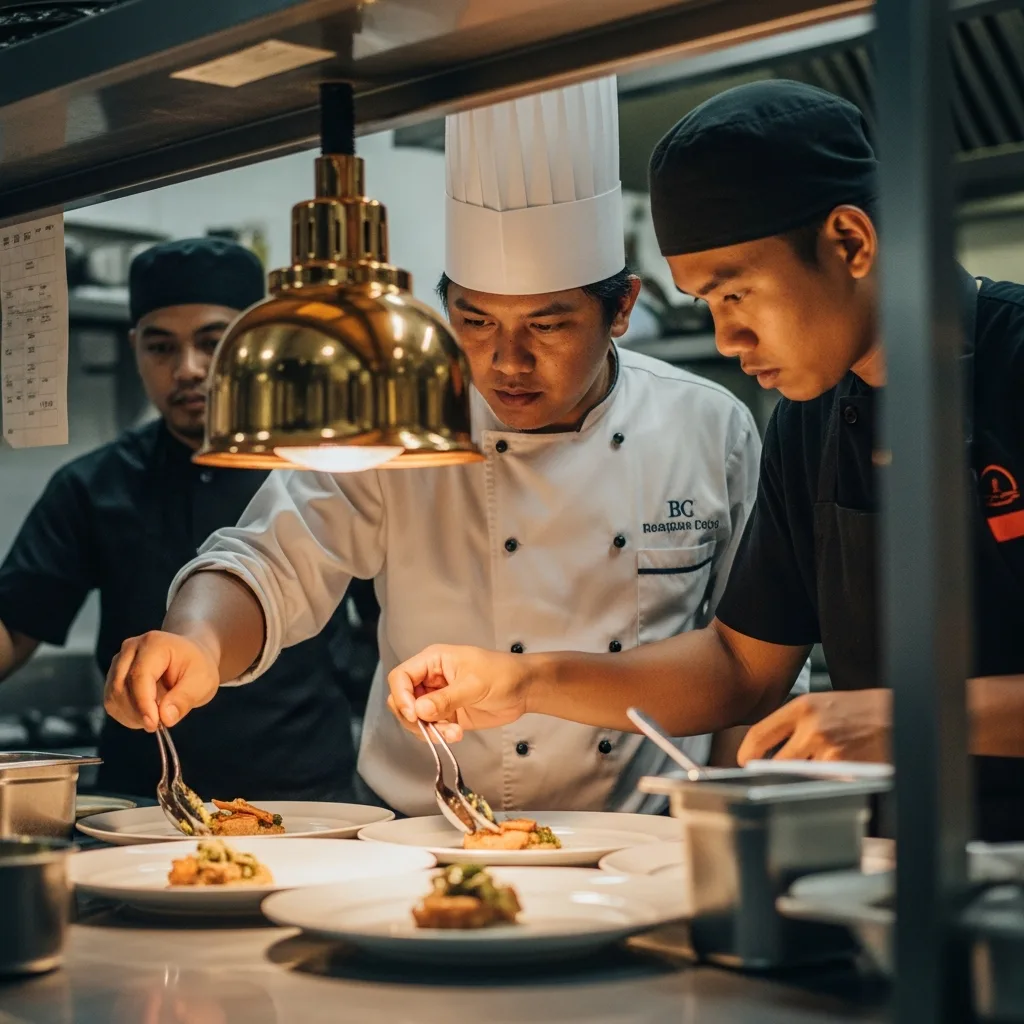
Restaurant Menu Development and Staff Training
A menu must work creatively, financially, and operationally. myCHEF.id helps hospitality teams build costed, standard recipes and train the people who will run them every service.
Search focus: restaurant menu development Indonesia
Ready to talk scope?
Share venue type, city, and the main pressure point. Written next steps — no spam.
WhatsApp usComplete menu-development process
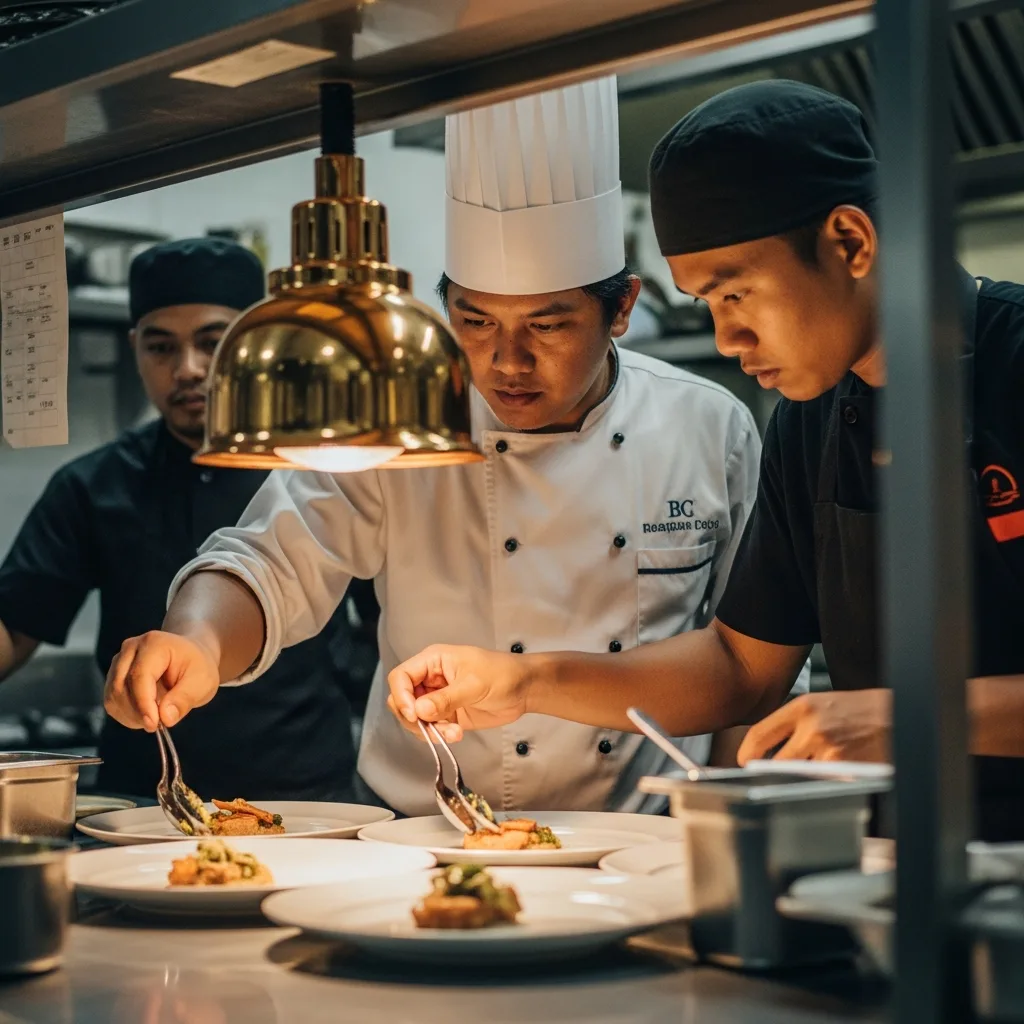
A typical programme moves through: menu direction; plateware selection; presentation and tasting; food photography coordination where needed; standard recipe development; ingredient selection; kitchen section allocation; individual chef training by section; and cooking trials before launch. Modules can be delivered together or separately.
Menu strategy
We align concept, target guest, price positioning, cuisine direction, kitchen capability, ingredient availability, preparation complexity, speed of service, menu size, dietary requirements, signature dishes, and overall menu balance — so the card matches what the kitchen can produce consistently.
Recipe standardisation and costing
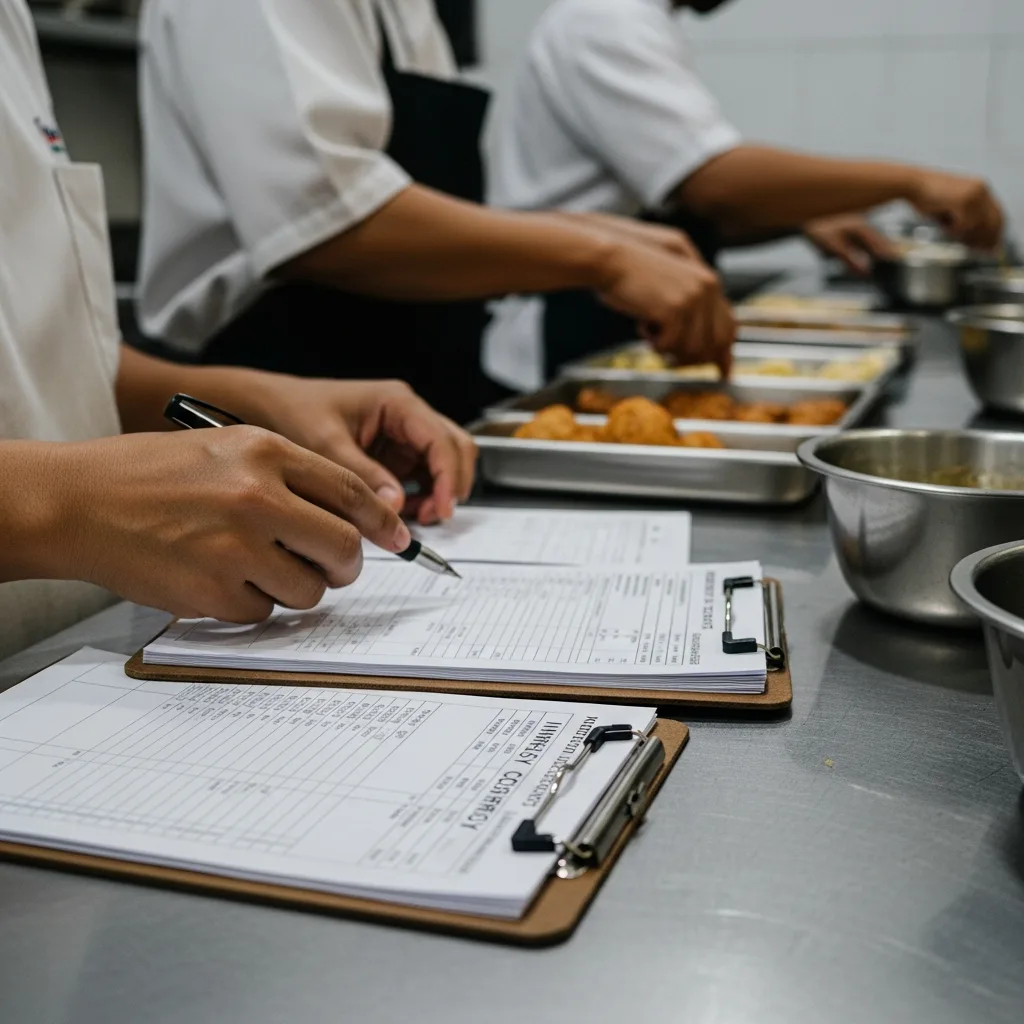
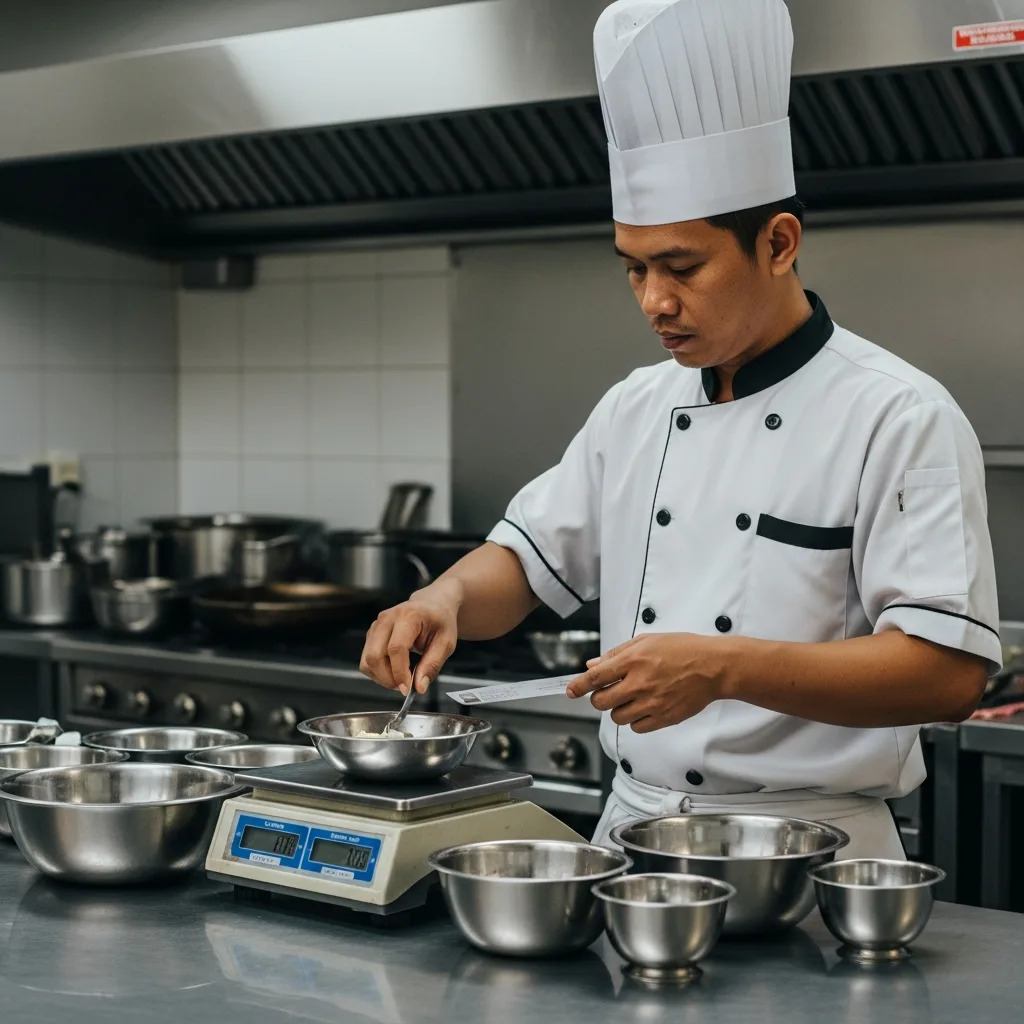
Standard recipes can include ingredient quantities, method, yield, portion size, plate presentation, ingredient price, cost per portion, selling-price considerations, allergen notes, storage guidance where appropriate, and version control so the recipe does not drift after launch.
COGS and cost-control training
Teams learn why portions matter, how to read contribution, how waste and staff meals affect results, and how purchasing decisions show up in the plate. Training is practical — built for cooks and supervisors, not only for the finance folder.
Kitchen and service training
Section organisation, station readiness, pass discipline, service handover, and FOH alignment can be included so food quality survives real volume. Recruitment assistance can support gaps when the roster cannot deliver the menu as written.
Post-launch accompaniment
After opening or menu refresh, optional follow-up helps lock standards, adjust recipes that underperform, and retrain where turnover creates drift. Scope is defined per engagement.
Methodology
Step 1
Menu direction
Concept, guest, price, and kitchen reality.
Step 2
Plateware & presentation
Serviceware that matches the dish and wash capacity.
Step 3
Tasting trials
Approve flavour, yield, and plating under timed conditions.
Step 4
Photography coordination
Optional content capture once dishes are locked.
Step 5
Recipe cards & costing
Standard methods with cost visibility.
Step 6
Section allocation
Who owns each dish under pressure.
Step 7
Team training
Section-by-section skill transfer.
Step 8
Cooking trial
Full-run rehearsal before public launch.
Step 9
Optional follow-up
Tune after real guest feedback and sales data.
Learn first
Supporting guides for this service
Educational pages that answer the questions operators ask before they engage.
FAQ
Questions operators ask first
Scope, timing, documents, confidentiality, and implementation options.
Still deciding?
Send your date, guest count and villa area — we reply within 1 hour with a fixed quote.
Still deciding?
Send your date, guest count and villa area — we reply within 1 hour with a fixed quote.
Related
Other paths in this hub
Stay inside the B2B kitchen cluster — each page owns a distinct commercial intent.
Hub
All kitchen solutions
Overview of consulting, design, and menu training for hospitality operators.
Open hubService
Consulting and Kitchen Audit
Structured review of finance controls, operations, staff practices, workflow, suppliers, documentation, and kitchen capability — with a prioritised roadmap.
Consulting and Kitchen Audit detailsService
Commercial Kitchen Design and Build
Layout planning, workflow optimisation, equipment positioning, utility coordination, renovation support, and build collaboration for professional kitchens.
Commercial Kitchen Design and Build detailsBuild a menu your kitchen can run profitably
Tell us whether you need a full menu programme, costing only, or team training. We will propose a scope that matches your stage — opening, refresh, or turnaround.
Book an Initial Consultation