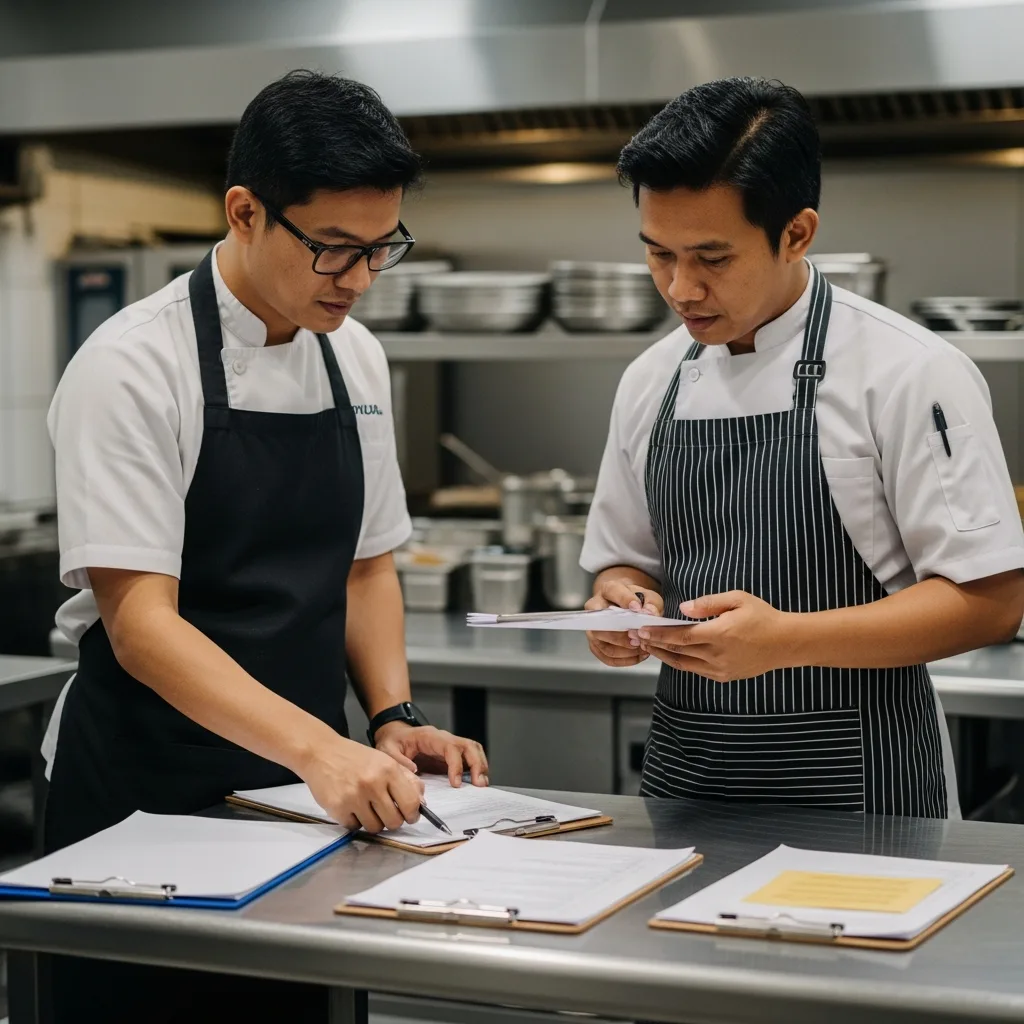
Restaurant Consulting and Kitchen Audit Services
myCHEF.id reviews how a hospitality business performs across money, people, processes, equipment, workflow, suppliers, and standards — then turns findings into a clear priority list you can act on.
Search focus: restaurant kitchen audit Indonesia
Ready to talk scope?
Share venue type, city, and the main pressure point. Written next steps — no spam.
WhatsApp usWhy a complete operational audit matters
A professional kitchen audit is not only a hygiene walkthrough. It should explain where money, time, and consistency are lost — and what to fix first. We look across financial performance signals, food cost, labour efficiency, inventory, waste, recipes, workflow, equipment, staff practices, leadership, documentation, and supplier performance.
Operational financial and cost-control review
This is an operational cost-control analysis for restaurant management — not a statutory financial audit, tax audit, forensic accounting engagement, or independent assurance opinion. Depending on scope and the documents you share, we may review theoretical versus actual food cost, COGS patterns, prime cost pressure, menu contribution, portion control, yield, waste, inventory levels, stock movement, purchasing controls, and labour efficiency.
- Theoretical vs actual food cost
- COGS and portion control
- Yield and waste patterns
- Inventory and purchasing controls
- Labour efficiency signals
Operational review
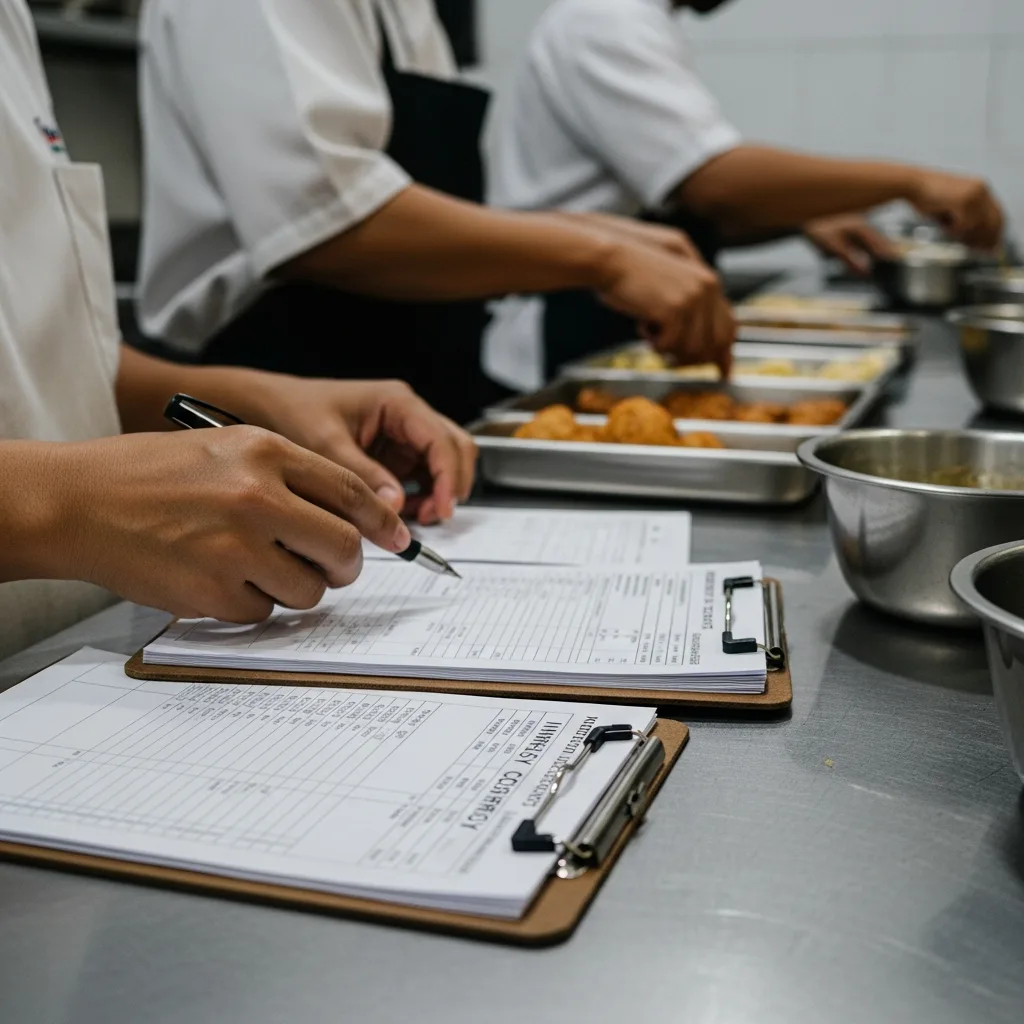
We observe how product moves through the kitchen and into service: receiving, storage, preparation, cooking, plating, service handover, dishwashing, waste flow, opening and closing, cleaning systems, temperature control, maintenance response, and peak-service performance.
Staff and organisation review
People problems often look like food-cost or speed problems. We assess skill levels, section responsibilities, training gaps, communication, leadership, scheduling, overtime patterns, key-person dependency, onboarding, performance standards, and team structure — without turning the visit into a blame exercise.
Supplier and partner review
Where relevant, we review pricing consistency, product quality, delivery accuracy and reliability, agreement clarity, alternative options, equipment maintenance response, and external partner performance. We describe observed patterns; we do not accuse suppliers of misconduct without evidence.
Restaurant cost-control systems
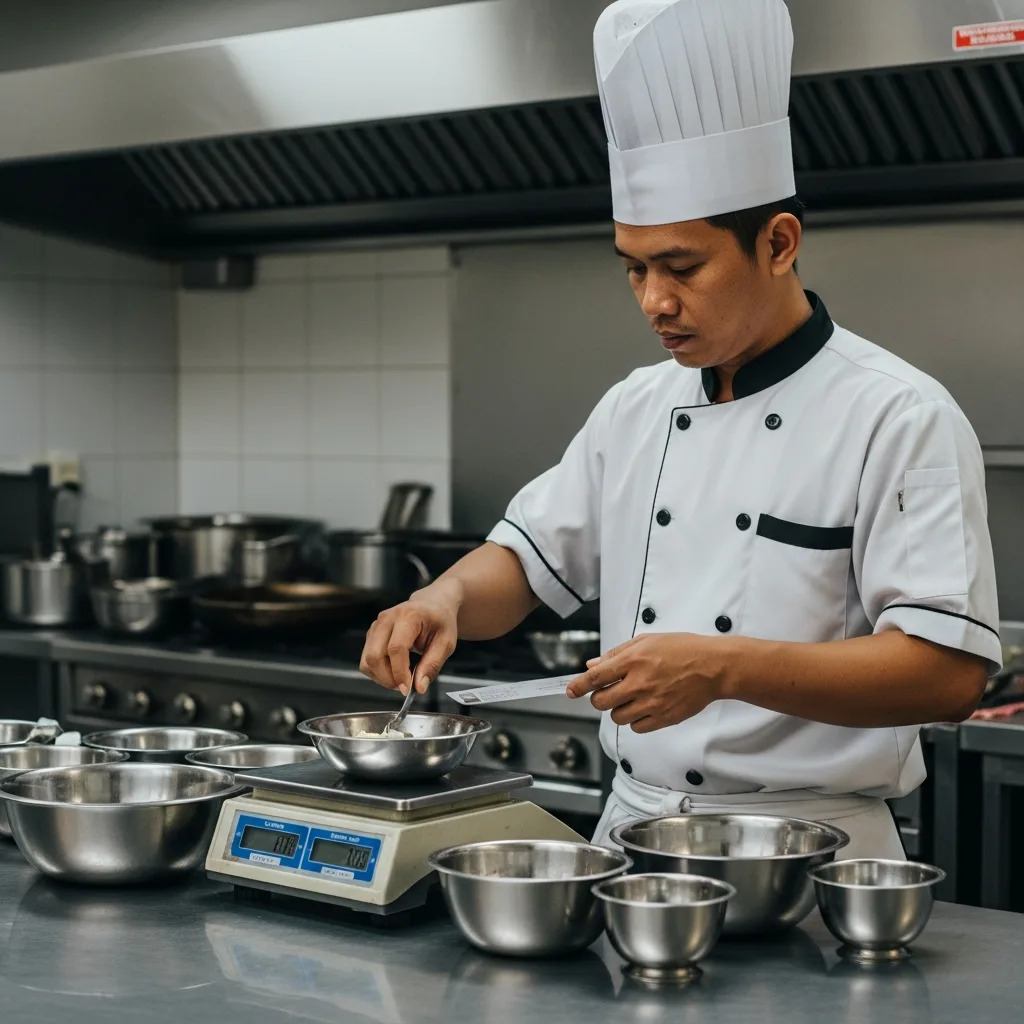
Sustainable cost control needs tools the team will actually use: standard recipe cards, exact ingredient quantities, current ingredient costs, yield calculations, portion controls, waste logs, inventory controls, variance analysis, menu engineering, staff-meal controls, and purchasing or receiving checks.
How to think about ROI (illustrative only)
Educational formulas help you estimate opportunity — they are not guarantees. Monthly food-cost opportunity ≈ monthly food sales × (current food-cost % − achievable food-cost %). Estimated payback ≈ project investment ÷ estimated monthly savings. First-year net benefit ≈ estimated annual savings − project investment. All projections depend on information you supply, implementation quality, market conditions, pricing, staff behaviour, and management follow-through.
Food-cost opportunity calculator
Educational estimates based on numbers you enter. Actual results depend on starting position, implementation quality, market conditions, pricing, staff behaviour, and management follow-through.
Monthly opportunity
IDR 12,000,000
Est. payback
2.1 months
First-year net (est.)
IDR 119,000,000
Methodology
Step 1
Management discussion
Clarify goals, pain points, and constraints.
Step 2
Document request
Menus, recipes, sales summaries, inventory records where available.
Step 3
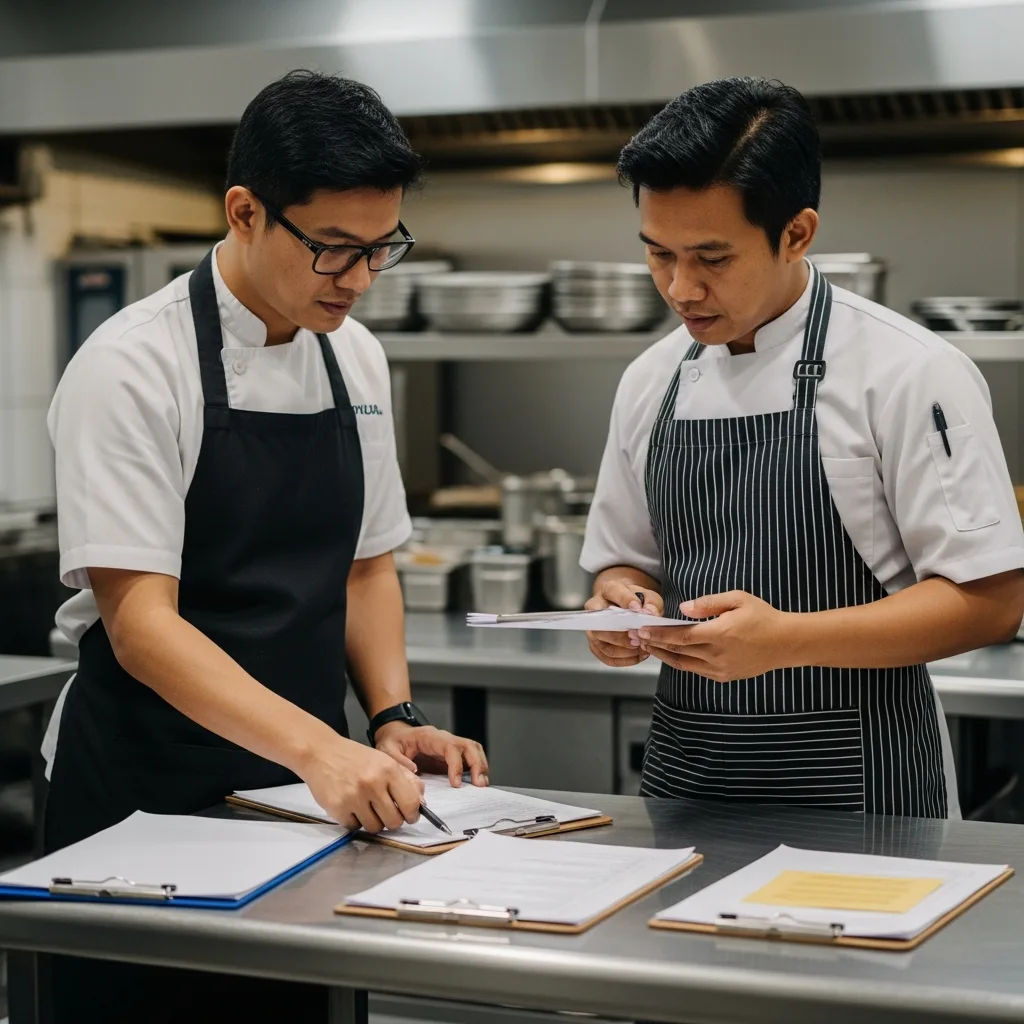
On-site observation
See real service flow, not only the theory of the menu.
Step 4
Kitchen & service review
Stations, handover, dish, waste, and peak pressure points.
Step 5
Staff conversations
Where appropriate, understand how the team actually works.
Step 6
Analysis
Connect operational and cost-control findings.
Step 7
Gap identification
What is missing, weak, or inconsistent.
Step 8
Prioritisation
Rank by urgency and commercial impact.
Step 9
Findings presentation
Clear summary leadership can act on.
Step 10
Optional implementation plan
Scoped next steps if you want execution support.
What you may receive
Deliverables are confirmed in the written proposal. This list shows typical outputs — not a fixed package for every engagement.
- Executive findings summary
- Risk and priority matrix
- Operational observations
- Cost-control findings
- Staff and training observations
- Workflow recommendations
- Equipment observations
- Supplier observations
- Immediate actions
- 30-day actions
- Medium-term recommendations
- Suggested implementation scope
Learn first
Supporting guides for this service
Educational pages that answer the questions operators ask before they engage.
FAQ
Questions operators ask first
Scope, timing, documents, confidentiality, and implementation options.
Still deciding?
Send your date, guest count and villa area — we reply within 1 hour with a fixed quote.
Still deciding?
Send your date, guest count and villa area — we reply within 1 hour with a fixed quote.
Related
Other paths in this hub
Stay inside the B2B kitchen cluster — each page owns a distinct commercial intent.
Hub
All kitchen solutions
Overview of consulting, design, and menu training for hospitality operators.
Open hubService
Commercial Kitchen Design and Build
Layout planning, workflow optimisation, equipment positioning, utility coordination, renovation support, and build collaboration for professional kitchens.
Commercial Kitchen Design and Build detailsService
Menu Development and Training
Menu strategy, costing, recipe standardisation, tasting, plateware, section training, cooking trials, and post-launch accompaniment.
Menu Development and Training detailsUnderstand where money, time and consistency are being lost
Start with a clear assessment of your restaurant or kitchen. We will tell you what we can review, what we need from you, and what a useful next step looks like.
Book an Initial Consultation