Practical Planning
What needs to be decided before your company event?
A clear brief makes the proposal easier to approve and the evening easier to host.
Choose the purpose before the production
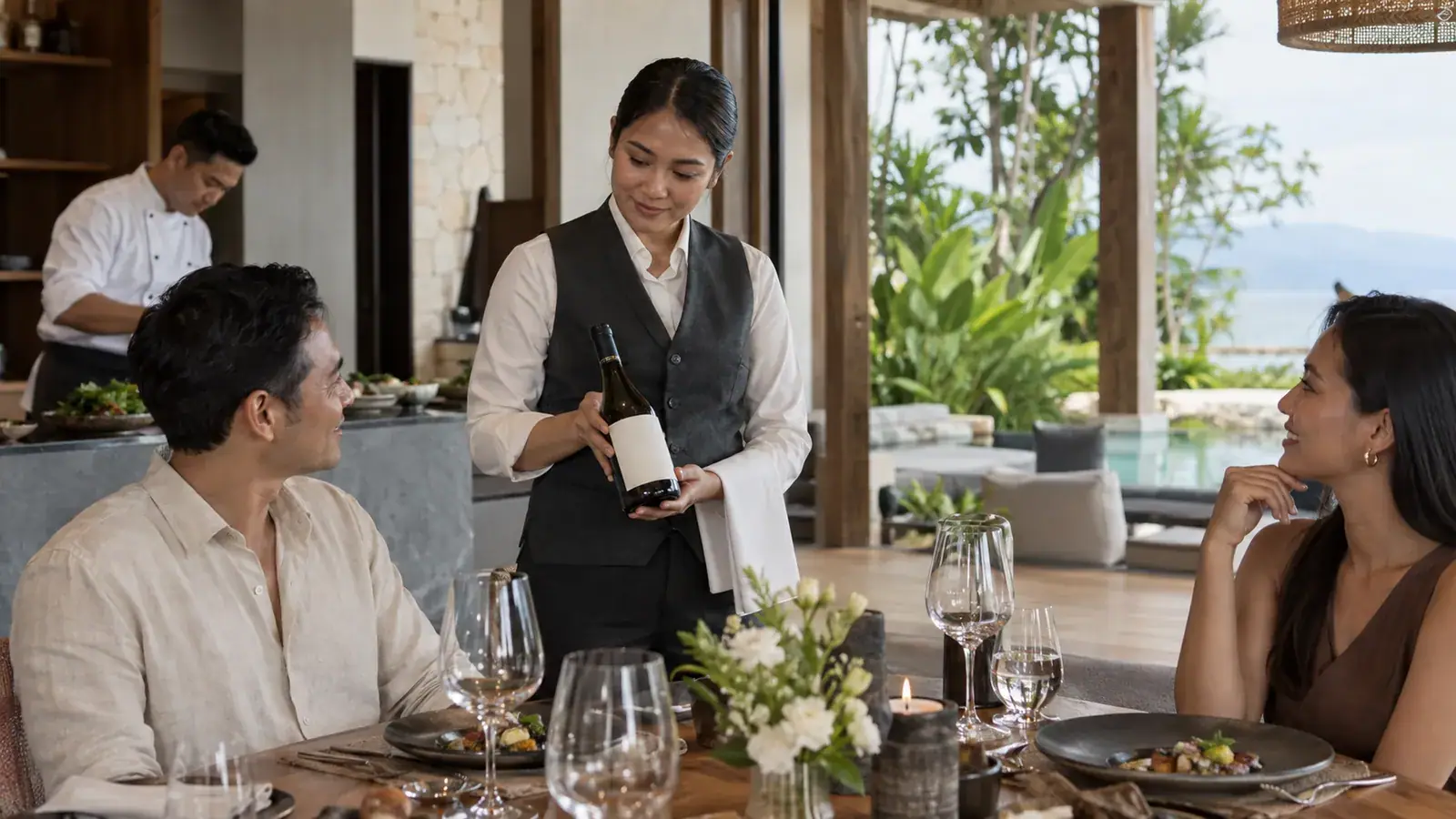
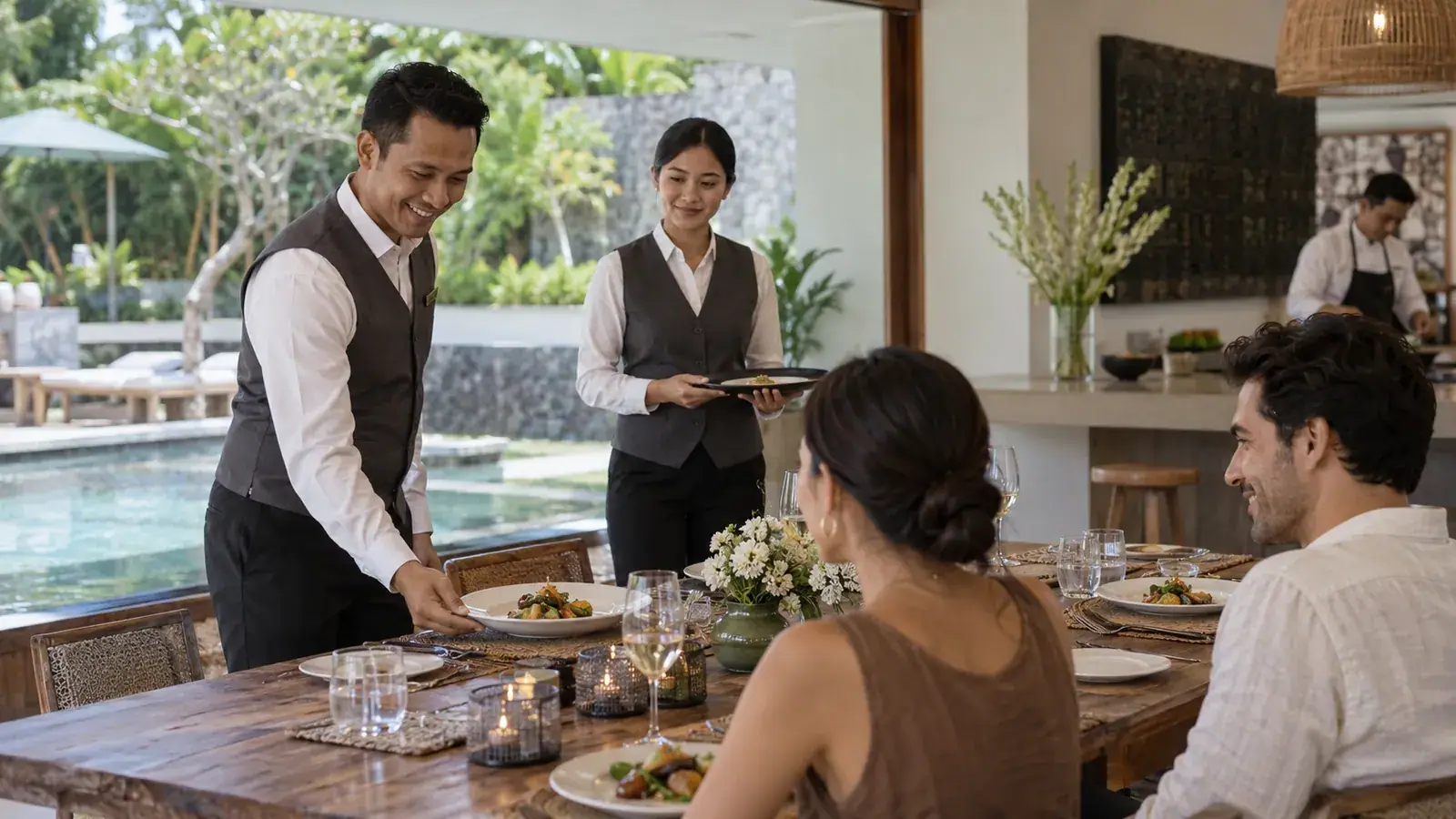
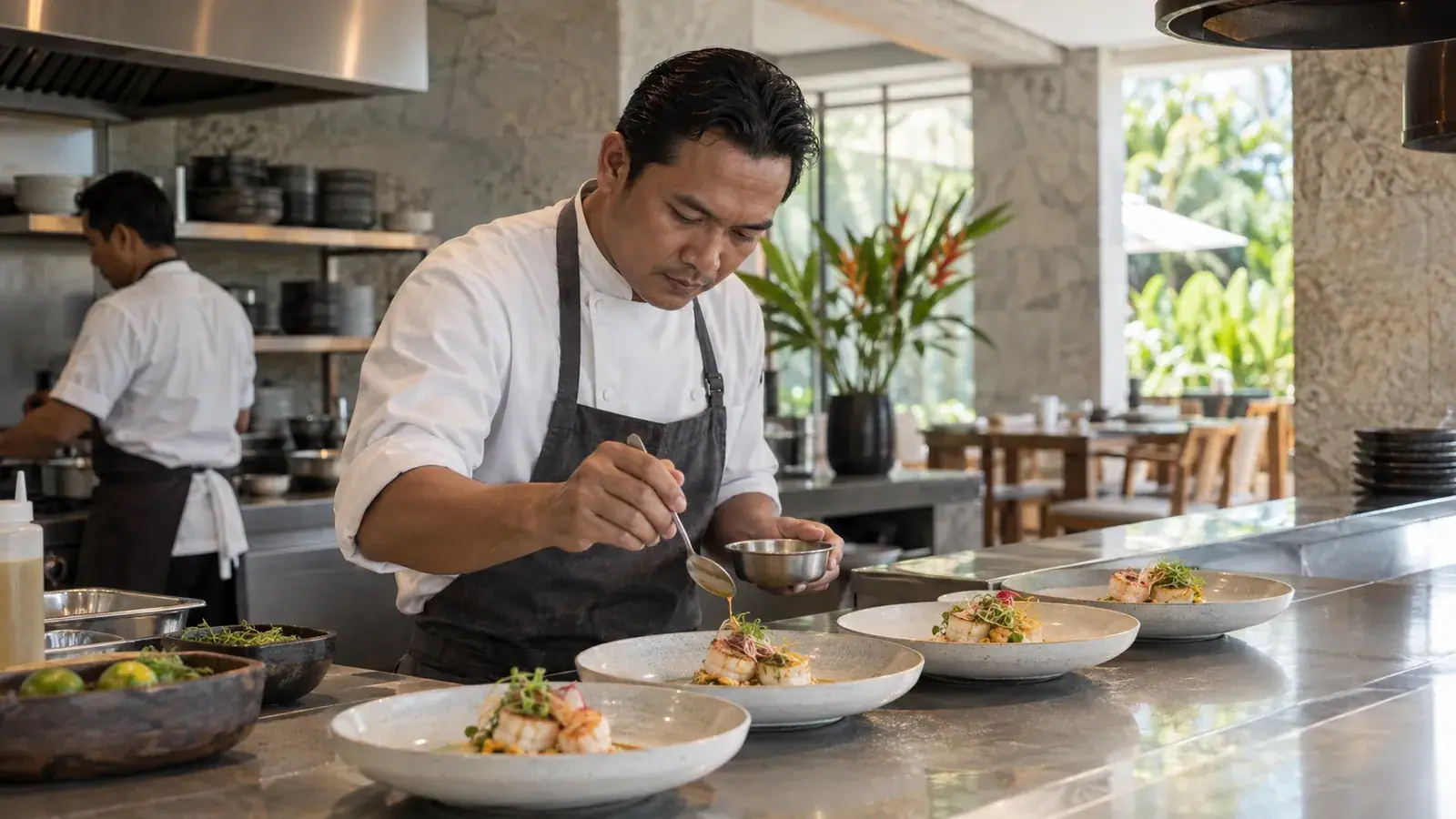
A welcome dinner should help colleagues settle in and meet one another. A closing celebration may need awards, speeches and more time around the table. A client reception needs space for conversation and easy food service. Tell us the intended atmosphere and the moments that matter most, then build the menu and staffing around them.
Check whether the venue suits the event
Confirm the permitted guest count, outside-visitor rules, kitchen access, setup window and finish time with the property. Look at the practical route from vehicle unloading to service areas, plus toilets, lighting and accessible seating. If guests are staying at the villa, keep their private rooms and the event footprint separate in the plan.
Agree the outdoor backup
For a garden reception or poolside dinner, decide where guests, food and equipment move if the weather changes. The fallback must have enough usable space, lighting and service access. Tent hire or alternative furniture should be priced when needed. Record who makes the weather decision and when the service team needs to start the changeover.
Give every supplier the same timeline
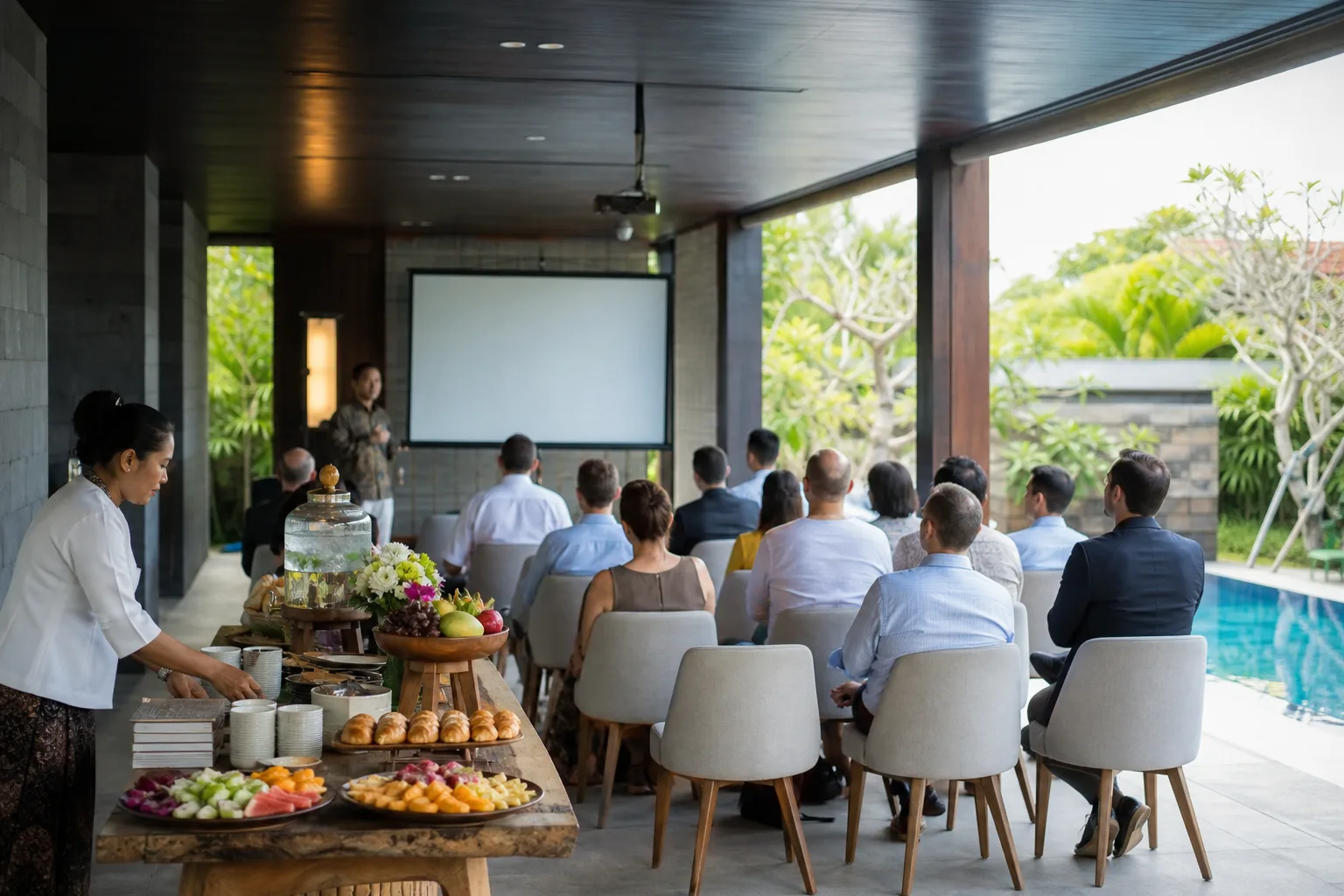
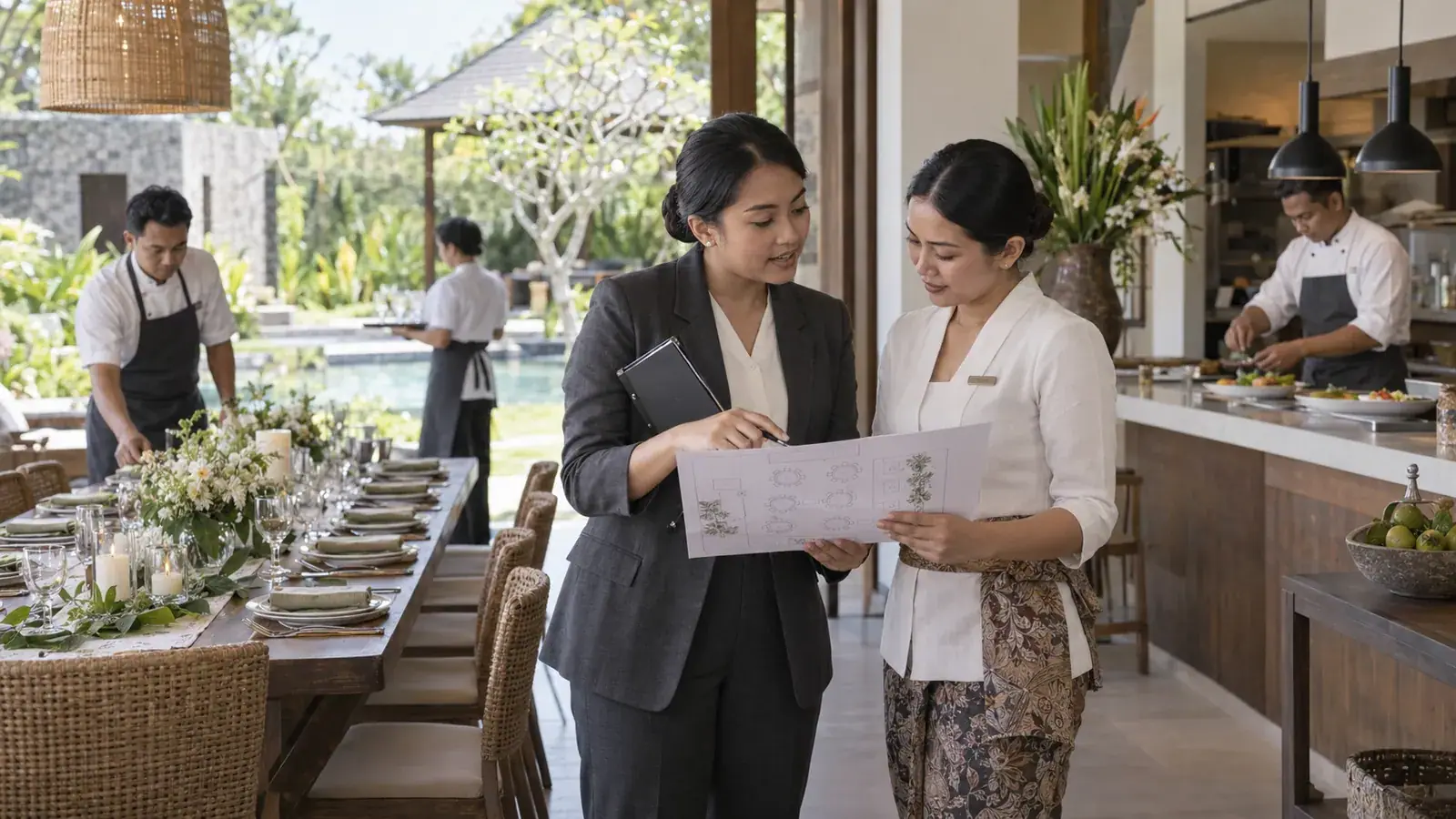
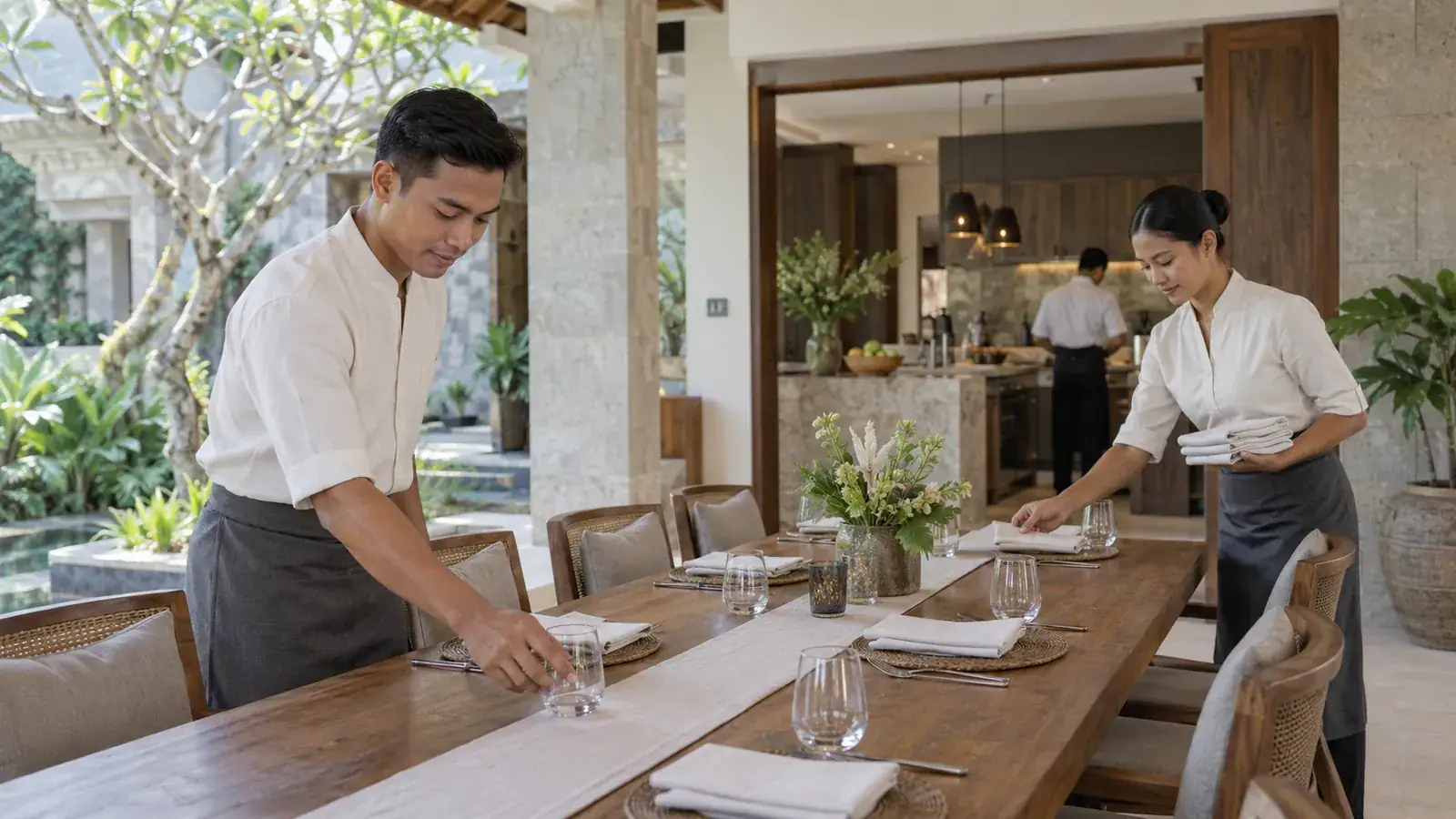
Food service, drinks, sound checks, presentations and guest transport affect one another. Name one event contact and circulate a working run of show with arrival, setup and collection windows. Protect speeches from noisy clearing and leave realistic gaps between courses. Changes should reach the coordinator before individual suppliers begin acting on different instructions.
From the first enquiry to event day
Send your brief, review the proposed format and approve the written scope. Corporate event minimum spend is IDR 15,000,000; the final total depends on the agreed food, staffing and production. A 50% deposit confirms the booking, with the balance due the day before the event.
Before the event, confirm the guest count, dietary information, supplier contacts and timeline. Your event coordinator uses that plan to connect the kitchen, service team and venue. If you need daily meals between events, see corporate retreat catering; accommodation and the full stay are handled through complete company retreats.