What a kitchen audit covers in an existing restaurant
How a kitchen audit reviews an existing restaurant: costs, recipes, workflow, suppliers and team practices, then written findings before any next step.
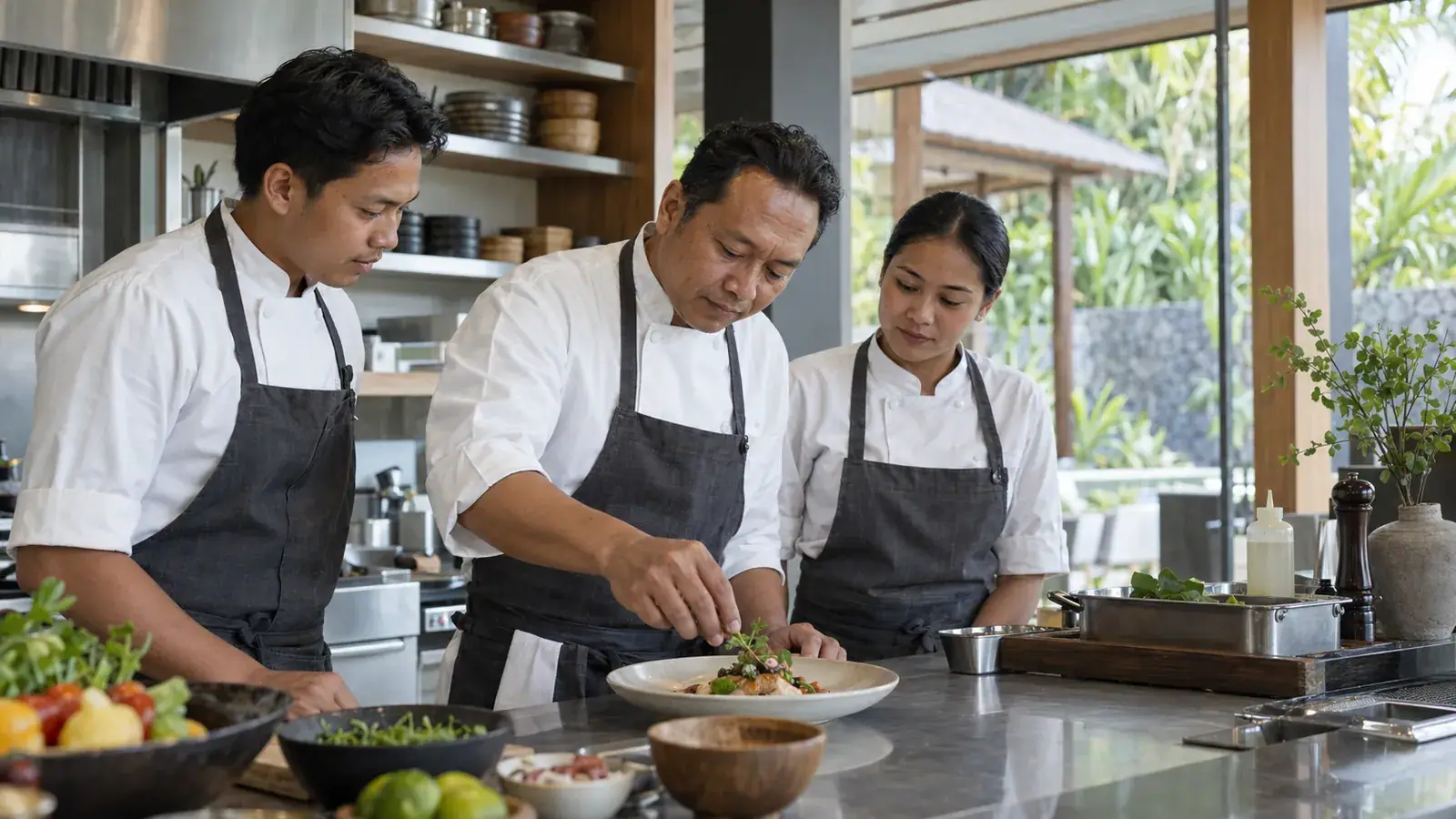
A kitchen audit is a structured operational review of an existing restaurant or commercial kitchen, with the scope agreed in writing before work begins. Our restaurant and commercial kitchen solutions include this audit work, plus kitchen design and menu training when you want those later. The first output is written findings, not a rebuild.
The review can look at costs, recipes, workflow, inventory, waste, equipment use, staff practices, documentation and supplier performance, as scoped. It is B2B operations support for restaurants, hotels, cafés, bars and professional kitchens across Indonesia. It is not a statutory financial, tax or forensic audit, and it is separate from booking a private chef for a villa stay.
- A kitchen audit is a scoped operational review, agreed in writing first.
- It can cover costs, recipes, workflow, waste, equipment, team practices and suppliers.
- You receive prioritised findings; design, menu work or training are optional next steps.
- Fees come in a written proposal based on scope. There is no published list price.
- Work can be on-site in Indonesia or, in part, by remote document review.
What does a kitchen audit actually look at?
A structured operational review can cover cost control, workflow, recipes, inventory, waste, equipment use, staff practices, documentation and supplier performance. Scope is agreed in writing before work begins. This is not a statutory financial, tax or forensic audit. The assessment reviews your records and daily work, with a site visit where that is agreed.
Existing restaurants often ask for this review when food bills drift from recipe cost, plates vary by shift, service slows at the pass, or opening and closing routines live only in people’s heads. The same audit can also look at supplier quality, pricing friction and whether the menu is more complex than the team and equipment can support. A practical walkthrough you can use to prepare is our commercial kitchen audit checklist.
The work follows only the stages you need: discovery, assessment, findings, solution design, then optional implementation, training and handover, and follow-up. Not every project includes every stage.
How does a kitchen audit help with rising food cost?
We compare what recipes should cost with what you actually spend, then check portions, usable yield, waste, buying and dish profit, and suggest controls your team can use each day. Food cost improves when the kitchen, purchasing and menu work as one system. Results vary by starting position, so we treat any percentage targets as internal goals, not promises.
If inconsistent recipes or plating are the bigger issue, the next step may be menu development and training rather than a redesign. If tickets pile up because stations fight each other, workflow and layout come first; see our guide to commercial kitchen workflow. The audit is there to show which of those paths actually matches the bottleneck.
What happens after the first assessment?
You receive prioritised findings and recommended next steps, ordered by impact so you know what to fix first and what can wait. Implementation, redesign, menu work or training are optional follow-on scopes. Diagnosis can stand alone, or continue into design, menu systems, training and follow-up support when you agree that in writing.
If a renovation or a new opening is already planned, kitchen planning, equipment lists, menu build and team readiness can sit on one timeline. Equipment is planned against the menu and volume, and supply can be coordinated where agreed. Brand lists are project-specific and confirmed with you; we do not hard-sell unstated brands on the website.
Is a kitchen audit the same as hiring a private chef?
No. A kitchen audit is B2B operations support for restaurants, hotels and commercial kitchens, not a chef booking for a villa dinner or a catered event. Villa private chef and catering bookings are a separate consumer service on myCHEF.id. If you want a chef in a holiday villa, start on the private chef in Bali page instead.
The consulting practice and the villa service share a culinary team, but the engagement is different: written scope, findings and optional implementation for a business kitchen, versus a booked meal service for guests. Cafés, bars, bakeries, hotel outlets, central kitchens and multi-outlet groups are in scope for consulting when the operational issues match the services. Bar programme work for venues is covered separately under bar consulting.
Can this work for a café, bar or a kitchen that has not opened yet?
Yes. Cafés, bars, bakeries, hotel outlets, central kitchens and multi-outlet groups are all in scope when the operational issues match our services, and pre-opening support is available before the first guest arrives. Pre-opening work can include kitchen planning, equipment lists, menu development, recipe systems and training readiness.
Existing kitchens can also be improved without a full rebuild, through workflow mapping, equipment repositioning and phased renovation, often after an operational assessment so spend follows real bottlenecks. Independent restaurants, restaurant groups, hotels and resorts, villas and hospitality estates, catering kitchens and production kitchens are all listed as operator types on the solutions page.
How are fees set, and where can the work take place?
Fees are based on scope, site conditions, depth of analysis, deliverables, and whether implementation, design or training is included. You receive a written proposal before you commit. There is no published from-price for this work. Sales, cost and supplier data are used only for the engagement and shared with the stakeholders you designate. An NDA can be signed when required.
Engagements are scoped for Indonesia. On-site work depends on location, schedule and project needs. Remote document review can support parts of the process where appropriate. English is standard for international owners and managers, and Bahasa Indonesia support is available for on-site team training depending on the facilitator assigned.
How quickly can a project start, and how is information handled?
Simple remote reviews can often begin within days of signed scope. Multi-day on-site audits and design projects are scheduled against venue access and team availability. Confidential commercial data is used only for the engagement. We reply within 1 hour during service hours, 08:00 to 22:00.
Role definitions, skill profiles and hiring support can be included when the team structure itself needs to change, and that is agreed in the written scope.
Need a kitchen audit for an existing restaurant?
Tell us your concept, location and the pressure point in the kitchen. We reply within 1 hour during service hours with whether an audit, design work, menu development or training is the right first step.
FAQ
What is included in a restaurant kitchen audit?
A structured operational review can cover cost control, workflow, recipes, inventory, waste, equipment use, staff practices, documentation and supplier performance. The exact scope is agreed in writing before work begins. This is not a statutory financial, tax or forensic audit.
Can you help an existing restaurant reduce food cost?
Yes. We compare what recipes should cost with what you spend, then check portions, usable yield, waste, buying and dish profit. The aim is a set of controls your team can use each day. Results vary by starting position, so we do not publish percentage targets as promises.
How is the consulting fee calculated?
Fees are based on scope, site conditions, depth of analysis, deliverables, and whether implementation, design or training is included. You receive a written proposal before you commit. We do not publish a list price or a from-price for consulting work.
What happens after the initial assessment?
You receive prioritised findings and recommended next steps, ordered by impact so you know what to fix first. Implementation, redesign, menu work or training are optional follow-on scopes. You decide how far to go after you have read the findings, and diagnosis can stand alone.
Do you work outside Bali?
Engagements are scoped for Indonesia. On-site work depends on location, schedule and project needs. Remote document review can support parts of the process where that is appropriate, so not every stage has to happen on site at the venue itself.
How is this different from booking a private chef?
This practice is B2B operations support for restaurants, hotels and commercial kitchens. Villa private chef and catering bookings are a separate consumer service on myCHEF.id, with their own pages and booking process, so a kitchen audit is not a villa chef booking.
Your next step
If an existing restaurant kitchen needs a clear review before you spend on a rebuild, start with a scoped consulting and kitchen audit. Send your concept, location and pressure point on WhatsApp, or read the full picture on our restaurant and commercial kitchen solutions page.