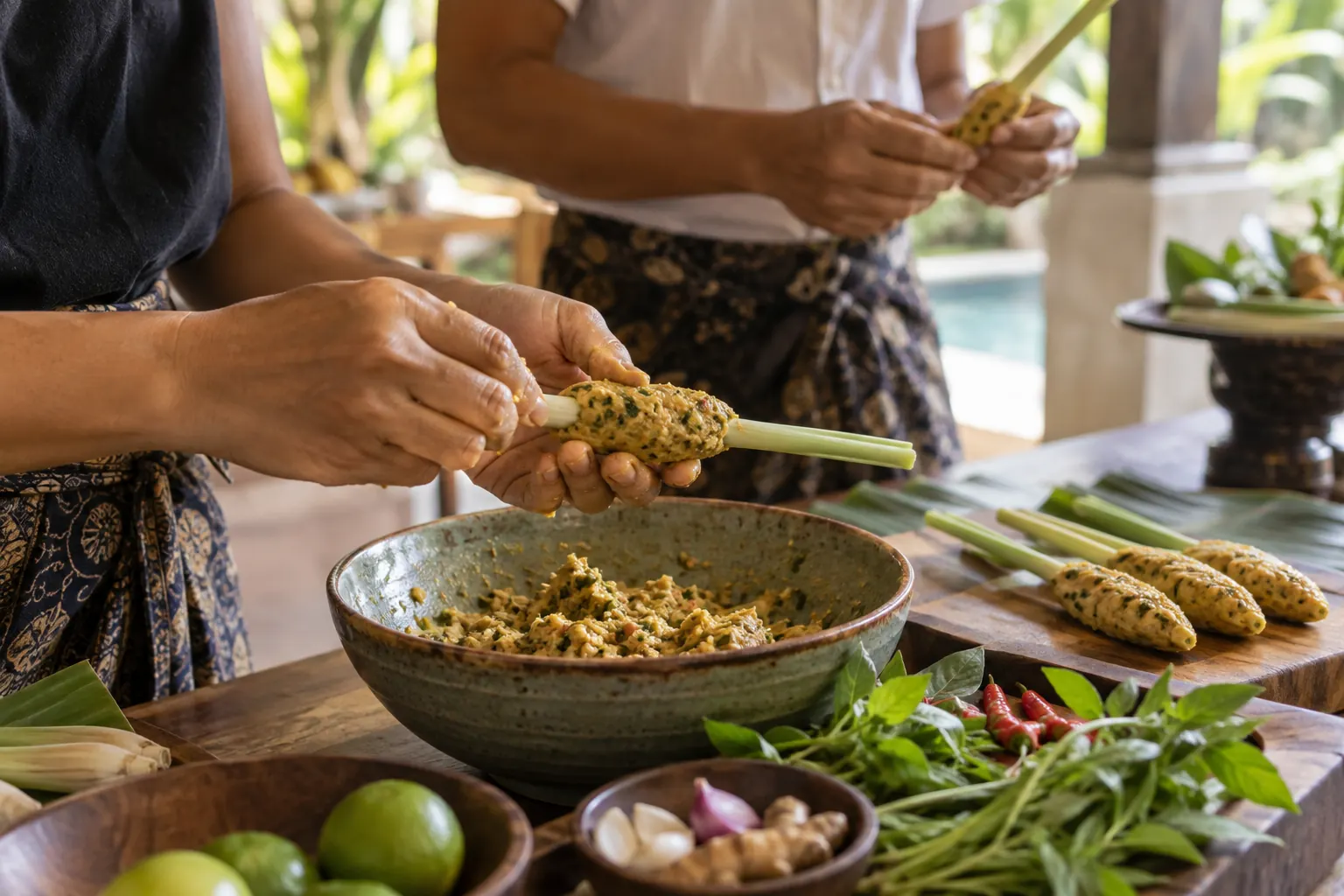
"Is a cooking class in Bali worth it?" is the honest question behind a lot of half-finished bookings — and the honest answer is: it depends entirely on what you want from it. A cooking class is not for everyone, and pretending otherwise helps no one. Here is a straight look at who gets real value, who does not, and how to pick a format so you are not disappointed.
Who a cooking class is genuinely worth it for
- People who want to take something home. A beach club gives you an afternoon; a cooking class gives you a skill you will use for years. If you cook at home, learning to build base genep and a handful of Balinese dishes is the souvenir that keeps paying off.
- Couples and honeymooners who want a shared activity that is not simply another dinner reservation.
- Families — children who "do not like spicy food" are often surprisingly proud of a plate they cooked themselves.
- Groups and celebrations — birthdays, hen parties, villa reunions. Cooking together and then eating together is a better icebreaker than any bar.
- Curious eaters who want to understand what is actually Balinese versus what is pan-Indonesian.
Who should probably skip it
If you want to relax and be cooked for, a class is the wrong choice — hire a private chef instead and simply enjoy the meal. If you have a single free afternoon on a first trip to Bali, a temple visit or a rice-terrace walk may serve you better. And if you actively dislike cooking, three hours at a stove will not convert you. That is fine — knowing it is what stops a class from being a waste.
Group school vs private class — the real trade-off
This is where "worth it" is usually decided. Traditional cooking schools are typically cheaper per head and can be genuinely excellent, but they come with trade-offs: classes of 15 to 24 people, a fixed menu, a set time slot, and often a five-hour day built around hotel pickups and a group market walk. If you are on a budget and want the social, bustling version, they can absolutely be worth it.
A private in-villa class costs more per person but removes the friction: only your group, your menu, your pace, no transfer time, and you eat everything you cook at your own table. For couples, families and anyone who values privacy and flexibility, that is usually the version people mean when they say a class was "one of the best things we did."
What you should actually get for your money
To be worth it, a class should include, at minimum: genuinely hands-on cooking (not watching a demonstration), a real sit-down meal of what you made, recipes you can reuse at home, and a chef who adapts to your level and dietary needs. If a "class" is really a demonstration where you watch and are then served, it is a meal with a show — priced like a class. Ask before you book.
What a myCHEF class costs and includes
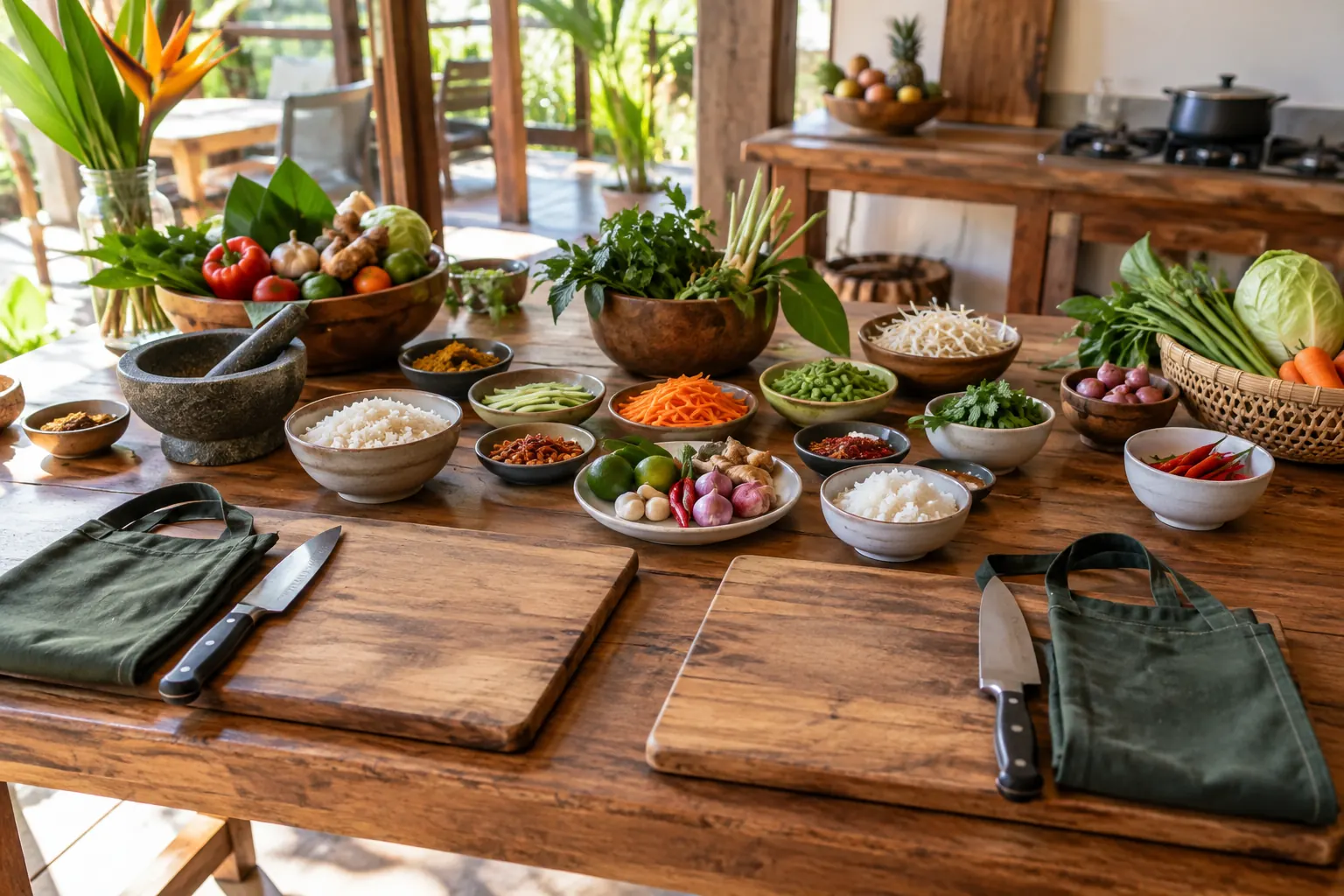
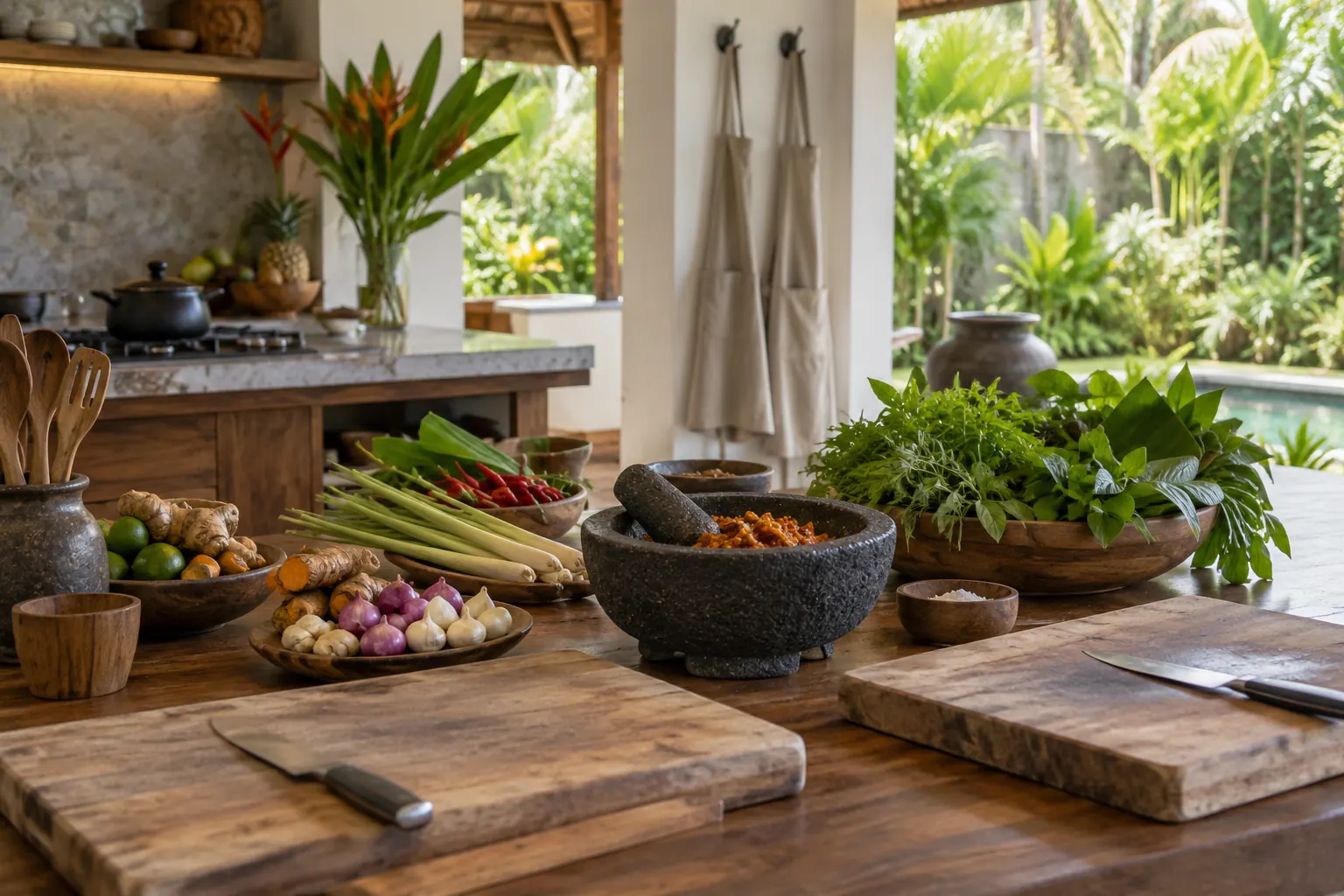
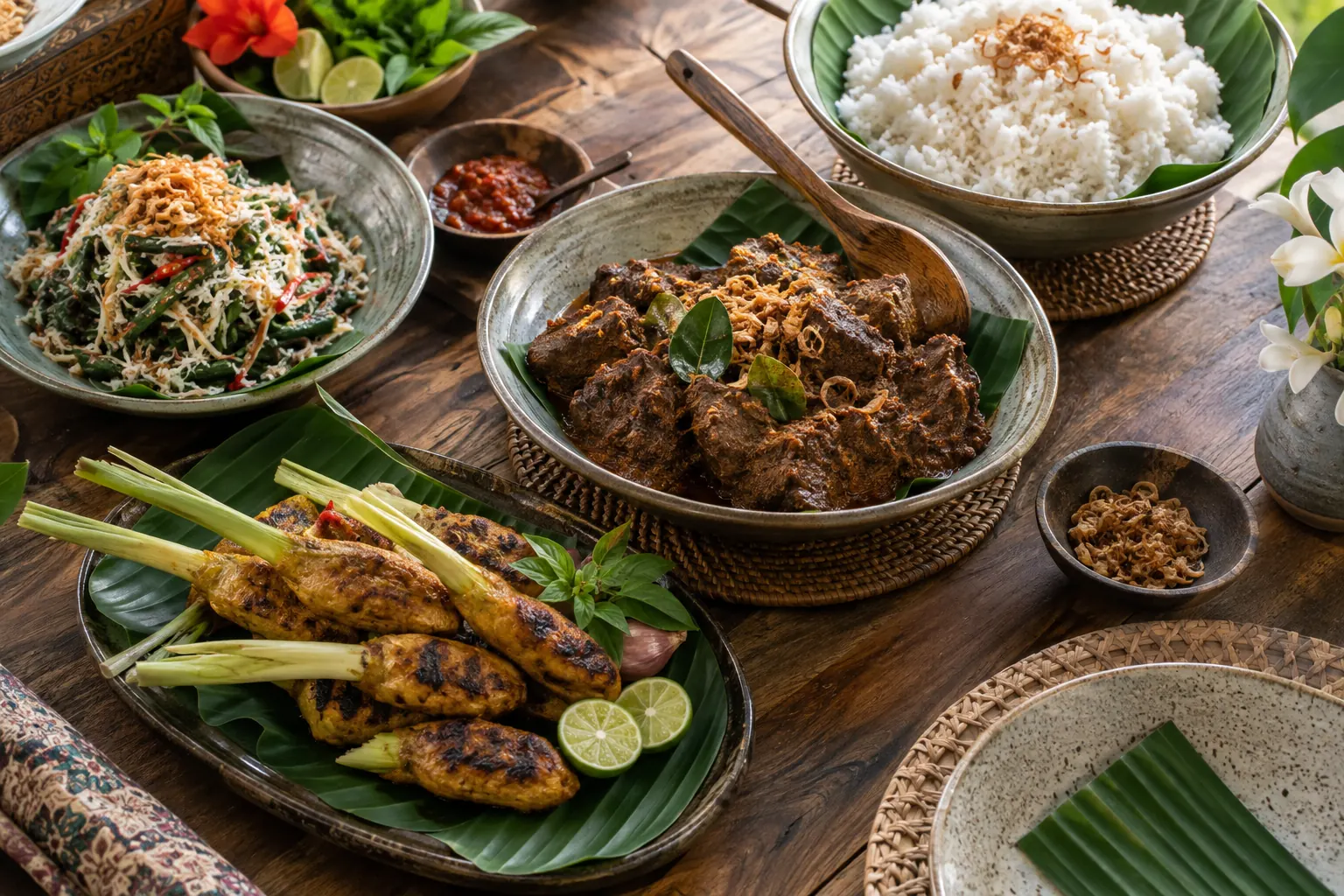
Our standard experience is a 3-hour private Indonesian class in your villa: an introduction to the ingredients and spice pastes, hands-on cooking of four to six dishes, a sit-down meal of everything you prepared, a personalised diploma, recipe cards, uniforms and hats, and full clean-up. From IDR 700,000 per person, minimum 4 guests. No shuttle, no shared bench, no watching from the back.
The honest bottom line
A cooking class in Bali is worth it if you want to do something, learn something and eat something you made — especially as a couple, family or group. It is not worth it if what you really want is to be looked after, in which case a private chef is the better call. If the first description sounds like you, compare prices in our 2026 cost guide, see the full private cooking class details, or message us on WhatsApp.