Why the Kitchen Matters Before You Book a Villa
Most Bali villa photos are taken from the pool deck. The kitchen, if shown at all, gets one wide-angle shot designed to make it look large. What that photo cannot tell you is whether there is enough hob space for a private chef to cook six courses simultaneously, whether the refrigeration is cold enough to hold proteins overnight, or whether the extraction is strong enough to handle an open-flame main course without smoking out the living room.
If you are booking a villa specifically to use a private chef (for a dinner party, a week-long stay, or a wedding catering event), the kitchen check is one of the most important things you can do before confirming. It is also the first thing we review before confirming full-day villa chef hire in Bali.
The Four Things a Private Chef Actually Needs
1. Sufficient Hob Space
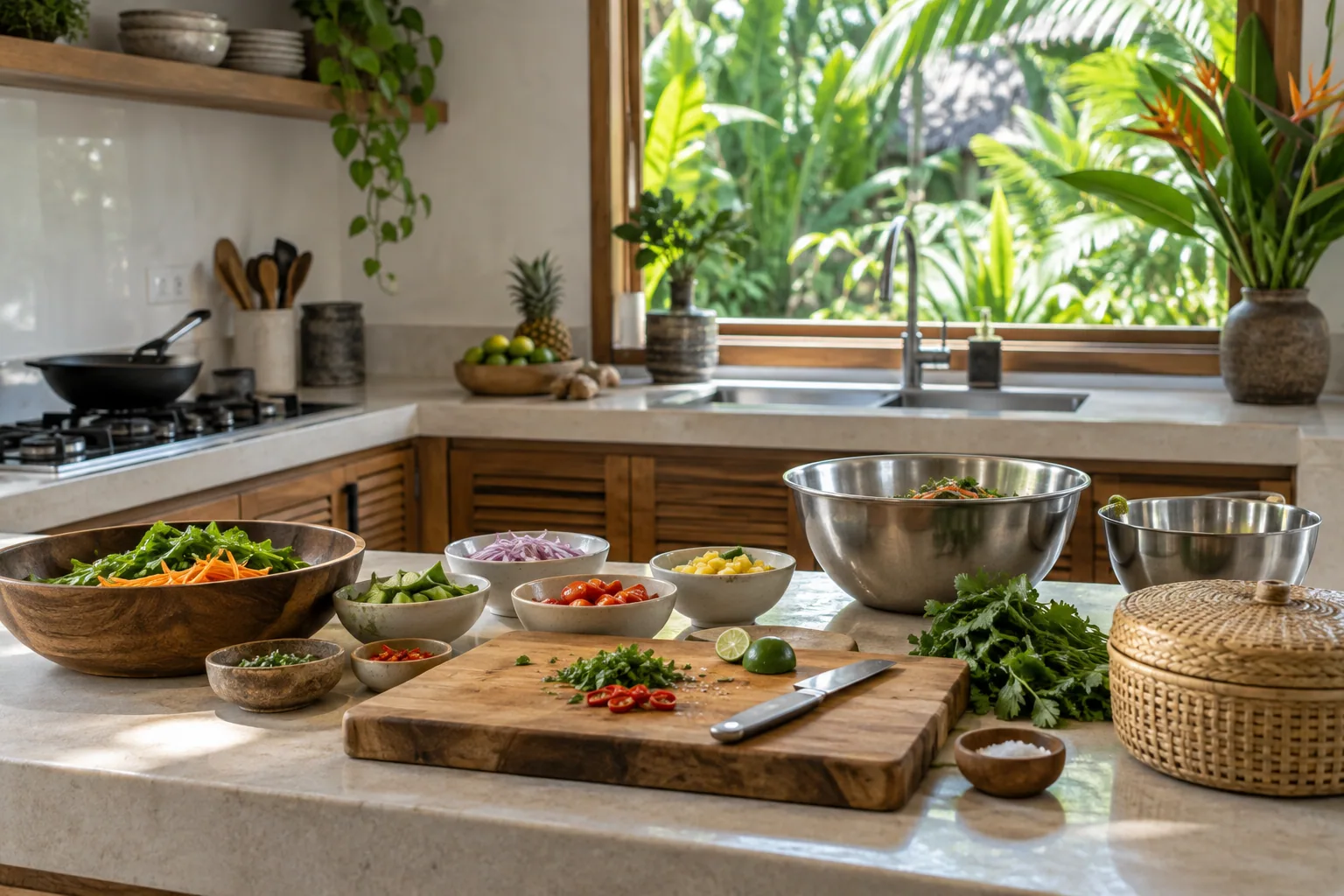
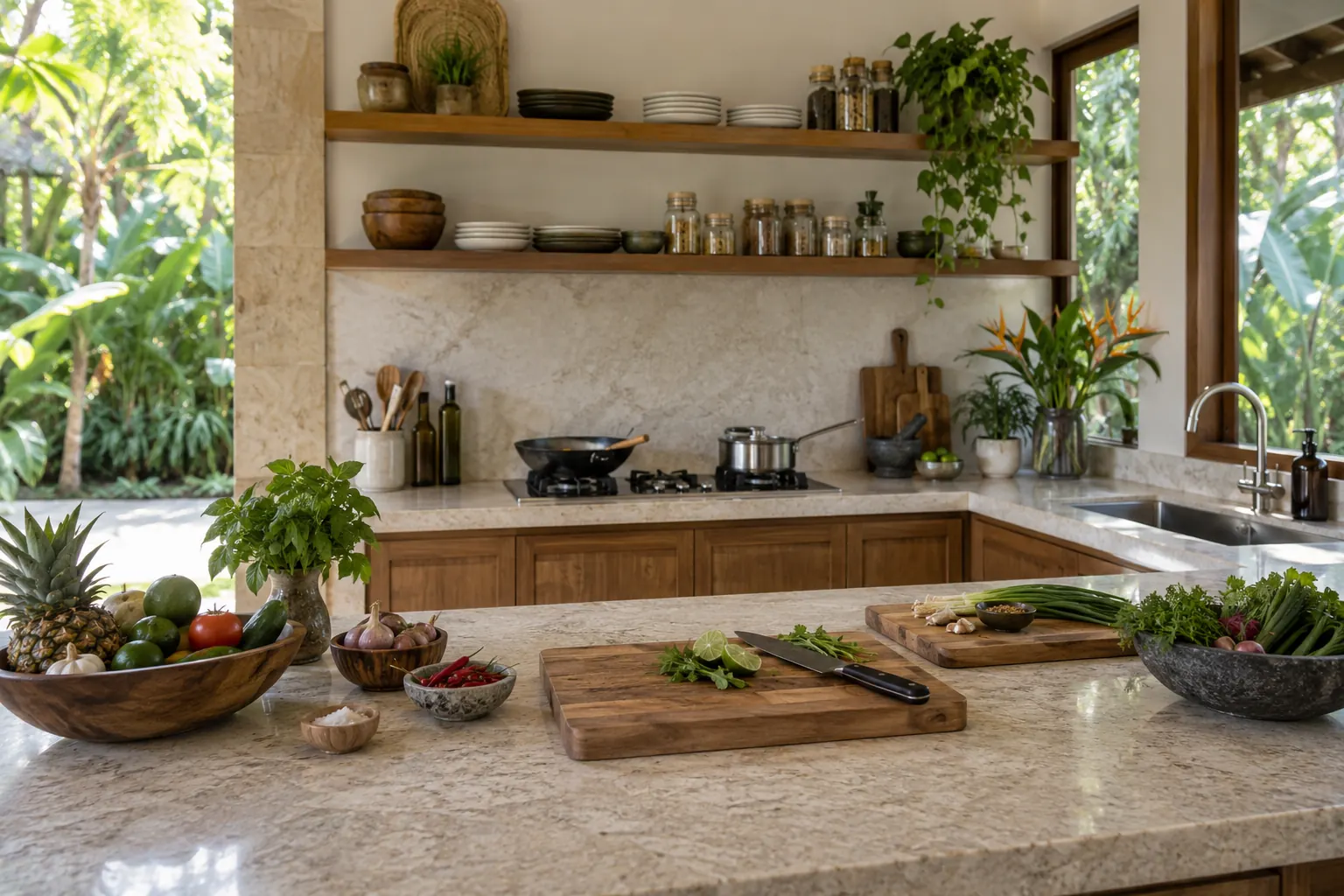
A private chef running a multi-course dinner for eight or more needs at minimum four burners. Six is better. Induction hobs are workable if the chef is experienced with them; gas is universally preferred because it gives instant heat control. One-hob studio kitchens are suitable for breakfast prep and simple lunches, but not for a proper dinner service.
When reviewing a villa, ask the concierge or look for photos that show the cooking surface. A single two-burner induction unit is a red flag if you are planning anything beyond the most basic meal.
2. Prep Counter Space
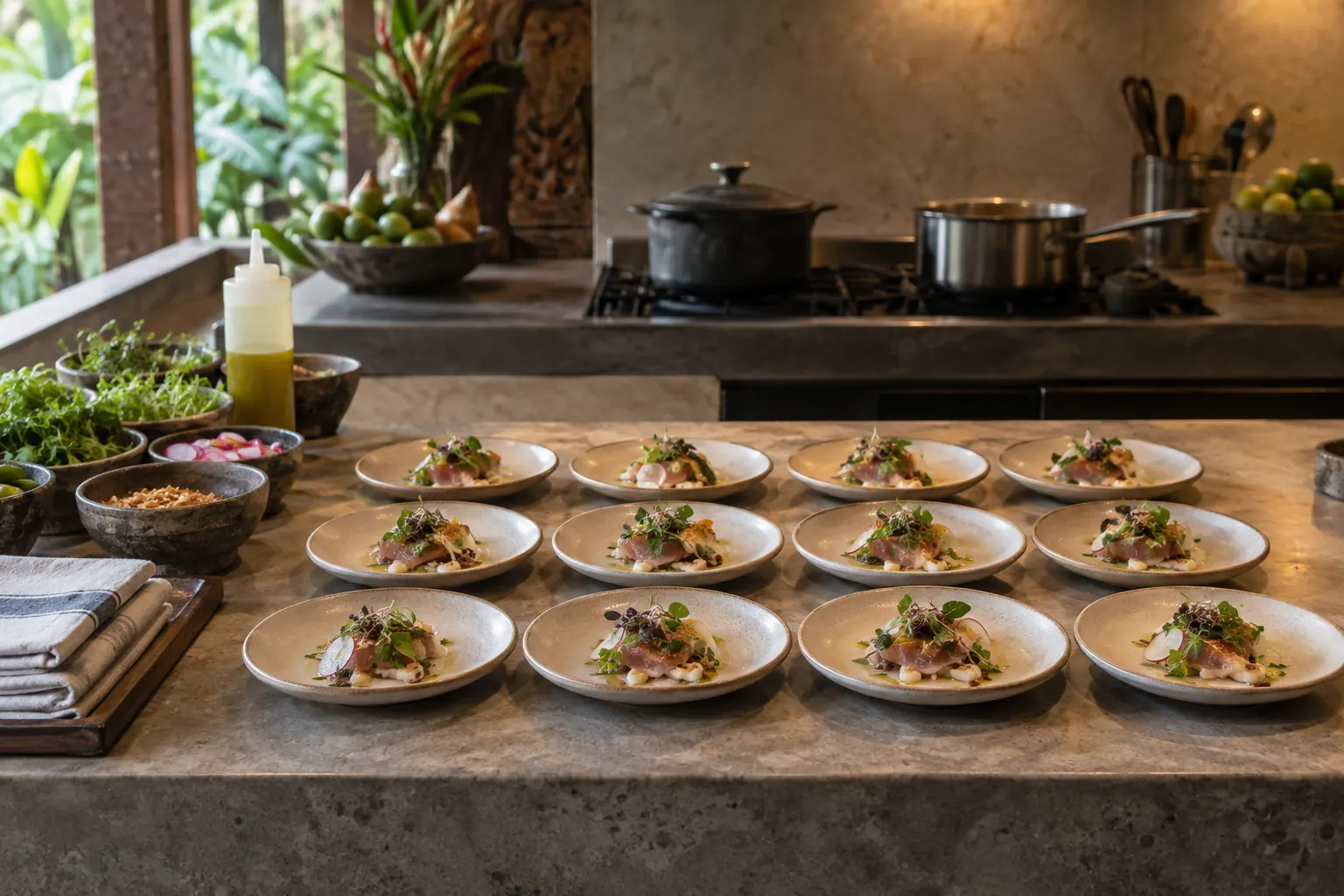
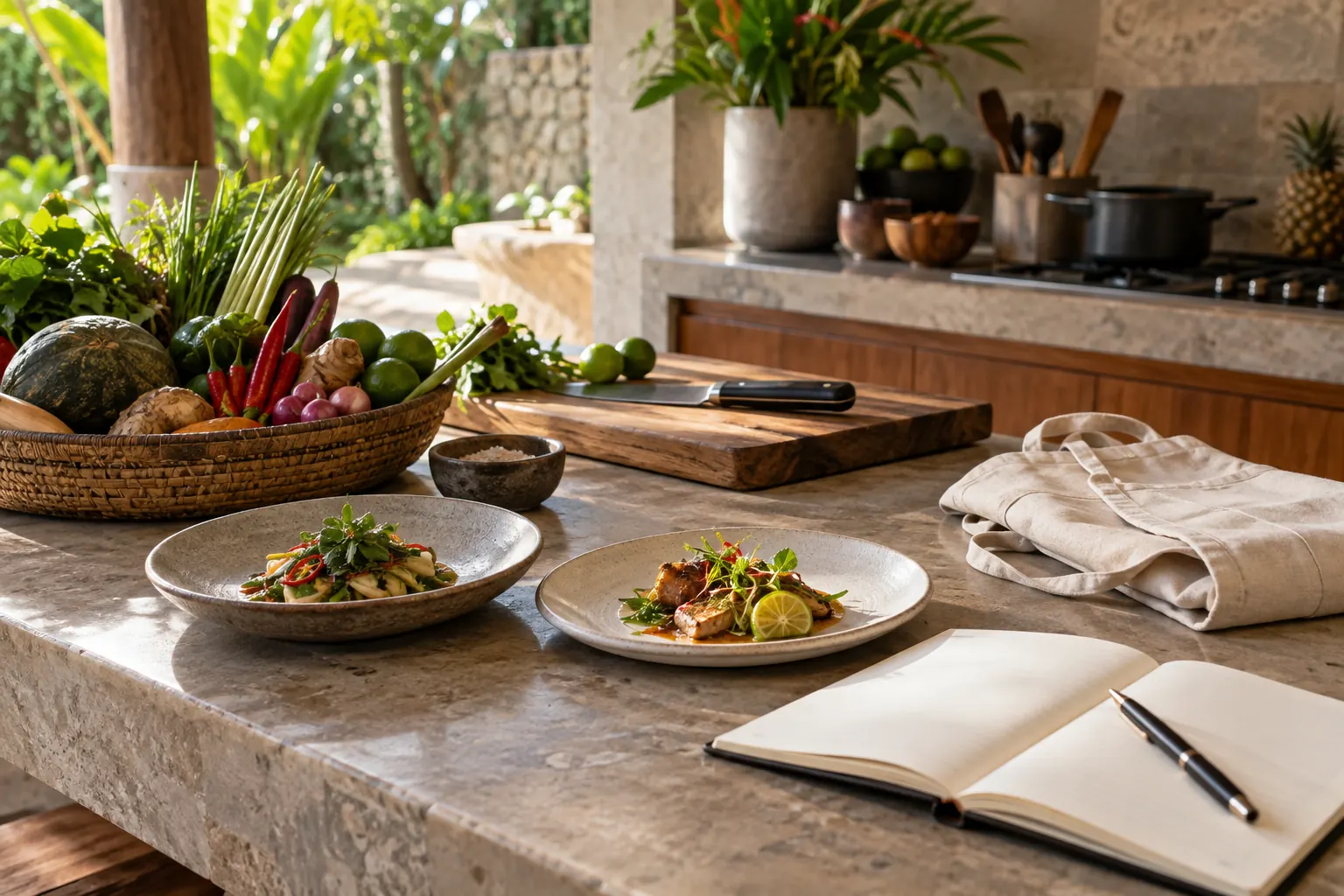
A professional chef works on multiple components in parallel. They need at least 1.5 to 2 metres of clear, cleanable counter space beside the hob. Marble and stone surfaces are standard in Bali villas and fine for cold work and plating. Problems arise when the counter is divided by a sink, cluttered with villa ornaments, or so narrow that mise en place trays do not fit beside each other.
Stone surfaces heat up in tropical sun during the day and retain that heat into the evening. A good prep surface stays cool enough to work comfortably; ask whether the kitchen is air-conditioned or at least well cross-ventilated.
3. Refrigeration and Cold Storage
A private chef working from a villa needs to store raw proteins, prepped components, and plated desserts separately. A single household fridge is limiting for a group of eight and inadequate for twelve or more. The best villa kitchens for chef use have at minimum a large main fridge (400L+) plus a separate freezer or a secondary fridge for drinks, freeing all cold space for food.
If the villa only has a small bar fridge and a combined fridge-freezer unit, the chef will manage, but it adds constraints, typically requiring same-day sourcing and limiting how far ahead cold preparation can be done. For events and larger dinners, this matters.
4. Ventilation and Extraction
Cooking for a private dinner involves high heat, open flame, and significant steam. Without proper extraction (a hood that genuinely draws smoke rather than just recirculating it), an evening's cooking fills the villa with food smells and residual smoke. This is particularly relevant for grill work, wok cooking, or any dish involving reduction at high heat.
Look for an over-hob extraction hood connected to a duct that leads outside the building. Recirculating hoods with charcoal filters are better than nothing but will not cope with serious cooking. In open-plan villas where the kitchen flows into the dining and living area, extraction quality directly affects the guest experience.
Secondary Checks Worth Making
- Knife block or magnetic strip: A professional chef brings their own knives, but having a stable, accessible storage point matters for a safe working kitchen.
- Power outlet placement: Blenders, immersion circulators, and stand mixers need power near the prep surface, not across the room.
- Dining table clearance: The path from hob to table needs to be unobstructed. Nothing kills a plated course like a chef navigating through a narrow doorway while balancing eight hot plates.
- Waste disposal: A private chef generates food waste through prep and service. Knowing where bins are and having clear access to outdoor disposal keeps the kitchen hygienic through a long evening.
What a Private Chef Will Adapt Around
A professional chef working in villa environments (which is almost all experienced Bali-based private chefs) is used to adapting. They pack additional equipment to cover gaps: portable induction units, extra cutting boards, their own service tools, mise en place trays, thermometers, and spare power strips. A kitchen that scores seven out of ten on the checks above is workable with some adaptation. A kitchen that scores three out of ten, with one burner, no ventilation, and a bar fridge, will limit what a chef can actually deliver.
The simplest way to avoid surprises is to send the chef your villa details before booking. A short conversation about the kitchen usually surfaces any real limitations quickly, and a good chef will either adapt the menu to what is possible or flag clearly when a format needs rethinking. myCHEF does this as part of every pre-event consultation: explore the full process on our catering page, or request a quote with your villa details and we will advise accordingly.
Quick Kitchen Checklist for Villa Bookers
- Four or more burners, ideally gas
- 1.5m+ of clear prep counter beside the hob
- 400L+ refrigeration for groups of eight or more
- Ducted extraction hood above the hob
- Clear path from kitchen to dining table
- Power outlets near the prep surface
- Accessible waste disposal
A villa that ticks five or more of these boxes will support a genuinely excellent private chef experience. For further guidance on planning a private chef dinner in Bali, see our cost guide and area-specific service guides.