Here is a distinction almost every menu in Bali blurs, and almost no visitor arrives knowing: Balinese food is not the same as Indonesian food. Nasi goreng, gado-gado and rendang are Indonesian — beloved, everywhere, and well worth eating. But they are not, in any meaningful sense, Balinese. The dishes that belong to Bali specifically are a smaller, older and far more interesting family. Knowing the difference changes what you order, what you cook, and how much of the island you actually taste.
Why Bali is different in the first place
Indonesia is the world's largest Muslim-majority country. Bali is a Hindu island. That single fact reshapes the food. Balinese cuisine is built around Hindu ceremony — temple anniversaries (odalan), Galungan, and the communal feast known as megibung — and it uses pork freely, most famously in babi guling, the spit-roasted suckling pig that is a genuine ceremonial dish rather than a tourist novelty. Across much of Indonesia, pork is absent from the table. In Bali it is central. Food here is offered to the gods before it is eaten by people, and that context is not decoration — it is the reason the dishes exist at all.
What is distinctly Balinese
These are the dishes that are Bali's own:
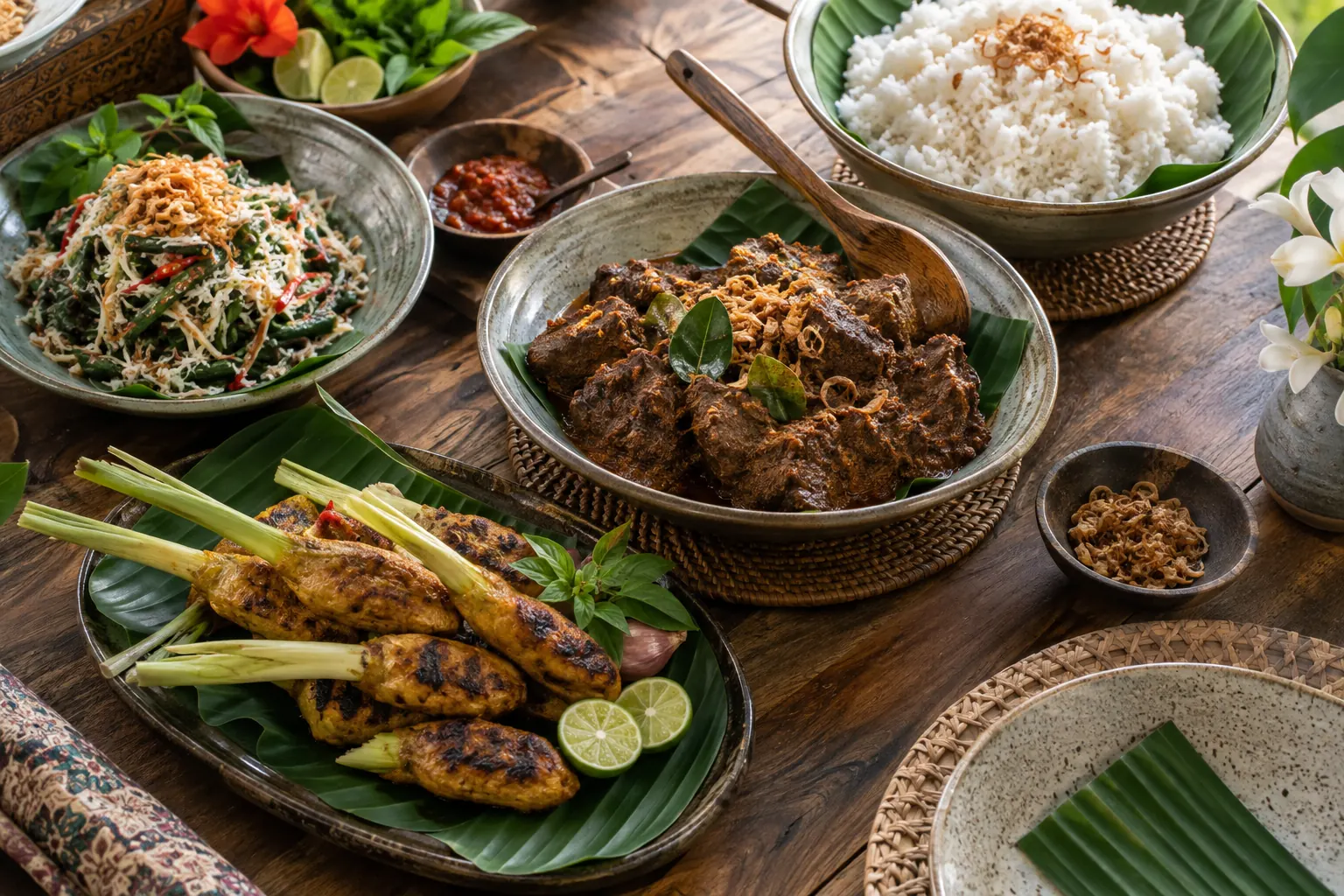
- Betutu — chicken or duck rubbed with base genep, wrapped in banana leaf and slow-cooked for hours. The ceremonial centrepiece.
- Lawar — a finely chopped salad of vegetables (or meat), fresh grated coconut and spice, traditionally prepared in large batches for ceremonies.
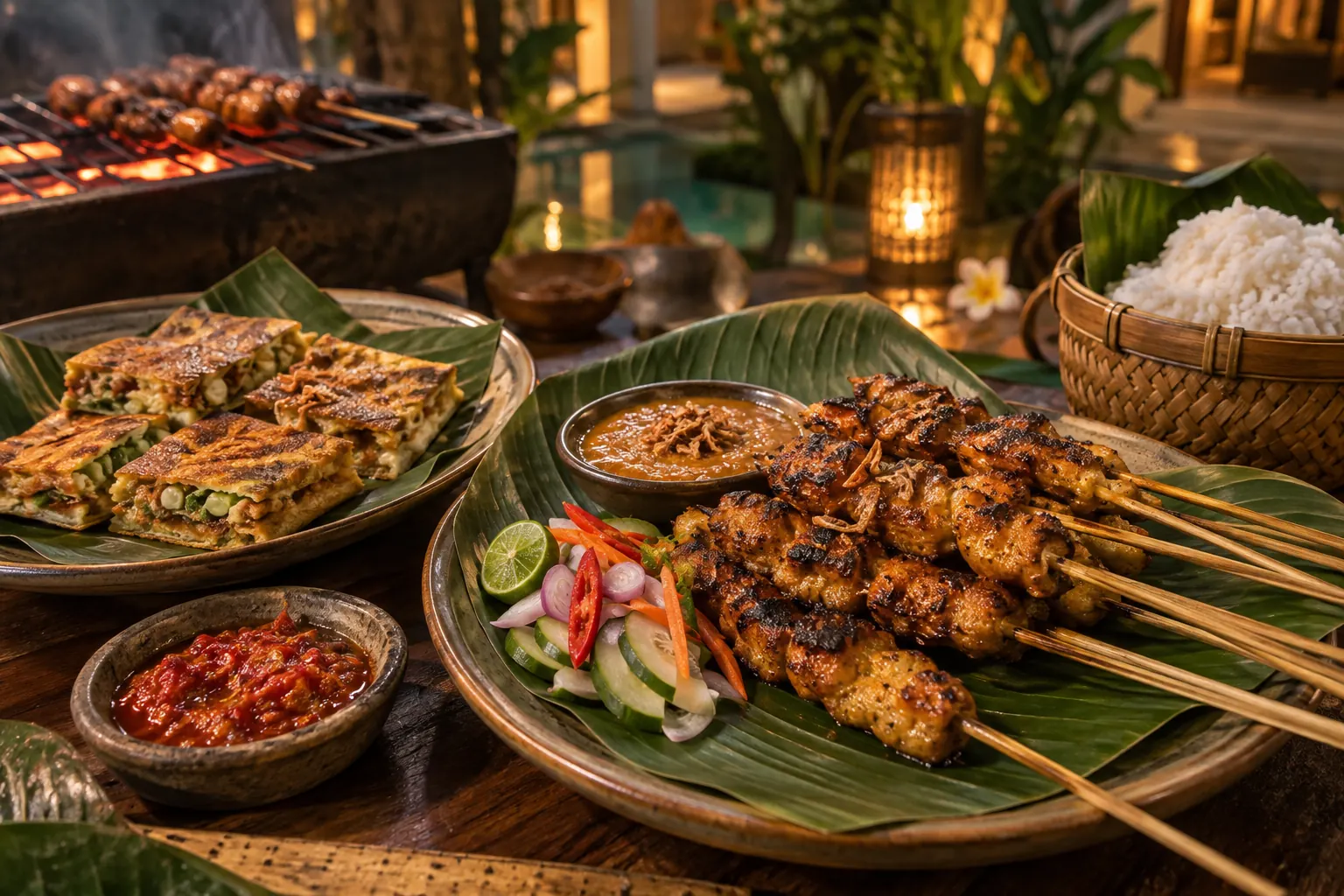
- Sate lilit — unlike the skewered sate found across Indonesia, Balinese lilit is minced fish or chicken bound with coconut and spice paste, moulded onto lemongrass stalks and grilled.
- Sambal matah — a raw sambal of thinly sliced shallot, lemongrass, chilli and lime. No cooking; pure freshness. Arguably Bali's greatest gift to the table.
- Pepes ikan — spiced fish steamed and grilled inside banana-leaf parcels.
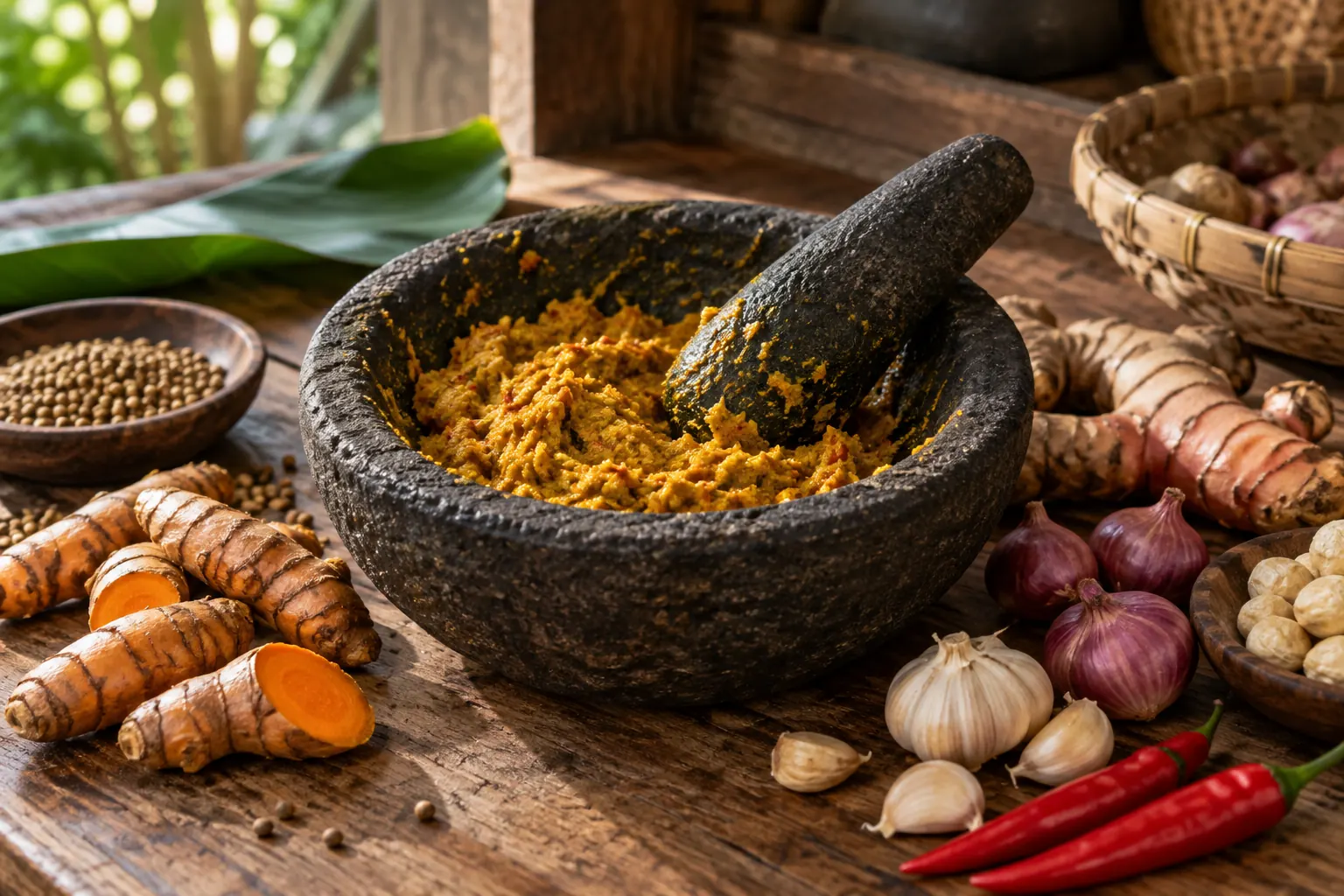
What unites them: base genep, raw sambals, banana-leaf cooking, coconut in savoury dishes, and a ceremonial logic running underneath.
What is pan-Indonesian (and still delicious)
The dishes most visitors already know are shared right across the archipelago:
- Nasi goreng and mie goreng — fried rice and noodles, the national comfort foods.
- Gado-gado — blanched vegetables with a warm peanut sauce.
- Rendang — the slow-cooked beef of the Minangkabau people of Sumatra, not Balinese at all.
None of this is a criticism. A great nasi goreng is a great thing. The point is simply honesty: when a "Balinese cooking class" teaches you nasi goreng and calls it Balinese, you have been shortchanged on the most interesting half of the island's food.
Why the distinction matters to you
Two reasons. First, ordering: in a warung or at a ceremony, knowing to ask for lawar, betutu or a proper sate lilit gets you food most tourists never try. Second, cooking: if you take a class, the distinction tells you whether you are learning Bali or learning the Indonesian greatest hits. We label our menus plainly for exactly this reason — the genuinely Balinese dishes and the pan-Indonesian crowd-pleasers, each marked as what it is.
Taste the difference for yourself
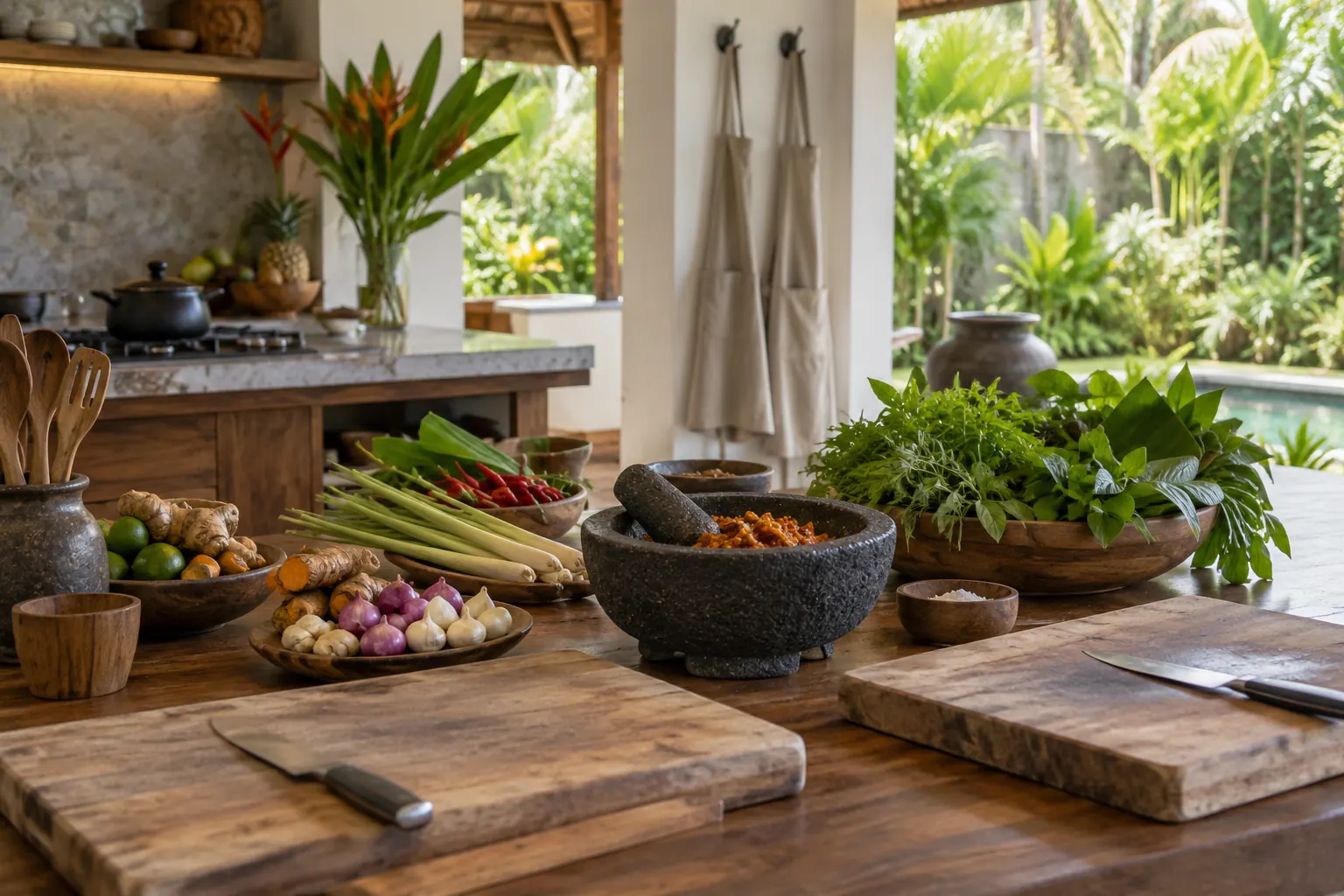
The fastest way to understand Balinese food is to cook it — to pound base genep, mould sate lilit onto lemongrass, and mix a sambal matah by hand. Our private cooking classes run in your own villa kitchen, Balinese-focused by default, with every dish explained as you go. From IDR 700,000 per person (minimum 4 guests). Message myCHEF on WhatsApp to plan yours, or read our chef's guide to base genep, the island's master spice paste.