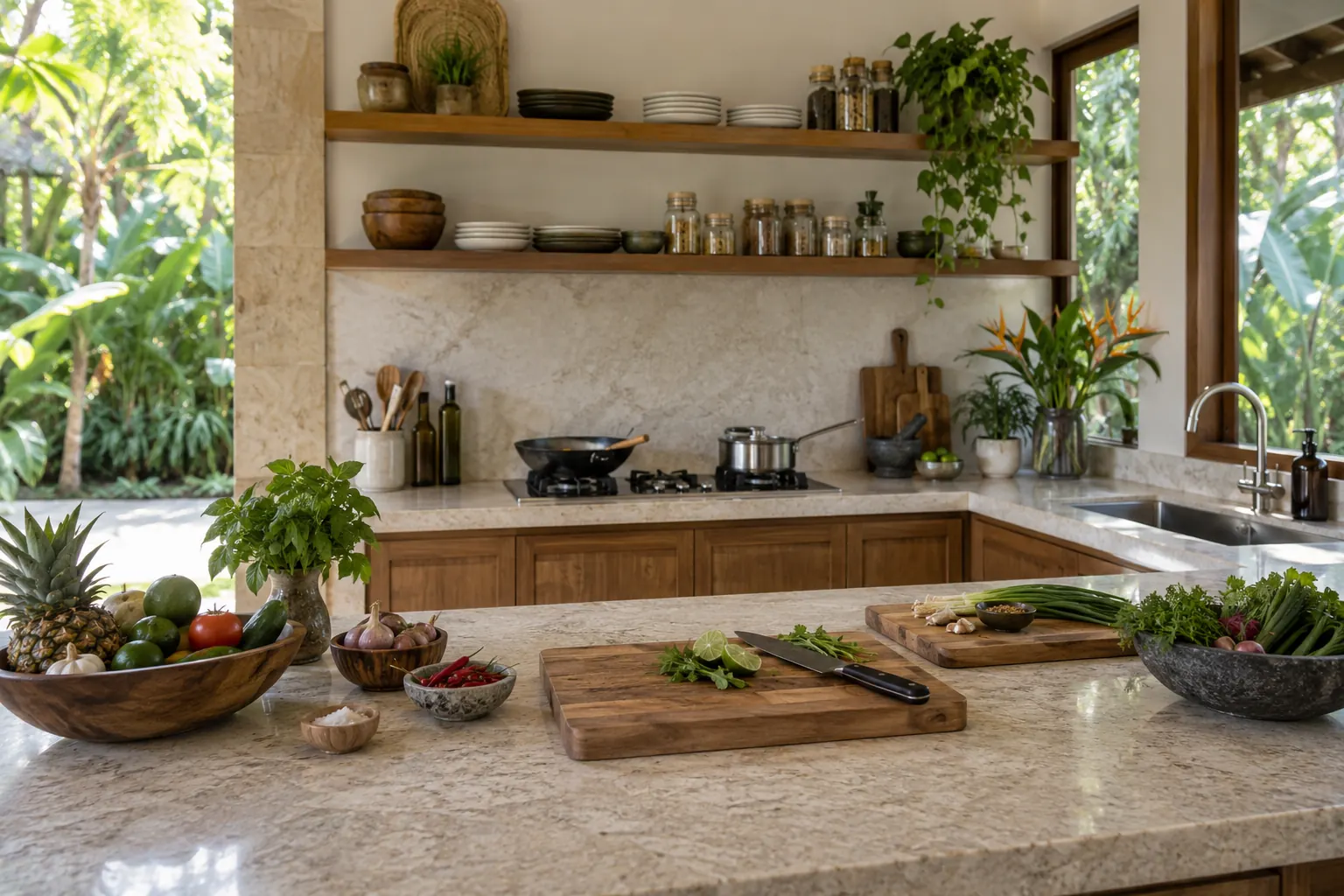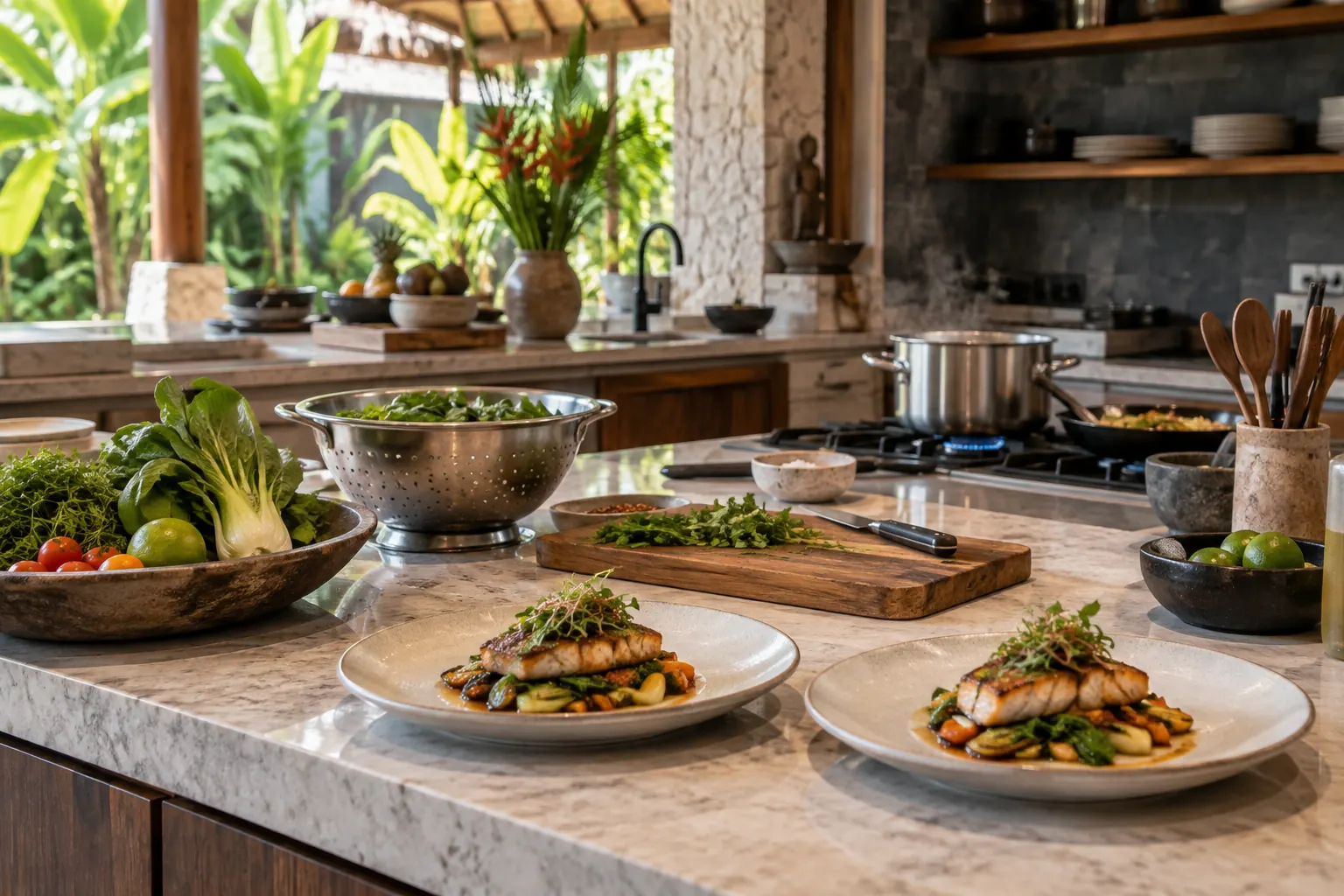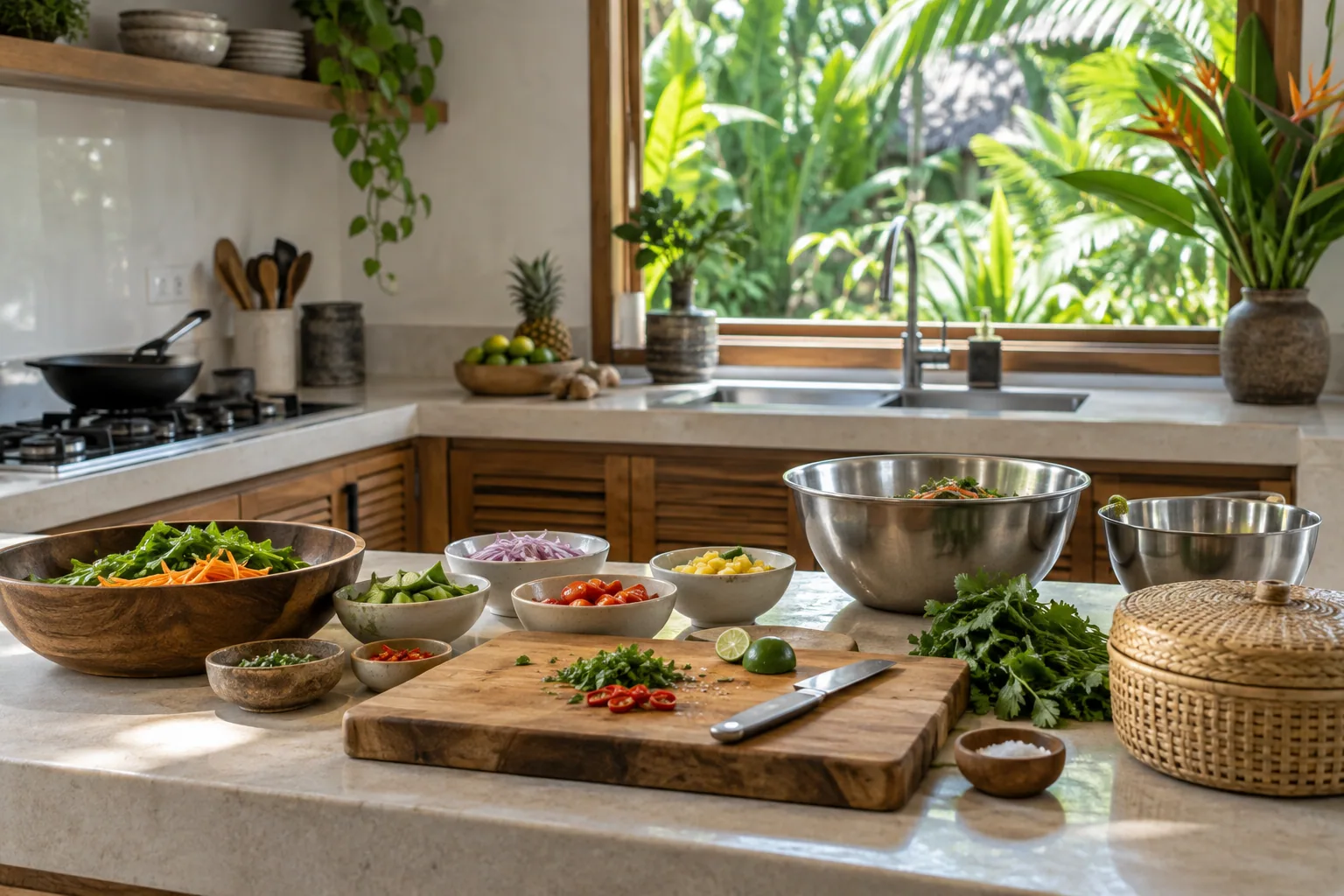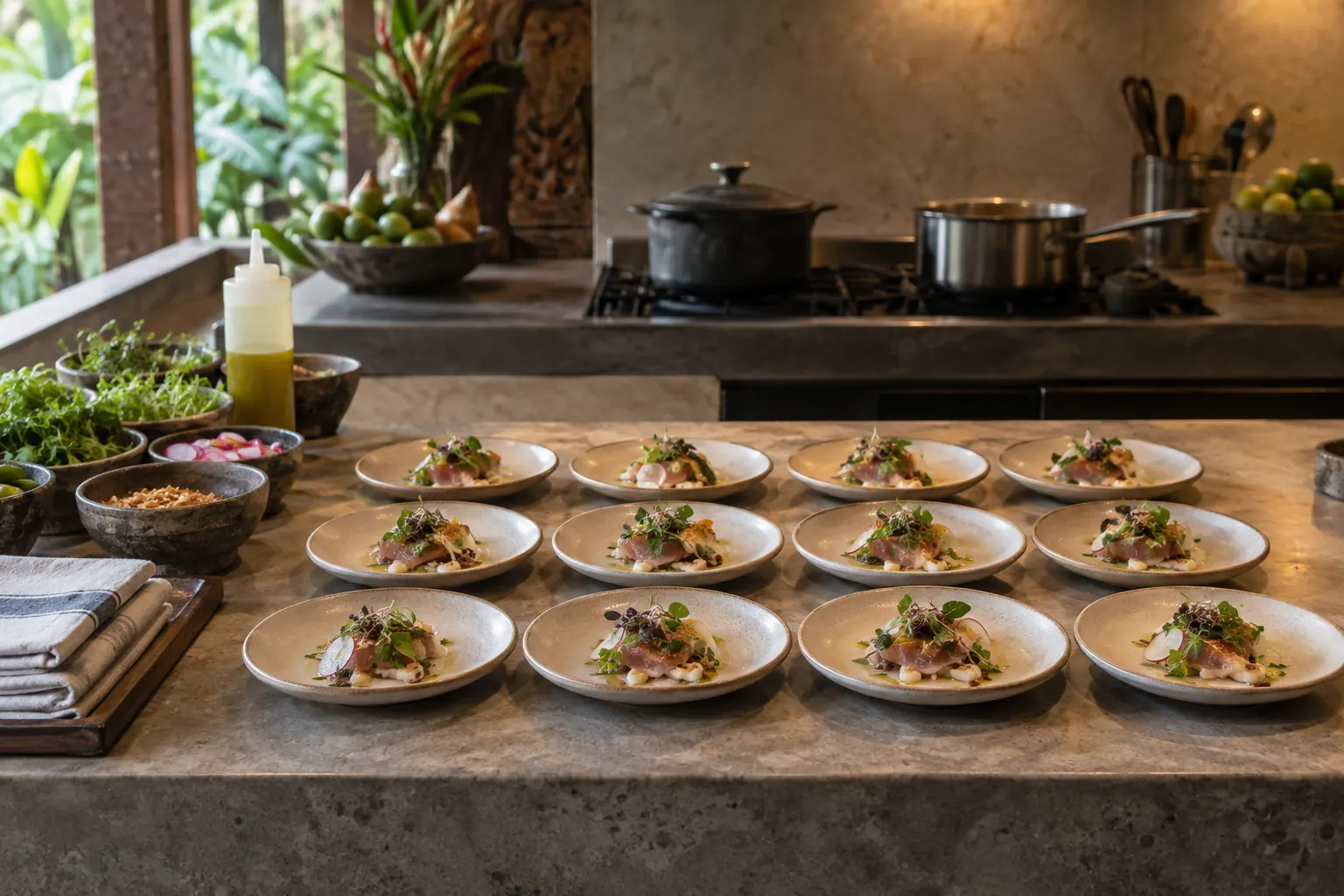
Private chef Bali preparation starts long before the first plate hits the table. For a 12-guest villa dinner, the visible part is maybe three hours: arrival, cooking, service, cleanup. The invisible part starts in the morning with the brief, the market run, the packing list, and one question asked over and over: what has to be true for dinner to feel effortless tonight? That is the real work. It is also why guests usually experience a calm table instead of the logistics behind it.
This is the part of the business most people never see. They see a clean counter, well-timed courses, and a team that knows where to stand. They do not see the ingredient checks, backup gear, or the decision to bring extra ice because the villa freezer looked weak in the photos. That is the difference between a chef showing up to cook and a team preparing to deliver a proper villa dinner service.
The Morning Starts With the Guest Brief
For a 12-guest service, the day starts with the run sheet. Guest count. Arrival time. Dietary notes. Table shape. Kitchen photos. Weather. Service style. If the villa is in Seminyak, the team may plan for a tighter arrival window and easier restocking. If it is in Uluwatu, the team usually checks travel time and sunset timing more carefully because both affect the first course.
The point of the brief is not paperwork. It is sequence. A mixed-diet table for 12 behaves differently from a table where everyone is eating the same menu. A family-style dinner needs a different plating flow from a course-by-course service. One allergy can change which cutting boards travel in the van. One child at the table can change the pace of the first course. That is why the early brief matters as much as the ingredients.
Shopping and Packing Happen Before the Van Leaves
Once the menu is locked, the sourcing run is practical, not theatrical. Seafood and herbs are checked for freshness. Meat is portioned to the service plan. Garnishes are cut or protected so they travel well in Bali heat. Nothing goes in the van because it looks nice on a list. It goes in because it has a job once the team reaches the villa.
The packing list usually covers more than guests expect: knives, pans, boards, service tools, backup tongs, plating spoons, thermometers, sanitizing gear, cloths, aprons, waste bags, and table-touch items if the villa setup needs help. That is one reason guests who read our villa kitchen guide tend to brief better. They understand that a beautiful kitchen photo does not answer whether there is enough cold storage, enough counter space, or a clean path from stove to table.
The myCHEF standard is simple: assume less, carry more, and keep the extra gear invisible unless it is needed. That is how the team protects the night without making the villa feel like an event loading bay.
On-Site Setup Is About Flow, Not Show
When the team arrives, the first job is not cooking. It is mapping the room. Where will plates rest before service? Where will used dishes move? Which side of the island gives the chef the safest working space? Where can the service lead stand without interrupting the table? A 12-guest dinner is large enough that bad flow shows up immediately. Good flow disappears into the night.
This is also where preparation saves time. If the fridge is smaller than expected, the team already knows what can stay chilled in backup storage. If the dining table is outside, candles, wind, and plate temperature all matter. If the villa stairs are steep, heavier service items move early so nobody is carrying them mid-service. Guests usually read this as confidence, which is fair. But the confidence comes from preparation, not performance.
Trust also comes from clarity. Guests who want to understand the standard behind the service can start with why myCHEF or meet the people behind the work on the chefs page. A polished dinner is never just one talented cook. It is a system.
Service Only Feels Easy Because the Reset Is Planned Too
Once dinner starts, the team is no longer improvising. The first course lands fast enough to settle the table. Shared dishes or plated mains move at a pace that keeps conversation alive. The service lead watches water, wine, and clearing points so the chef can stay focused on the next plate. For 12 guests, timing matters more than decoration. Ten strong minutes between courses feels elegant. Twenty slow minutes feels like a problem.
Cleanup is part of the service, not what happens after the service. Used pans are managed as the meal goes on. Waste is consolidated. The kitchen is reset in stages so the final 20 minutes are calm. That is why many guests walk back into the villa after the last course and wonder how the team left so little trace. The answer is not speed. It is that the reset began before dessert was served.
That behind-the-scenes discipline is what lets a 12-guest villa dinner feel intimate instead of operational. The food matters. So do the details guests never notice. Together, they are the reason the night feels finished, not merely served.
FAQ
How early does the team prepare for a 12-guest villa dinner?
Usually the real preparation starts in the morning with the brief, sourcing, and packing. On-site arrival is only one part of the workday.
Why does kitchen information matter so much before the booking?
Because kitchen layout affects prep flow, cold storage, service timing, and what equipment the team needs to bring to execute cleanly.
Is cleanup handled after the meal or during service?
Both. Strong teams reset continuously during service so the end of the night feels calm and the villa returns to order quickly.