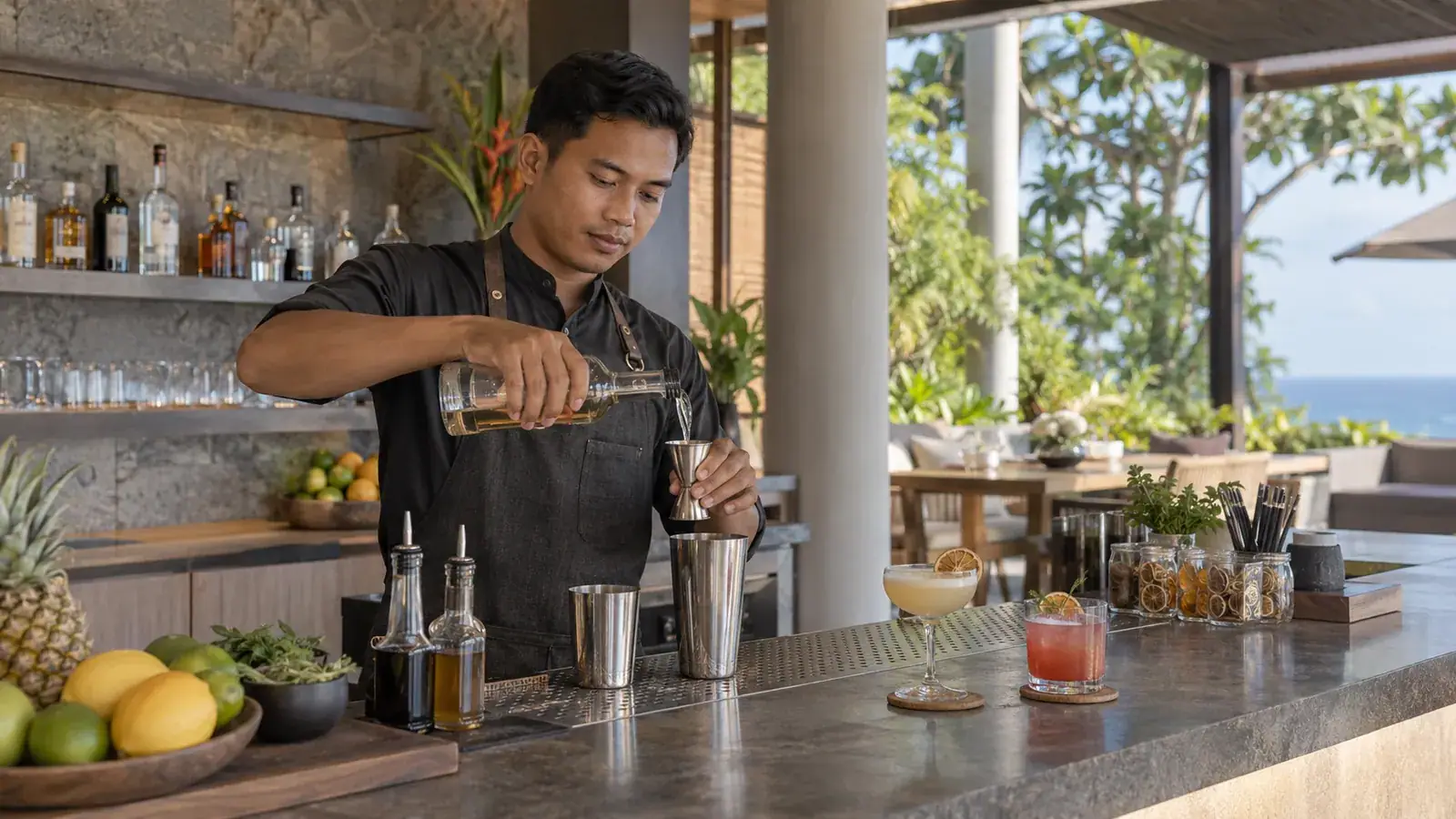
Bar Staff Training Bali
Turn your bar team into consistent, confident operators who protect margins and improve the guest experience.
Google reviews
Read on GoogleUntrained staff cost you more than you think
In Bali, most front-of-house bar roles must be filled by local talent, but formal bar training is rare. Inconsistent pours, slow service, and wasted inventory silently drain revenue every shift.
MyChef Bar Training gives your team the practical skills and systems to perform confidently from day one.
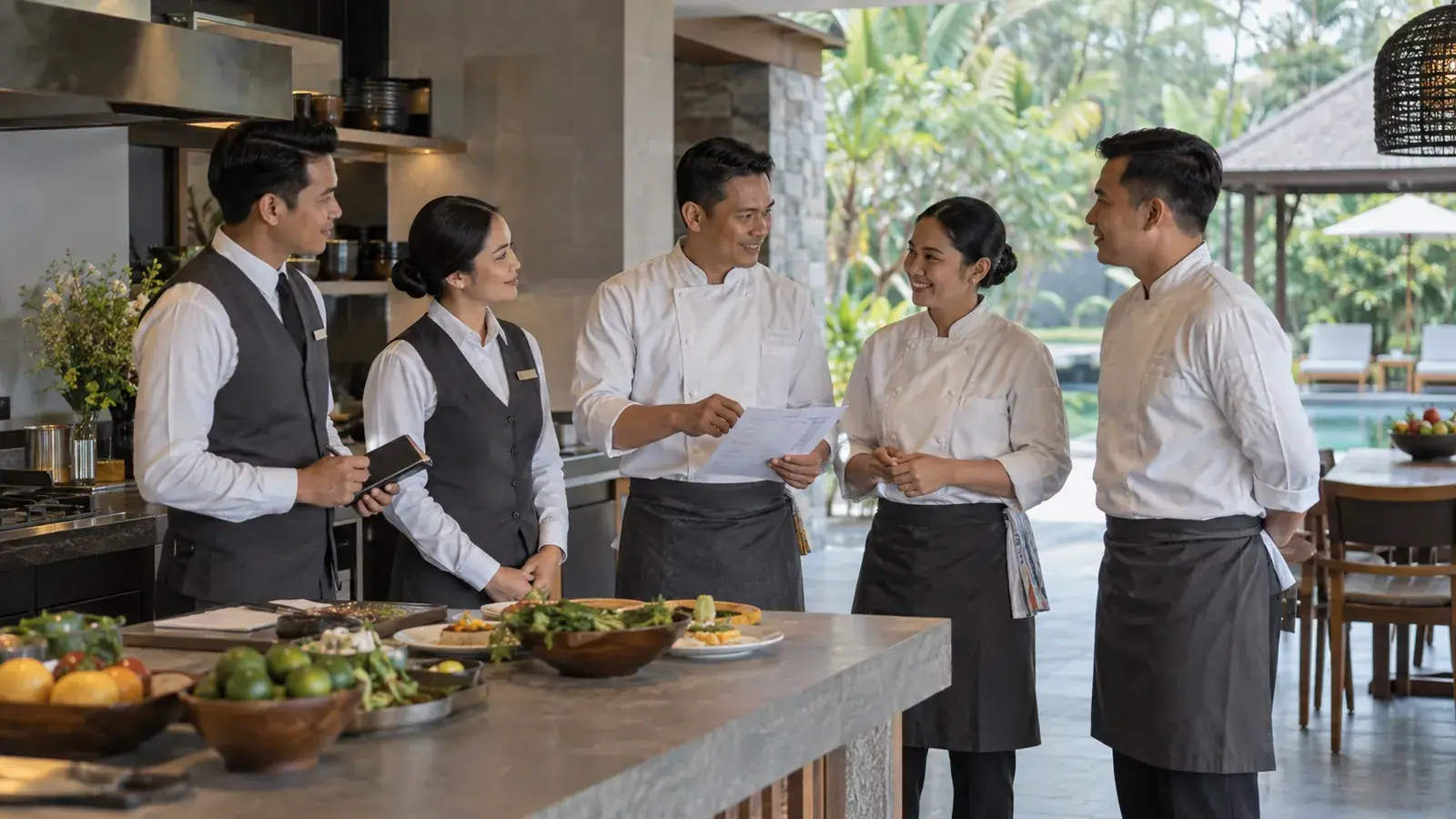
What we deliver
Skills assessment
Benchmark current ability across service, speed, and product knowledge.
Custom training programme
Built for your venue type, menu, and guest expectations.
Hands-on sessions
Practical training behind your actual bar with real equipment.
Reference materials
Recipe cards, checklists, and SOPs your team can use daily.
Live feed from events
View on InstagramOur process
Briefing
We review your menu, team, and biggest pain points.
Assessment
Current skills are benchmarked across key competencies.
Training
Practical, venue-specific sessions with live feedback.
Handover
SOPs, checklists, and a follow-up plan are delivered.
Briefing
We review your menu, team, and biggest pain points.
Assessment
Current skills are benchmarked across key competencies.
Training
Practical, venue-specific sessions with live feedback.
Handover
SOPs, checklists, and a follow-up plan are delivered.
Everything in the programme
Trained by operators who understand Bali
Curriculum built for Indonesian bar teams
Practical, venue-based delivery
Focus on margin protection and guest satisfaction
Why bar staff training matters in Bali
Bali's hospitality market runs on a structural talent constraint: Indonesian law does not issue work permits for front-line bartenders, so the experienced mixologist you would like to import is not an option. Most formal bar training available on the island is either consumer-grade or non-existent, which means your local team is learning on the job while guests post reviews. In a market where a weak cocktail mention can undo a five-star accommodation experience, practical, venue-based training is the only durable edge.
The turnover economics make training even more critical. Bartenders in Bali typically earn Rp 3.3–3.9 million per month and will move for a small pay rise, taking whatever consistency your bar had with them. A documented training system turns individual know-how into institutional capability, so a resignation becomes a manageable handover instead of a quality collapse.
The seasonal rhythm of Bali also rewards readiness. A well-trained core team absorbs peak-season pressure without the quality drop that produces one-star reviews, and it reduces the panic hiring that leads to compliance mistakes and guest complaints. Training therefore pays for itself in lower turnover, fewer incidents and stronger review language.
MyChef runs a five-level programme ladder — Bar Basics, Professional Bartender, Advanced Mixology, Bar Service Excellence and Manager Track — delivered at your venue, on your bar, using your own menu. Each level mixes morning theory with afternoon practical work, and every graduate completes a mandatory Responsible Service of Alcohol module and a timed practical assessment before certification. Group programmes start from Rp 2.75 million per participant, making structured training a fraction of the cost of one bad hire.
Venues that benefit from training
Boutique & luxury hotels/resorts
Beverage Manager vacancies are chronic and flagship reviews are dragged down by bar quality.
Villas & villa-management companies
Butlers double as bartenders with no formal training while guests expect resort-standard in-villa drinks.
Beach clubs & day clubs
Volume exposes every inconsistency; weak, watery cocktails and slow rounds damage the brand.
Restaurants & cafés
Untrained front-of-house staff and inconsistent drinks are repeatedly cited as top F&B failure drivers.
Expat/foreign-owned venues
Owners cannot legally work the bar themselves and need English-delivered training for local teams.
Common mistakes venues make
- Hiring for "experience" without verifying practical skills or service standards.
- Relying on a senior bartender to train everyone informally, then losing that knowledge when they resign.
- Sending staff to consumer mixology classes that do not transfer to your venue, menu, or volume.
- Ignoring Responsible Service of Alcohol until an incident creates licence exposure.
- Treating training as a one-off event instead of an ongoing system with refreshers.
Compliance and responsible service
Every MyChef training level includes a mandatory Responsible Service of Alcohol module. Under Indonesia's updated criminal code, serving an intoxicated guest can expose staff to criminal penalties and the venue to licence consequences, so refusal-of-service technique, ID checking, and incident logging are trained and assessed before any certificate is issued.
We also align the curriculum with SKKNI national bartender competencies and can arrange optional BNSP national assessment through a licensed assessor. Training alcohol remains the venue's stock under its own SIUP-MB, and MyChef never takes title to or sells alcohol.
Certificates are awarded only after a written test and a timed practical covering three drinks to spec plus one refusal-of-service scenario. Graduates who pass enter a 30-day check-in where we conduct a blind taste test, spot coaching and a closure report, so the skills are verified in service rather than forgotten in a classroom.
Training success KPIs
How training connects to other MyChef services
Training is the foundation that makes every other bar service work. Graduates who excel can be fast-tracked into our Permanent Bar Staff Recruitment pipeline or deployed through Temporary Bartender Staffing while your own team continues to develop. Venues that train often discover they also need a menu their team can execute to spec, which leads naturally into Cocktail Menu Development or Signature Cocktail Creation.
For operators who want the result without the day-to-day management, training feeds into Monthly Bar Management Support and the Complete Bar Performance Programme. The 30-day check-in findings give us a clear handover point, so coaching continues instead of stopping the moment the certificate is handed over.
The training line also creates a renewable talent pipeline. Because Indonesian law reserves front-line bar roles for local talent, the only sustainable way to raise quality is to develop it. MyChef uses training graduates to replenish the temporary staffing pool continuously, so clients who book cover benefit from the same assessed standard that permanent recruitment clients receive.
Recommended next steps: our B2B bar consultancy, vetted temporary cover while your team trains, hire from an assessed talent pool, a menu your team can execute to spec, bartender salary benchmarks, staffing-ratio guide.
Great bars don't happen by accident. They happen when seasoned operators design every pour, every process, and every guest moment with intention.
You may also need
Bartender Hire Bali — Temporary Bar Staffing
Vetted bartenders and barbacks for events, weddings and venue cover — employed by us, zero employment-law risk to you.
ExploreBar Audit & Improvement Bali
A four-pillar operational audit that finds what your bar is losing, prices it in rupiah and hands you a prioritised 90-day fix plan.
ExploreMonthly Bar Management Support Bali
Senior bar leadership on retainer — stock control, menu reviews, training refreshers and owner-grade reporting.
ExploreBar Staff Training in Bali — Certified Programmes Delivered on Your Bar
Bali has hospitality schools and consumer cocktail classes, but no specialist that trains working bar teams inside the venues that employ them. MyChef Bar Training fills that gap: a five-level, certification-backed programme delivered on your bar, with your equipment and your menu, measured against pass rates we publish.
Get a fixed written training quote
Why Untrained Bar Teams Are a Margin Problem
Indonesian manpower rules reserve front-line bar roles for local talent, so importing an experienced mixologist is not an option — capability has to be built, not bought. Meanwhile bartenders in Bali typically earn Rp 3.3–3.9 million a month and will move for a small rise, taking your consistency with them. When recipes live in one senior bartender's head, a resignation becomes a quality collapse that shows up in reviews within weeks.
A documented training system converts individual know-how into institutional capability. It also pays: fewer over-pours, faster rounds, fewer remade drinks, and a team that absorbs July–August and year-end peaks without the service drop that produces one-star reviews.
The Programme: Five Levels on Your Own Bar
- Bar Basics — hygiene, station setup, glassware, core technique.
- Professional Bartender — measured pouring, classic builds, speed of service.
- Advanced Mixology — flavour construction, batching, menu-level execution.
- Bar Service Excellence — guest interaction, upselling, complaint recovery.
- Manager Track — costing, stock control, rota and team leadership.
Each level mixes morning theory with afternoon practical work behind your actual bar. Most programmes run one to three days per level, scheduled so your team is never off the floor longer than necessary. Every participant completes a mandatory Responsible Service of Alcohol module — refusal technique, ID checks, incident logging — because overservice now carries criminal and licence exposure for your venue and your staff.
A Certification Standard With Teeth
Certificates are earned, not attendance-based. Each graduate passes a written test plus a timed practical: three drinks built to spec and one live refusal-of-service scenario. Our published benchmarks: at least 85% first-time pass (with one free re-sit inside 30 days), and 100% RSA completion before any certificate is issued.
The curriculum aligns with SKKNI national bartender competencies, and we can arrange optional BNSP national assessment through a licensed assessor for venues that want government-recognised certification — useful for hotel groups with formal HR frameworks.
After Certification: The 30-Day Verification
Training fails when it ends at the certificate. Thirty days after graduation we return for a blind taste test and spot coaching during live service, then issue a closure report. Our target: at least 90% of graduates still pouring to spec at that check. If the number slips, coaching continues — the 30-day findings also hand over cleanly into monthly bar management support for venues that want the standard held permanently.
Pricing and What's Included
Group programmes start from Rp 2.75 million per participant. Every programme includes:
- Pre-training skills assessment across service, speed and product knowledge
- A customised plan built on your menu, volume and guest profile
- Hands-on practical sessions on your bar
- Recipe cards, checklists and SOPs your team keeps
- Train-the-trainer notes for your managers
- The 30-day follow-up verification and closure report
A structured programme costs a fraction of one bad hire — and unlike a hire, the system stays when people leave. Training alcohol remains your stock under your own licence; we never take title to or sell alcohol.
Who Trains With Us
Hotels and resorts fighting chronic beverage-manager vacancies; beach clubs where volume exposes every inconsistency; restaurants whose drinks list underperforms their kitchen; villa operators whose butlers double as untrained bartenders; and expat-owned venues that need English-delivered training for local teams. While your team trains, vetted temporary cover keeps service running — and standout graduates can enter our assessed recruitment pipeline.
Evaluate the training: Record baseline pours, recipe execution and service checks before training. Recheck the same measures after the programme to identify improvements and any remaining coaching needs.
Bar Staff Training FAQ
How much does bar staff training cost? Group programmes start from Rp 2.75 million per participant, with the final fixed quote based on participant count, training days and custom modules such as train-the-trainer or BNSP preparation. Quoted ++ (11% government tax + 10% service charge).
How long does a programme take? One to three days per level, scheduled around your service rhythm after an initial skills assessment.
What team size do you train? From small villa F&B teams to full beach-club bars. Group pricing applies; tell us your headcount and we will structure the cohorts.
Is the certification recognised? Certification is skills-assessed against SKKNI-aligned competencies, with optional BNSP national assessment via a licensed assessor. Pass requires a written test, a timed three-drink practical and a refusal-of-service scenario.
Which areas do you cover, and in what language? All of Bali, delivered on-site at your venue. Training is delivered in English and/or Bahasa Indonesia to suit your team .
What happens after the programme? A 30-day verification visit with blind taste testing, spot coaching and a closure report — plus optional continuation into monthly management support.
Get a Fixed Training Quote
Send your venue type, team size and biggest service challenge to +62 896-7407-2020 (WhatsApp) or bali@mychef.id. A bar specialist replies within four business hours with available dates and a fixed written quote.
Questions about Bar Staff Training
Straight answers to help you decide if this service fits your venue.
Still deciding?
Send your date, guest count and villa area — we reply within 1 hour with a fixed quote.
Helpful reads
How Much Does a Bartender Cost in Bali? 2026 Guide | MyChef
Hiring a bartender in Bali depends on experience, service style, event length and season. This guide explains what drives cost and how to budget without locking in outdated figures. Request a quote for current rates.
Read moreHow Many Bartenders Per Guest? Bali Event Guide | MyChef
Staffing ratios for 20 to 300 guests: the 1:15–20 rule, when to add barbacks, and how ratios affect queue times and drink quality.
Read moreTell us about your bar project
We reply within four business hours with tailored next steps, availability and pricing.
Get the Bar Cost Leak Checklist
A 10-point checklist that shows where most Bali venues lose margin behind the bar — and the exact steps to fix it.