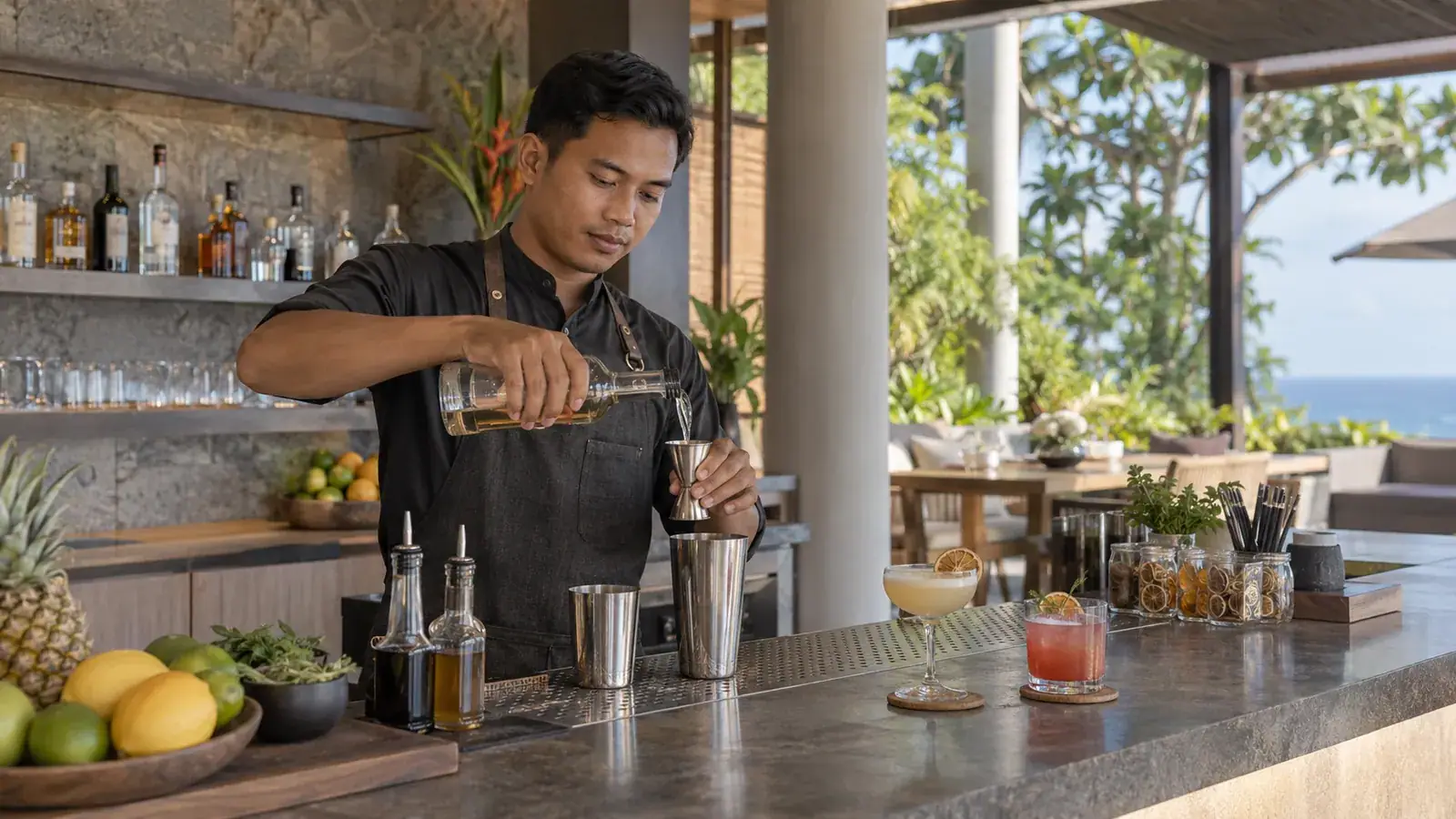
Event bartenders serving guests at a Bali villa wedding reception
Resource

How Many Bartenders Per Guest? Bali Event Guide

Staffing ratios for 20 to 300 guests: the 1:15–20 rule, when to add barbacks, and how ratios affect queue times and drink quality.

The standard staffing rule

For full cocktail service at a Bali event, plan one bartender plus one server or barback per 15–20 guests. This ratio keeps queue time under two minutes during peak pours and gives each bartender enough time to shake, garnish and serve to standard.

For simpler beer-and-wine or self-serve stations, one bartender per 30–40 guests is usually sufficient, provided glassware and ice are pre-positioned and replenishment runs are scheduled.

How service style changes the ratio

A passed-cocktail reception needs fewer bartenders than a busy sit-down bar where every guest orders individually. Table service requires more floor staff and fewer high-skill bartenders. Build-your-own cocktail or batch-punch stations can reduce live bartender count but need stronger prep and runner support.

Signature cocktails slow throughput. If your menu includes five or more bespoke shaken or stirred drinks, add one bartender per station or simplify the build of at least two high-volume options.

When to add a barback

A barback becomes essential once you have more than two bartenders on a station, or whenever the bar is more than a few steps from the back-of-house. Barbacks keep ice full, restock bottles, clear glassware and manage rubbish so bartenders stay in front of guests.

As a rule, add one barback for every two bartenders at high-volume events. At weddings and villa parties where the bar is outdoors or remote, barbacks also handle runner routes and protect service during rain or power issues.

Sample staffing by guest count

For 30 guests: 1 bartender + 1 server/barback. For 60 guests: 2 bartenders + 1 barback. For 100 guests: 3 bartenders + 2 barbacks. For 200 guests: 4–5 bartenders + 3 barbacks, often split across two stations. For 300 guests: 6–7 bartenders + 4 barbacks across three or more stations.

These numbers assume a four-hour service window with one peak hour. Longer events or unlimited open bars increase fatigue and consumption, so add one extra bartender or rotate staff every two hours.

Other factors that affect the count

Guest arrival pattern matters. If 80% of guests arrive within a 30-minute window, you need more bartenders than the same headcount arriving gradually. Bar layout, glassware supply, ice access and payment method also affect speed.

Always confirm staffing with your supplier at least one week before the event. MyChef holds a standby pool for confirmed booking blocks so no-shows do not leave you short-handed.
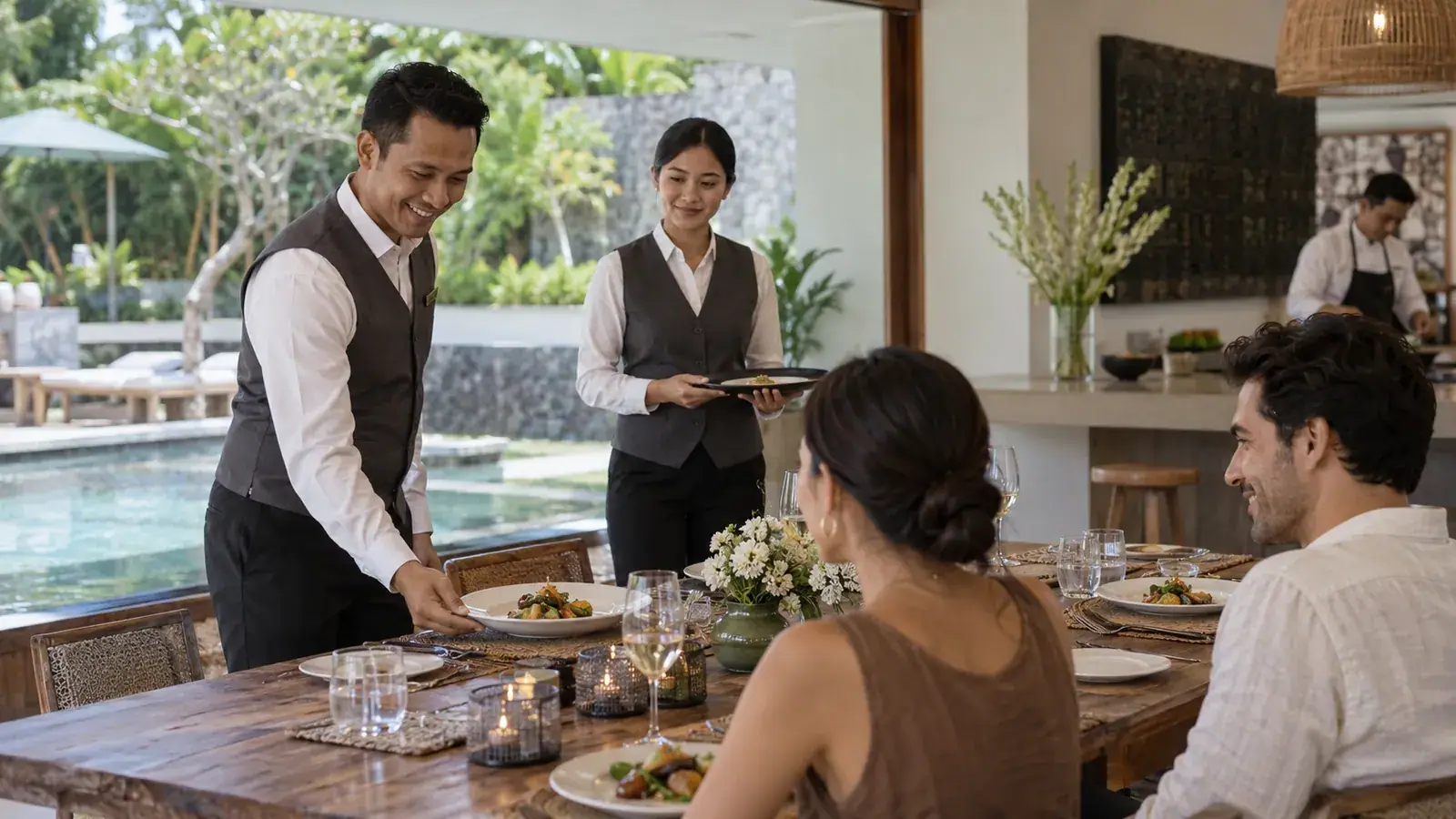
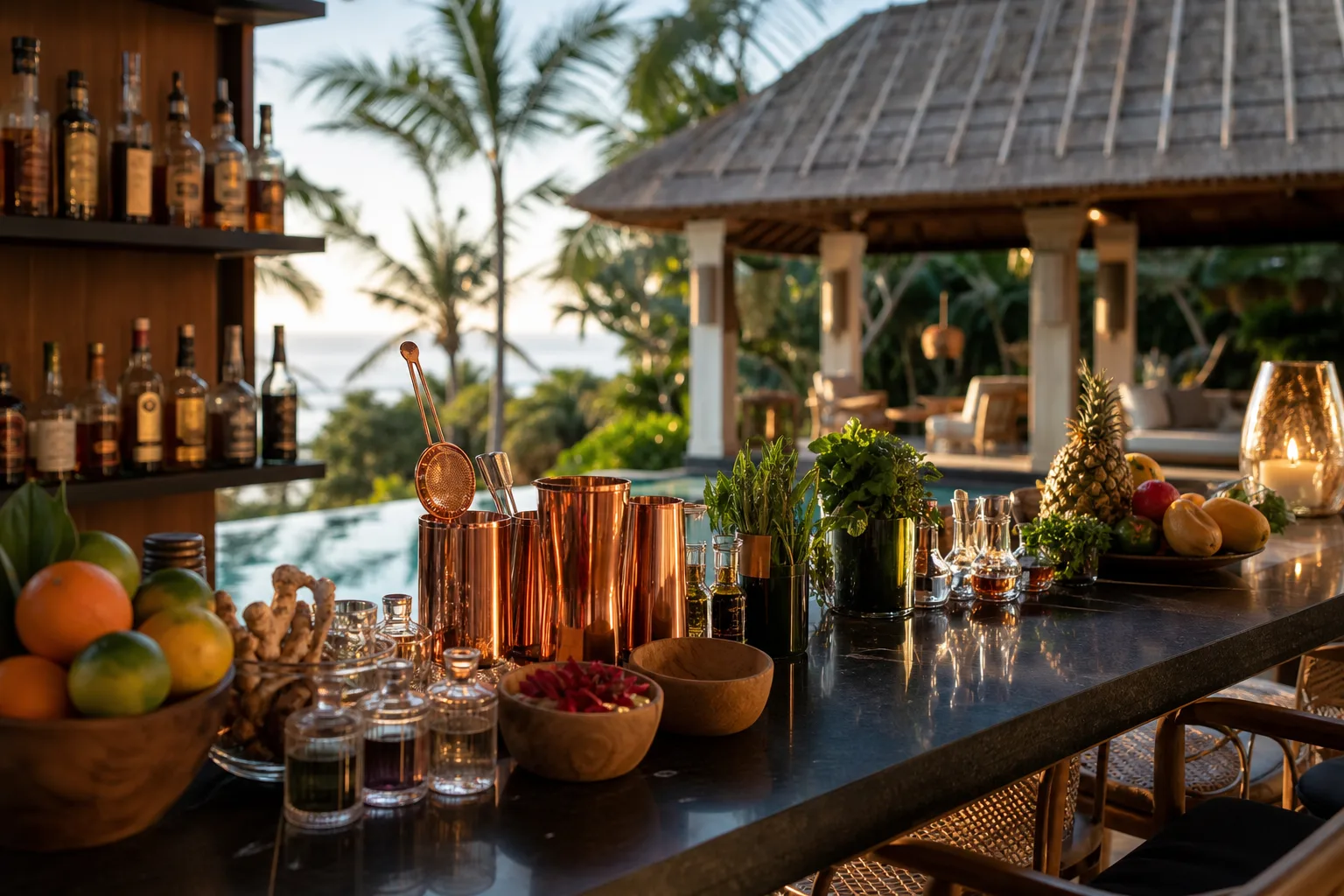
Event bartenders serving at a Bali villa party
Context

Why the right bartender count makes or breaks an event

One of the most common questions we hear from event organisers and villa hosts in Bali is also one of the most consequential: how many bartenders do I actually need? Understaff by even one person and guests spend the evening in queues while drinks arrive warm and poorly garnished. Overstaff and you pay for labour that stands idle. The right number depends on guest count, service style, menu complexity and the physical layout of the venue.

This guide gives you a practical starting ratio, explains when to add barbacks and runners, and shows how arrival patterns and drink menu design change the calculation. Use it to spec your crew, then ask MyChef to confirm the numbers for your specific Bali event.

Remember that a staffing ratio is only as good as the briefing and backup behind it. Even the right number of bartenders will struggle if glassware, ice and garnishes are not pre-positioned, or if there is no plan for replenishment during the peak hour. Good ratios are the starting point; good operations make them work.

Villa party bar setup in Bali
Deep dive

How service style and layout change the math

The standard rule of one bartender plus one server or barback per 15–20 guests applies to full cocktail service where every drink is made to order. This ratio keeps queue times below two minutes during the peak hour and gives bartenders enough time to shake, garnish and serve consistently. If your menu is beer-and-wine only, one bartender can comfortably cover 30–40 guests because the transaction time per drink is much shorter.

Service style changes the shape of the team, not just the headcount. A passed-cocktail reception needs fewer fixed bartenders because servers carry drinks to guests, but it needs more floor staff and a strong prep kitchen. Table service requires waiters who understand the menu and can pace orders. Build-your-own stations reduce live bartender demand but increase the need for barbacks who can restock, explain options and keep the area clean.

Signature and bespoke cocktails slow throughput significantly. A drink with five or more ingredients, fresh juice, house syrups or smoked garnishes can take two to three times longer than a beer pour. If your menu is heavy on these, either add a bartender per station or simplify at least two high-volume options into batchable serves.

Physical layout matters in Bali villas and beach clubs. Outdoor bars, remote stations, multi-level venues and spaces far from the back-of-house all slow replenishment. Rain, humidity and power issues can interrupt service. Barbacks become essential when the bar is more than a few steps from storage, and one barback per two bartenders is a sensible rule for high-volume events.

Time is another variable. A four-hour service window with one peak hour needs fewer staff than a six-hour unlimited open bar where fatigue and consumption both rise. Rotating bartenders every two hours, adding a service well or splitting into multiple stations can protect quality without inflating the headcount unnecessarily.

Watch-outs

Common bartender-count mistakes at Bali events

  • Applying a flat 1:50 ratio regardless of whether the menu is cocktails, beer-and-wine or passed service.
  • Forgetting barbacks and runners, forcing bartenders to leave the bar for ice, bottles and glassware.
  • Ignoring the arrival pattern; 80% of guests arriving in 30 minutes creates a queue crisis.
  • Planning for a four-hour event but booking staff for only the service window, with no setup or breakdown time.
  • Assuming one long bar is better than two smaller stations, which can create bottlenecks at peak times.
Action steps

Actionable tips for staffing your Bali bar event

  • Start with 1 bartender + 1 server/barback per 15–20 guests for cocktail service, then adjust for menu and layout.
  • Add one barback for every two bartenders once you exceed two bartenders on a station.
  • Simplify or batch at least two high-volume cocktails to protect throughput without losing quality.
  • Confirm staffing at least one week before the event and ask your supplier about standby cover.
  • Plan setup and breakdown time into the booking; professional service needs 30–45 minutes before guests arrive.
Bali wedding bar team in action
FAQ

Questions about this guide

Our bar resources are written for hotels, restaurants, beach clubs, villas, wedding organisers and private estates in Bali. If your venue serves drinks to guests, the frameworks usually apply.
Yes. The guides are designed to be actionable on their own. We also link to a MyChef service if you would prefer a specialist to handle implementation or review your work.
We refresh benchmarks against the Bali hospitality market at least twice a year. If you are budgeting for a specific role or project, confirm the latest figures with a quick WhatsApp message.
Yes. You can book a free 30-minute bar health call or send a written enquiry. We will ask a few questions, give an honest read on your situation, and tell you plainly whether a paid engagement is worth it.
You are welcome to share the link with your team or print the page for internal use. For larger groups or white-label training, contact us about a private Bar Staff Training session.

Still deciding?

Send your date, guest count and villa area — we reply within 2 hours with a fixed quote.

Yes — share the page link with partners. For printed packs or customised versions for a multi-outlet group, contact us via bar services contact.
No. Benchmarks are directional for Bali hospitality planning. Your actual salaries, rent and pour costs depend on venue, concept and year.
Guides educate. Paid services implement — audits, menus, training, staffing and setup. Use the guide, then scope a project if you need hands-on help.
We refresh major benchmarks when market conditions shift. Check the page date context and confirm critical figures on a discovery call before budgeting.
Some materials can be adapted for local team training under a paid scope. Public pages are primarily English for international operators.

Still deciding?

Send your date, guest count and villa area — we reply within 2 hours with a fixed quote.

Core examples assume South Bali and Ubud market conditions. Outer-island or remote venues need localised costing — ask when you contact us.
Yes as a starting framework. Convert relevant sections into venue-specific SOPs and train the team — we can help formalise that process.
Some resources cover menu and costing principles; signature recipe development is a separate service under cocktail menu development.
Cost issues → costing guides; hiring → salary and recruitment resources; opening → new bar setup guides. Or message us with your symptom and we point you to the right page.
Contact us with the gap — high-frequency questions often become new resources, and unique problems become consulting scopes.

Ready to implement what you have read?

Get a tailored proposal for your venue within four business hours.

WhatsApp Us
⭐ 560+ events served · 12,000+ guests · 500+ villa bookings

Published rates are ++ — 10% service charge and 11% government tax are added to the listed price. Your quote is always confirmed as a fixed, itemised all-in total before you commit.