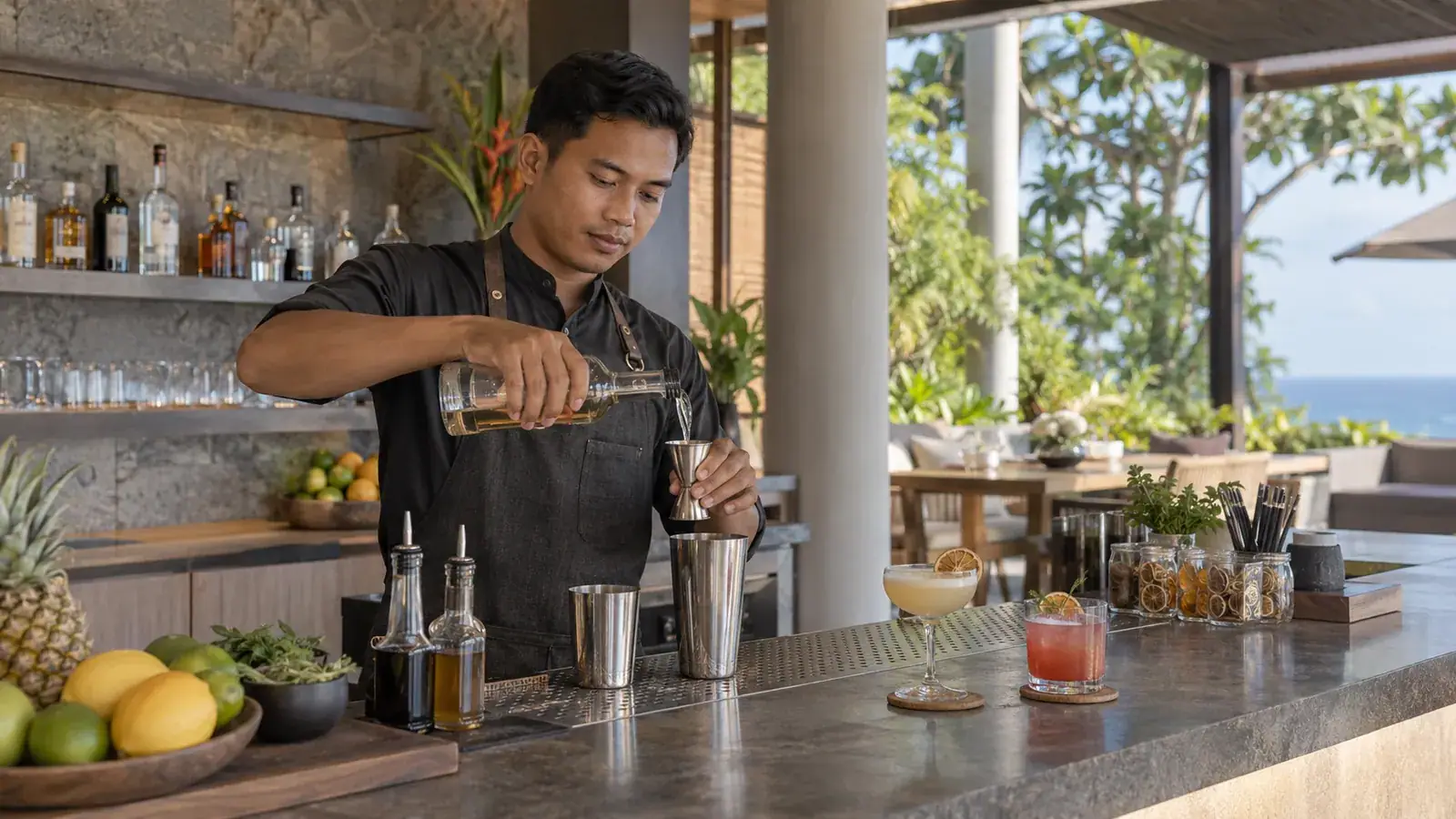
Bartender pay in Bali varies by location, venue type and experience. This guide covers the factors that shape salaries, true in-house hiring costs, and when outsourced staffing is the lower-risk option. Request a quote for current market guidance.
2026 bartender salary benchmarks in Bali
Front-line bartender salaries in Bali for entry-level roles in Seminyak, Canggu and southern tourist zones often sit in the low single-digit millions per month. In Ubud and quieter areas the floor can be closer to local minimum-wage thresholds, while high-volume beach clubs and luxury resorts in Uluwatu often pay a premium for experience.
Senior bartenders and head bartenders with three to five years of experience typically move into the mid-to-high single-digit millions per month. Bar managers and F&B supervisors who oversee stock, costing and rosters often reach the low tens of millions, depending on outlet size, bonus structure and responsibilities. Request a quote for current salary guidance.
True cost of an in-house hire
Base salary is only part of the picture. Indonesian labour rules add BPJS Ketenagakerjaan and Kesehatan, annual THR, leave provisions, uniforms, transport or accommodation allowances, and recruitment advertising or agency fees. For many venues the loaded cost runs a meaningful premium above base pay.
Then there is turnover cost. If a bartender leaves in month three, you lose training investment, recruitment time and roster continuity. A realistic 90-day cost model includes sourcing, onboarding, uniform, training and the productivity dip while the new hire finds their speed.
Outsourced staffing vs in-house
Outsourced temporary bartender staffing removes payroll, BPJS, scheduling and replacement risk from your ledger. You receive one invoice per event or per month, and the supplier carries employer obligations. Rates are quoted per hour or per month depending on the role and coverage needed. Request a quote for event or recurring coverage.
The break-even point depends on how variable your demand is. If your bar has steady nightly covers, permanent staff are usually cheaper per hour. If your volume spikes around events, weddings, charter seasons and holidays, outsourcing the swing capacity is almost always more cost-efficient.
Training as a cost lever
Untrained staff increase pour cost, waste and breakage. A foundation bar training programme can pay back within weeks through tighter pours and faster service. Custom programmes for your menu and venue are scoped and quoted after a short discovery call.
Training also reduces turnover. Bartenders who feel competent and see a career path stay longer, which lowers your annual recruitment spend. Request a quote for foundation or custom bar training.
How to use these benchmarks
Use the salary bands to sanity-check your current payroll and to budget a new outlet. Compare your loaded monthly cost per bartender against the equivalent outsourced rate for the same number of shifts. If the gap is small but your roster is unstable, outsourcing may still be the lower-risk option.
For permanent roles, validate the salary band against current Bali market data before you advertise. Underpaying lengthens time-to-hire and increases early turnover; overpaying without clear accountability erodes margin. Request a quote if you want a market-aligned salary band for your next hire.