Best wedding catering formats Bali villa: 7 picks 2026
Compare the best wedding catering formats Bali villa hosts can choose. Pick plated dining, sharing menus or buffets, with clear kitchen and service checks.
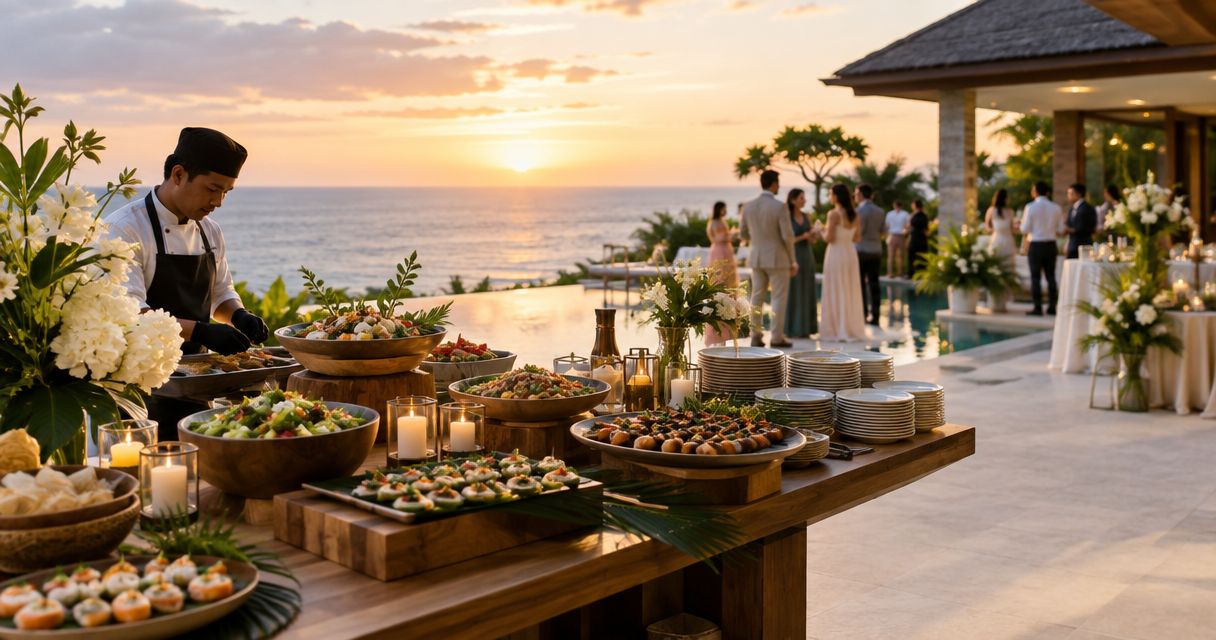
Best overall: plated dining. Best for a sociable villa wedding: family-style sharing. Best for flexible portions: a buffet. This 2026 guide compares 7 wedding catering formats for Bali villas; myCHEF serves villa hosts seeking private chef, catering and event dining services.
- For best wedding catering formats Bali villa planning, choose plated dining when a coordinated seated reception is the priority.
- Family-style sharing suits conversation; buffets suit guests who want control over portions.
- Food stations and live cooking need deliberate space planning, not just an appealing menu.
- myCHEF provides private chef, catering and event dining services for Bali villa guests.
Why the catering format matters
Your wedding menu and your service format are different decisions. The menu determines what guests eat; the format determines whether they sit, queue, circulate or watch food being prepared.
For a Bali villa wedding in 2026, choose the format before finalising dishes. A plated reception needs a workable route from kitchen to tables, while stations need room for guests to move without blocking service. An attractive garden is not a catering plan.
Choose the format that fits the villa and the occasion, then build the menu around it. Keep the wedding reception separate from any multi-day chef arrangement for guests staying at the property.
What makes the best villa wedding catering format?
Judge each option against these criteria before choosing a menu:
- Guest fit: Can children, older guests and people with dietary requirements eat comfortably?
- Kitchen access: Does the preparation and finishing space support the intended service?
- Service rhythm: Does dinner fit around speeches, entertainment and other reception moments?
- Movement: Can guests and staff reach tables or food points without competing for space?
- Weather protection: Where will food preparation, service and dining move if outdoor conditions change?
- Host workload: Who coordinates menu choices, table assignments and communication with the caterer?
No format wins every criterion. Plated dining offers a coordinated seated meal, but requires more individual guest information. A buffet gives guests portion control, but introduces movement and queues.
Wedding catering formats at a glance
| Rank and format | Best for | Standout feature | Key limitation |
|---|---|---|---|
| 1. Plated dining | A coordinated seated reception | Individual dishes served at the table | Requires accurate meal choices and service coordination |
| 2. Family-style sharing | A sociable wedding meal | Shared dishes keep dinner centred on each table | Serving dishes compete with table styling for space |
| 3. Buffet | Guest-controlled portions | Guests select their own food and quantities | Queues and carrying plates need planning |
| 4. Food stations | Guests exploring different menu themes | Food is distributed across separate serving points | Each station adds space and service requirements |
| 5. Cocktail reception | A standing celebration focused on mingling | Small dishes accompany a circulating reception | Seating and adequate meal provision need explicit attention |
| 6. Live cooking | A reception with visible food preparation | Cooking becomes part of the guest experience | Heat, smoke and preparation activity need suitable placement |
| 7. Tasting menu | An intimate, food-focused wedding | A sequence of dishes creates a deliberate dining experience | A longer dining sequence restricts other reception activities |
1. Plated dining: best for a coordinated seated reception
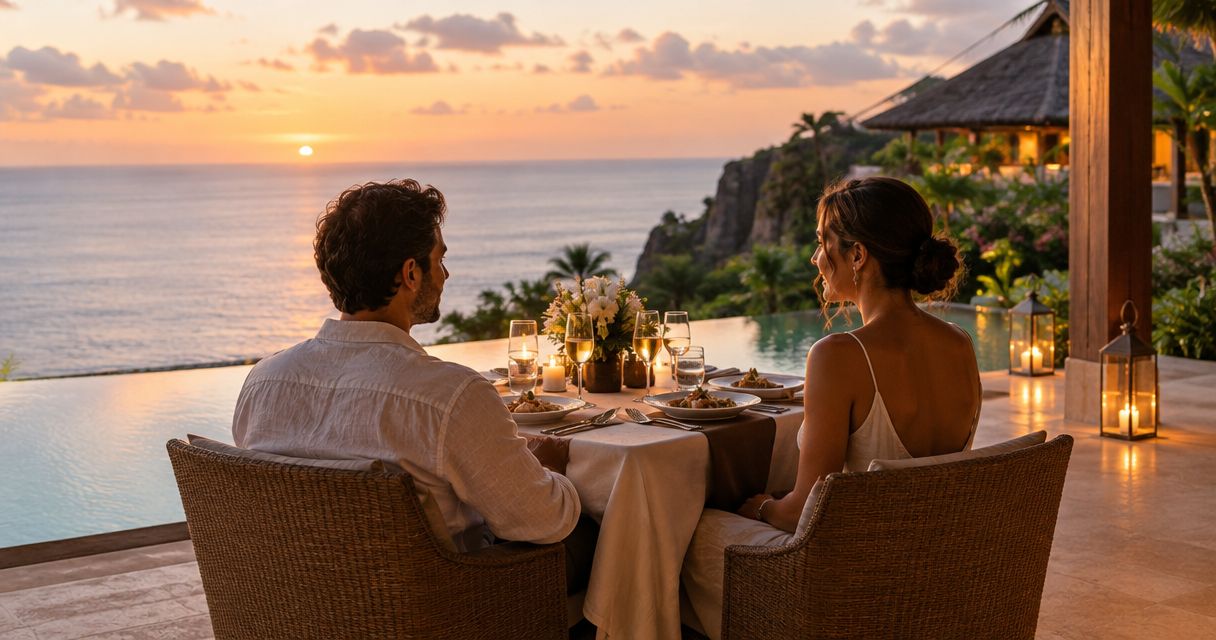
Plated dining serves individually prepared dishes to guests at their assigned seats. It suits a wedding where dinner has a clear place in the reception schedule and guests should not need to leave their tables for food.
Build the plan around the service route, not just the menu. Ask how dishes will reach the furthest table and how dietary alternatives will reach the correct guest.
Plated dining pros:
- Guests remain seated during food service.
- Individual portions support deliberate presentation.
- Assigned seats help connect dietary meals to named guests.
Plated dining cons:
- Meal choices and dietary details need accurate coordination.
- A difficult kitchen-to-table route complicates service.
Best for: Couples planning a seated reception with organised speeches and dinner service.
For a 2026 wedding, agree which reception moments happen between courses rather than interrupting their delivery. A familiar structure of 3 meal stages—starter, main and dessert—provides a clear starting point, not a required menu.
Verdict: Choose plated dining as the default for a coordinated seated wedding.
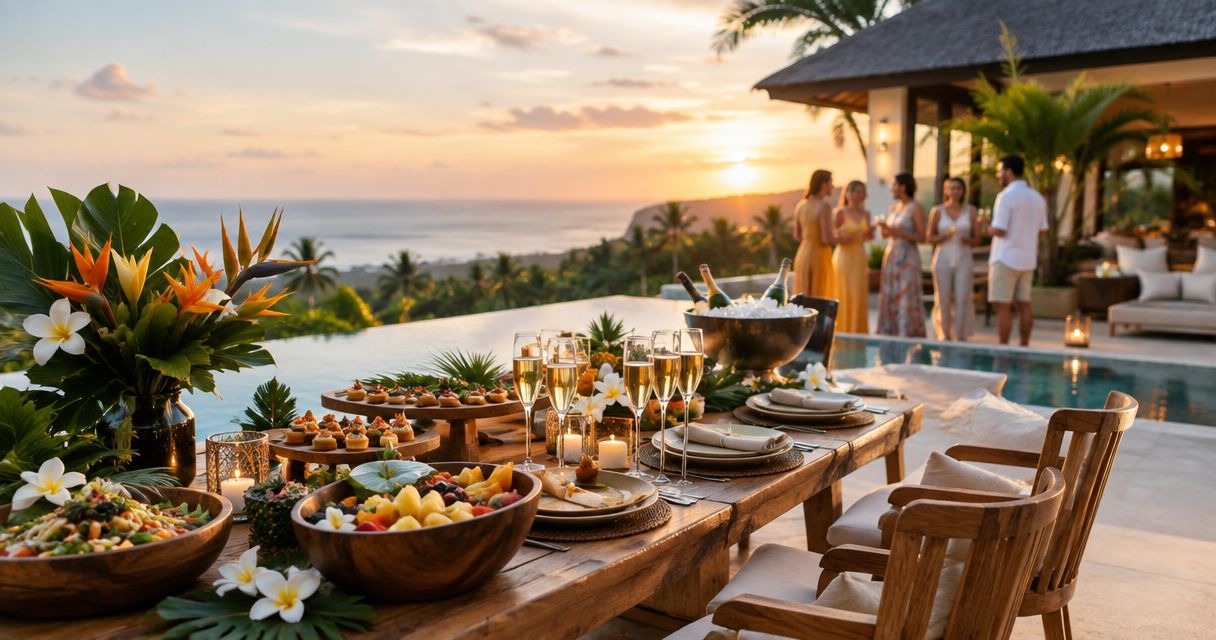
2. Family-style sharing: best for a sociable wedding meal
Family-style service places shared dishes on each table for guests to pass around. It keeps the meal seated while making food a shared activity rather than a sequence of individual presentations.
Check the table layout before committing. Serving platters, glassware, flowers and candles all draw on the same surface space.
Family-style sharing pros:
- Guests share food without visiting a buffet.
- Passing dishes creates a natural point of interaction.
- Guests choose portions from the dishes within reach.
Family-style sharing cons:
- Shared utensils require careful handling of dietary restrictions.
- Large platters can crowd heavily styled tables.
Best for: Couples who want a relaxed, seated dinner built around conversation.
Ask for a table layout that includes the actual serving dishes. For guests who need separate meals, confirm an individual service plan rather than relying on everyone at the table to keep ingredients apart.
Verdict: Choose family-style sharing when conversation matters more than individual plate presentation.
3. Buffet: best for guest-controlled portions
A buffet presents dishes at a serving area where guests choose their food and quantities. It gives diners control over portions, but moves part of the meal away from the dining table.
The important question is not how impressive the buffet looks. It is whether guests can approach it, understand the dishes and return to their seats comfortably.
Buffet pros:
- Guests choose portions according to appetite.
- Diners can see the available dishes before selecting them.
- A varied menu can sit within one serving format.
Buffet cons:
- Guest arrivals at the serving area create queues.
- Carrying plates is inconvenient for some guests.
Best for: Groups prioritising choice and portion flexibility over uninterrupted seated service.
For a Bali villa buffet in 2026, request a plan for weather protection, appropriate food holding and assistance for guests who cannot comfortably carry plates. Dietary labels help guests ask questions; they do not replace a clear ingredient discussion.
Verdict: Choose a buffet when portion flexibility is the priority and the villa supports guest circulation.
4. Food stations: best for exploring different menu themes
Food stations divide the menu among separate serving points. Each station has a defined role, such as starters, main dishes or desserts, so guests encounter different parts of the meal around the reception space.
This format needs a reason for each location. Spreading food around the villa without planning routes simply spreads the congestion.
Food station pros:
- Distinct serving points make menu themes easy to identify.
- Guests can approach the food that interests them.
- Stations can separate different parts of the dining experience.
Food station cons:
- Separate serving points need equipment and staffing decisions.
- Guests need to understand where each part of the meal is served.
Best for: Couples who want guests to explore a varied menu during the reception.
Request a marked layout showing food points, dining areas and service routes. Keep access to bathrooms and exits clear, and decide how guests will know when a station is ready.
Verdict: Choose food stations for menu exploration, not as a workaround for an unsuitable service layout.
5. Cocktail reception: best for a wedding centred on mingling
A cocktail reception uses small dishes served to circulating guests or collected from designated points. It fits a celebration where conversation and movement matter more than an assigned-seat dinner.
Be explicit about whether the food replaces a meal or precedes one. Small presentation does not automatically mean a complete dinner.
Cocktail reception pros:
- Guests can move between conversations.
- Food service does not depend on assigned dining seats.
- The format suits a reception without a formal course sequence.
Cocktail reception cons:
- Standing throughout the meal does not suit every guest.
- Guests need clarity about whether further food is coming.
Best for: Couples planning a mingling-led reception rather than a traditional seated wedding meal.
Provide places to sit and surfaces for drinks and plates. Ask the caterer to explain how the proposed menu functions as a full meal if no seated dinner follows.
Verdict: Choose a cocktail reception for movement and conversation; skip it if your guests expect seated dinner service.
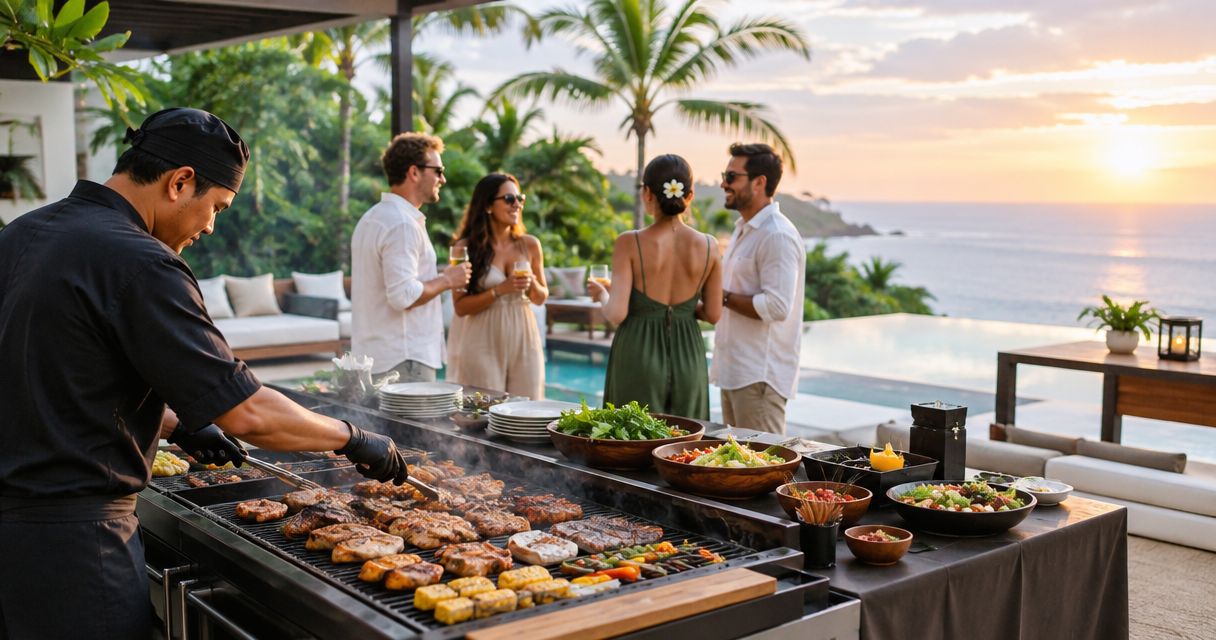
6. Live cooking: best for visible food preparation
Live cooking brings part of the preparation into the reception setting. Guests see food being cooked or finished instead of receiving everything from a separate kitchen.
It is a preparation method as well as a guest experience. Decide whether the finished food reaches guests through table service, a buffet or collection at the cooking point.
Live cooking pros:
- Preparation gives guests something specific to watch.
- Cooking provides a focal point within the reception.
- Finished dishes can connect directly to the visible process.
Live cooking cons:
- Heat, smoke and cooking equipment require suitable placement.
- Cooking and guest collection can compete for the same space.
Best for: Couples who want food preparation to be a visible part of their wedding.
If open-flame dining is proposed, confirm villa permission, equipment requirements and a weather alternative before approving the layout. Keep the cooking area out of essential guest routes.
Verdict: Choose live cooking only when the villa can accommodate the preparation setup and its service route.
7. Tasting menu: best for an intimate, food-focused wedding
A tasting menu serves a deliberate sequence of dishes, with the progression forming part of the experience. Unlike a conventional plated dinner, its main purpose is sustained attention to the food.
That makes the reception schedule important. Guests should know they are sitting down to an extended dining experience rather than a quick meal before dancing.
Tasting menu pros:
- The menu sequence gives dinner a clear narrative.
- Individual service supports detailed dish presentation.
- Food becomes the central reception activity.
Tasting menu cons:
- Multiple service moments leave less freedom for interruptions.
- Dietary alternatives need planning across the entire sequence.
Best for: An intimate wedding where the couple and guests want dinner to be the main event.
For a tasting-menu wedding in 2026, review the full sequence alongside speeches and entertainment. Confirm how the menu will work for children and guests who do not want every course.
Verdict: Choose a tasting menu for a food-led celebration; skip it when dining is secondary to a busy reception programme.
How these formats were ranked
Plated dining takes the default position because it directly serves a coordinated seated reception. The remaining formats each address a different priority: conversation, portion choice, menu exploration, mingling, visible preparation or an extended dining sequence.
The ranking is a decision guide, not a score for caterers. Villa layout, guest requirements and the reception schedule determine whether the default remains the right choice.
Send a wedding brief, not just a menu request
For a 2026 enquiry, give myCHEF enough information to distinguish your wedding event from the rest of your villa stay. A request for catering and a request for daily private-chef meals need different scopes.
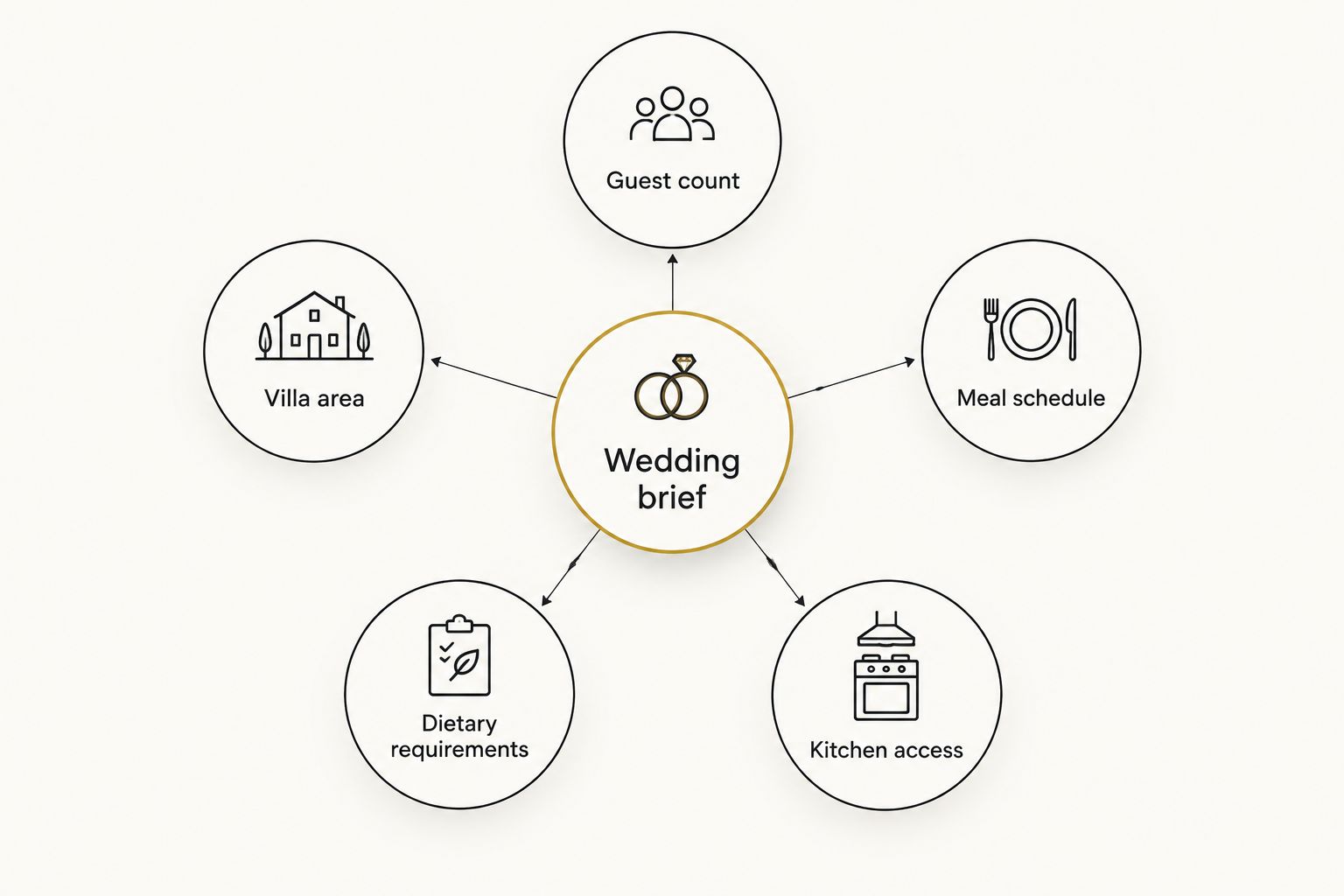
Use these headings in your request:
- Guest count: Wedding diners, children and any additional people needing meals.
- Villa area: Location, property details and known event restrictions.
- Meal schedule: Wedding date, reception timing and meals requested on other dates.
- Dietary requirements: Named requirements and any allergy-related questions.
- Kitchen access: Available preparation space, equipment and permission for outdoor cooking.
The wedding brief should connect the occasion, guests and property. Include your preferred format, but let the kitchen and service assessment test whether it fits.
For a multi-day stay, send 2 separate briefs: one for the wedding reception and one for the surrounding villa meals. Ask what a full-day chef arrangement covers, how groceries are handled, what staff and equipment are included, and which tax or other charges apply. Confirm booking terms and change procedures in writing.
Plan your villa wedding dining
Prepare your dates, guest count, villa area and wedding or multi-day meal requirements.
Which wedding catering format should you choose?
Start with plated dining if you want a seated wedding reception with coordinated service. Choose family-style sharing if the table conversation matters most, or a buffet if guests should control their portions.
Use stations, cocktail service, live cooking or a tasting menu only when their specific advantage matches your occasion. None removes the need for a clear dietary plan, workable service access and a weather alternative.
FAQ
What's the best wedding catering format for a Bali villa?
Plated dining is the default choice for a coordinated seated reception. Family-style sharing suits a more sociable table experience, while a buffet gives guests control over portions.
Is family-style sharing better than a buffet for a villa wedding?
Family-style sharing is better when you want guests to stay seated and pass dishes around their table. A buffet is better when individual food selection and portion control are the priority.
Can a cocktail reception replace a wedding dinner?
A cocktail reception can replace dinner when the proposed food service is designed as a complete meal. Confirm that scope explicitly and provide seating for guests who need it.
What should I check before choosing live cooking?
Check villa permission, cooking-area placement, equipment requirements and the weather alternative. Also confirm how finished dishes reach guests, because live cooking does not define the service format.
How should I handle dietary requirements at a villa wedding?
Give the caterer named dietary requirements and discuss allergy handling before finalising the menu. Confirm separate meals, utensils and guest identification where needed rather than relying only on dish labels.
Can I request wedding catering and a multi-day villa chef stay together?
You can include both requirements in an enquiry to myCHEF, which provides private chef, catering and event dining services. Keep the reception scope separate from the dates, meals and guest numbers for the surrounding villa stay.
What should I include when requesting a wedding catering quote?
Include your wedding date, guest count, villa area, preferred format, meal schedule and dietary requirements. Ask for the staffing, equipment, grocery treatment, tax treatment and booking terms to be itemised.
One last thing
The same menu can create very different weddings depending on how it reaches the table. Before requesting a tailored quote through your chosen contact channel, ask the villa manager to confirm event permission and share the kitchen and dining layout; then send those details with your dates, guest count and preferred format.