7 Private Cooking-Class Formats to Compare in Bali
Cooking class Bali guide for 2026: a hands-on villa class is best for villa guests. Compare seven formats, check guest tasks and choose the right setting.
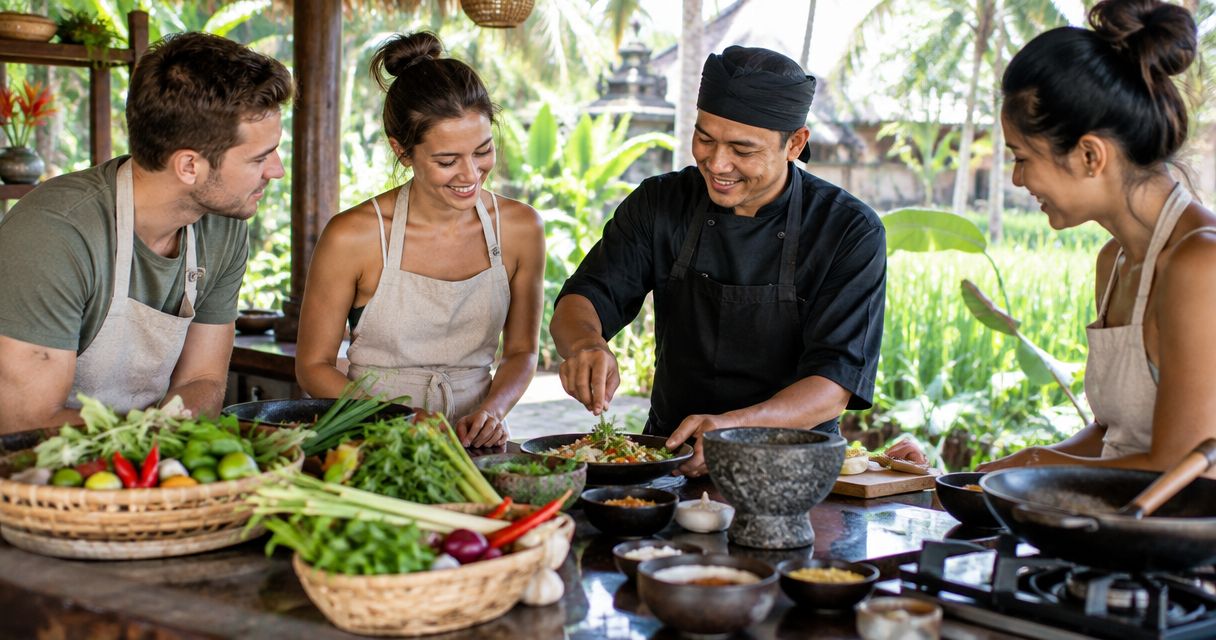
Best overall for villa guests: a private villa cooking class with confirmed hands-on instruction. Best for exploring ingredients: a market-to-kitchen class. Best for children: a family-focused class. These are seven cooking class Bali formats to compare in 2026, not seven verified providers; confirm the instructor, venue and tasks before you book.
- For a cooking class Bali villa guests can join without travelling, choose a private villa class that confirms hands-on instruction.
- Choose a market-to-kitchen class if ingredient selection matters more than staying at the villa.
- myCHEF provides private chef dining for Bali villa guests; confirm any cooking instruction separately.
- Ask who cooks, what guests prepare and whether the venue suits your group before booking.
Why this matters
A private chef dinner and a private cooking class give you different roles. At dinner, the chef prepares the meal; in a class, you should handle ingredients, practise techniques and leave knowing how to make at least part of the dish. myCHEF is a private chef and catering service for Bali villa guests, not a verified cooking-class provider in the information available here. If you want dinner rather than instruction, start with myCHEF.
For a cooking class Bali itinerary in 2026, decide whether you want to learn a technique, shop for ingredients, cook with children or keep the activity at your villa. Then ask the organiser exactly what the instructor teaches and what guests do themselves. A private booking alone does not establish that the session is hands-on.
What makes the best private cooking class in Bali?
Use these criteria before comparing formats. They reveal more than a class title or a photograph of the finished meal.
- Hands-on time: Ask which dishes guests prepare, which steps the instructor demonstrates and which steps are completed in advance.
- Venue fit: Check whether the class takes place in your villa, a teaching kitchen or a host's kitchen. For a villa session, confirm prep space, equipment, ventilation and cold storage.
- Ingredient focus: Ask whether you select ingredients yourself, discuss them with an instructor or arrive after everything has been prepared.
- Group fit: Tell the organiser who will cook, including children, and whether guests need separate workstations or shared tasks.
- Dietary handling: Give the organiser the actual requirements and ask which ingredients, tools and dishes need adjustment.
- Clear scope: Get the venue, menu, duration, inclusions and any separate travel or ingredient charges in the booking details. Do not treat an unspecified private session as a cooking lesson.
Private cooking class Bali options at a glance
| Format | Best for | Standout feature to request | Key limitation |
|---|---|---|---|
| Private villa class | Guests who want to stay at the villa | Hands-on teaching in the villa kitchen | Depends on the kitchen and a confirmed instructor |
| Market-to-kitchen class | Ingredient discovery | Ingredient selection followed by cooking | Involves travel and more moving parts |
| Balinese home-kitchen class | Learning in a host's kitchen | Direct instruction on the agreed menu | Venue and participation level need checking |
| Plant-based class | Plant-based cooking | A menu built around the group's requirements | Must confirm ingredients and shared equipment |
| Seafood-focused class | Seafood preparation skills | Demonstration followed by guest preparation | Needs clear handling and equipment plans |
| Family-focused class | Groups cooking with children | Age-appropriate tasks for each participant | Adults still need to supervise children |
| Dessert-focused class | Guests who want a specific technique | A defined dessert guests can help make | Narrower scope than a full meal |
The 2026 shortlist below ranks formats, not businesses. No named class operator, menu, schedule or booking terms were supplied, so confirm those details directly before choosing.
1. Private villa class: best cooking class in Bali for villa guests
A private villa class is the most direct fit when your group wants to cook without adding a journey to the day. Ask a prospective instructor to name the dishes, the techniques guests will practise and the equipment they need. A chef arriving to prepare lunch does not make that lunch a lesson.
Private villa class pros:
- Keeps the session in the setting where your group is staying.
- Lets you ask whether the menu suits your group's dietary requirements.
- Gives you a clear chance to check the kitchen before confirming the booking.
Private villa class cons:
- The villa kitchen must have suitable space, equipment and storage.
- Private dining services do not automatically provide instruction.
Best for: Villa guests who want active participation and can confirm an instructor and a workable kitchen. Verdict: Choose this format first if staying at the villa matters; otherwise, compare dedicated teaching venues.
2. Market-to-kitchen class: best for ingredient discovery
This format pairs an ingredient-selection activity with a cooking session. Its value is the connection between what you select and what you prepare, so ask whether you will make those choices or simply watch an instructor shop. Confirm where the cooking takes place after the market portion.
Market-to-kitchen class pros:
- Gives ingredient selection a role in the lesson.
- Creates questions to ask about substitutions and preparation.
- Suits guests who want an activity beyond the kitchen.
Market-to-kitchen class cons:
- Travel and the change of venue add logistics.
- A market visit can take time away from cooking if the practical portion is short.
Best for: Guests whose main goal is learning how ingredients become a dish. Verdict: Choose it when the organiser confirms both the selection and cooking portions.
3. Balinese home-kitchen class: best for learning with a host
For this format, the kitchen setting is part of the experience. Ask who teaches, which dishes you will make and whether guests work alongside the host. A home setting does not, by itself, tell you how much instruction you will receive.
Balinese home-kitchen class pros:
- Places the lesson in the kitchen where the host teaches.
- Lets you discuss the agreed dishes as they are prepared.
- Works for guests who prefer a host-led session to a villa-based one.
Balinese home-kitchen class cons:
- You need to check the venue's accessibility and travel arrangements.
- Guest participation can be limited unless the tasks are agreed in advance.
Best for: Guests who prioritise direct teaching in a host's kitchen. Verdict: Choose it only after confirming that you will cook, not just observe.
4. Plant-based class: best for plant-based cooking skills
A plant-based class should teach more than how to remove an ingredient from a standard dish. Ask for the proposed menu and the preparation tasks, then explain any separate allergies or dietary restrictions clearly. Plant-based does not automatically mean suitable for every dietary need.
Plant-based class pros:
- Keeps the lesson focused on dishes your group wants to make.
- Makes ingredient choices a useful part of the discussion.
- Gives you a basis for checking each dish before booking.
Plant-based class cons:
- A menu label does not confirm allergen handling.
- The format is a poor fit if the rest of the group wants a different menu.
Best for: Guests who want to practise plant-based dishes, not merely be served them. Verdict: Choose it when the organiser confirms the menu, tasks and dietary handling.
5. Seafood-focused class: best for preparation skills
If the goal is to learn seafood preparation, specify the skills you want demonstrated and the tasks you want to perform. Ask what the teaching kitchen provides and how the session separates preparation, cooking and cleanup. Do not assume a seafood meal includes a seafood lesson.
Seafood-focused class pros:
- Keeps the instruction centred on a defined ingredient category.
- Makes it easier to ask for a particular preparation technique.
- Helps you distinguish a demonstration from hands-on practice.
Seafood-focused class cons:
- Requires a clear equipment and handling plan.
- Does not suit guests who prefer to avoid preparing seafood.
Best for: Guests who want to practise seafood preparation. Verdict: Choose it when the instructor confirms the practical tasks and kitchen arrangements.
6. Family-focused class: best for children joining in
For a family session, ask what each child can do and what adults must supervise. The useful distinction is between children having real, appropriate tasks and children waiting while adults cook. Check the venue layout before choosing an off-site kitchen or a villa session.
Family-focused class pros:
- Gives the organiser a reason to plan tasks around the participants.
- Lets adults state food preferences and restrictions before the menu is set.
- Works as a shared activity when everyone has a role.
Family-focused class cons:
- Adults still need to supervise children.
- A menu that suits adults does not necessarily offer children useful tasks.
Best for: Families who want children to participate rather than watch. Verdict: Choose it after the organiser explains each participant's role.
7. Dessert-focused class: best for one specific technique
A dessert session makes sense when your group wants to learn a defined preparation rather than plan an entire meal. Ask which steps are done before guests arrive; that answer tells you whether you will practise the technique that interested you. Confirm what equipment the venue supplies.
Dessert-focused class pros:
- Keeps the lesson centred on a clear outcome.
- Makes hands-on tasks easier to specify before booking.
- Fits a group that wants a focused activity instead of a meal session.
Dessert-focused class cons:
- Does not replace a full cooking lesson if you want to prepare dinner.
- Advance preparation can remove the steps you hoped to learn.
Best for: Guests with a particular dessert technique in mind. Verdict: Choose it when that technique remains part of the hands-on session.
How these formats were ranked
The order prioritises fit for Bali villa guests, then the clarity of the learning goal. In 2026, a private villa class takes the default position because it addresses the venue question directly, but it only earns that recommendation when instruction and kitchen suitability are confirmed. The other formats move ahead when your main goal is ingredients, a host's kitchen, a dietary focus, a preparation skill or participation by children.
Which cooking class in Bali should you choose?
Choose a private villa class if you want to stay at the villa and the organiser confirms hands-on teaching. Choose market-to-kitchen for ingredient selection, or a family-focused session when children's participation decides the plan. For a specific skill, name it before asking about a plant-based, seafood or dessert class; the organiser's answer should identify exactly what you will prepare.
If you would rather have the meal prepared for your group, choose private dining instead of calling it a class. myCHEF provides private chef, catering and event dining services for Bali villa guests. Ask about cooking instruction separately; the stated myCHEF service scope does not establish that a lesson is available.
FAQ
What's the best cooking class Bali format for villa guests in 2026?
A private villa class is the best fit when you want to stay at the villa and cook yourself. Confirm that an instructor will teach guests and that the kitchen has the space and equipment the session needs.
Is a private chef dinner the same as a private cooking class?
No. A private chef dinner centres on a meal prepared for guests, while a cooking class requires agreed instruction and guest participation. Ask exactly which dishes you will prepare yourself.
Does myCHEF offer private cooking classes in Bali?
The information provided confirms private chef, catering and event dining services, not cooking classes. Ask myCHEF directly if you need to establish whether instruction is available.
Can a cooking class take place in a Bali villa?
A villa class requires an organiser willing to teach there and a kitchen that suits the agreed menu. Check prep space, equipment, ventilation and cold storage before confirming.
Which Bali cooking class format works for families?
Choose a family-focused session that assigns appropriate tasks to children and adults. Ask the organiser to explain each participant's role and the supervision required.
How do I check dietary requirements for a private cooking class?
Give the organiser the specific requirements and ask how the menu, ingredients and equipment will be handled. A plant-based menu alone does not confirm allergen suitability.
Should I choose a market visit or a villa cooking class?
Choose a market-to-kitchen format if selecting ingredients is central to your day. Choose a villa class if avoiding travel matters more, and confirm hands-on teaching in either case.
One last thing
Before booking a 2026 cooking class Bali experience, ask one question: Which preparation steps will guests do themselves? A specific answer separates a lesson from a demonstration or a private meal. If a prepared villa dinner is what you want instead, check private dining availability with myCHEF.