
Bar manager checking stock variance after a busy service in Bali
Resource

How to Reduce Bar Shrinkage in Bali

Practical steps Bali venues can take to cut inventory loss, protect pour cost and hold staff accountable without creating a culture of blame.

Understand where shrinkage hides

Shrinkage is the difference between what you should have used and what you actually used. In Bali bars it typically comes from over-pouring, spillage, unrecorded comps and voids, staff drinks, breakage, theft and poorly managed stock rotation.

Each source needs a different control. Over-pouring needs recipe cards and jigger discipline. Breakage needs storage rules and staff training. Theft needs access controls and cameras. You cannot fix what you have not measured.

Measure before you manage

Start with a baseline stocktake. Count every bottle, keg and case in rupiah value, then compare it to theoretical usage based on POS sales. The gap is your shrinkage. Express it as a percentage of beverage revenue so the number is meaningful to the owner.

Repeat the count weekly at first, then monthly once the number stabilises. Spot counts on high-value items such as premium spirits and champagne catch problems early.

Lock in recipe standards

Every drink on the menu needs a written recipe with exact measures, method and glassware. Train bartenders to build to spec, not by eye. Even experienced free-pourers should be tested regularly against the spec to prevent drift.

Use jiggers or measured pourers during peak periods if variance is high. The small slowdown is cheaper than the inventory loss.

Fix policies and access

Write a clear comp and void policy with manager approval levels. Limit after-hours access to storage. Store high-value bottles separately. Record breakages with photo evidence. Rotate stock so older bottles are used first and nothing expires unseen.

Make accountability visible, not punitive. Share weekly shrinkage numbers with the team and celebrate improvement. When staff understand that controls protect wages and bonuses, they become part of the solution.

When to bring in outside help

If shrinkage stays high after 60 days of internal controls, an external bar audit or costing project can find the leaks you are too close to see. MyChef audits quantify shrinkage in rupiah and hand over a prioritised 90-day fix plan.

For ongoing protection, a monthly bar management retainer keeps stock counts, recipe standards and accountability systems honest long after the initial project ends.

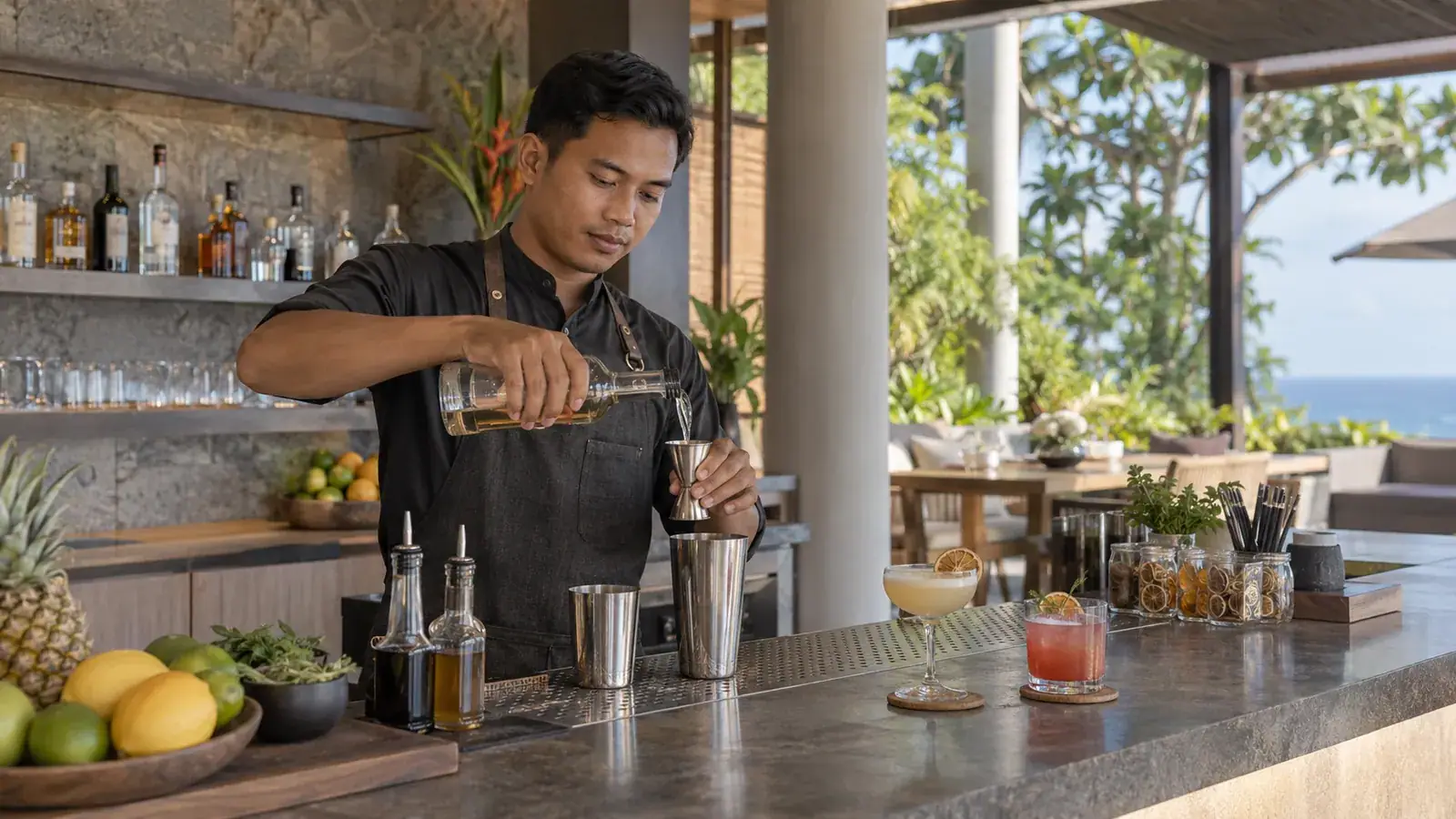
Bali bar manager conducting a stocktake
Context

Why shrinkage is the silent margin killer

Shrinkage is the gap between what your bar should have used and what it actually used. It is invisible on a busy night, does not show up in your POS, and often goes unmeasured for months. Yet research shows that most bars lose 20–25% of inventory value to shrinkage, with over-pouring alone responsible for 40–50% of those losses. In Bali, where imported spirits carry excise and supplier channels can be complex, unmanaged shrinkage can erase a venue’s beverage margin faster than a rent increase.

The good news is that shrinkage responds to measurement and discipline. This guide explains the common sources of loss in Bali bars, how to establish a baseline, and the operational controls that bring shrinkage under control without creating a culture of blame.

Shrinkage is not only a cost issue; it is also a management signal. Persistent variance often points to unclear policies, inadequate training or poor access control. Fixing the system usually reduces loss faster than accusing individuals, and it builds a team culture where everyone has a stake in protecting margin.

MyChef auditor checking premium spirit storage
Deep dive

Building a shrinkage-control system

The first step is measurement. Conduct a baseline stocktake that counts every bottle, keg and case in rupiah value, then compare it to theoretical usage based on POS sales. Express the gap as a percentage of beverage revenue so the number is meaningful to the owner. Repeat weekly at first, then monthly once the number stabilises, with spot counts on high-value items such as premium spirits and champagne.

Recipe standards are the next control. Every drink needs a written recipe with exact measures, method and glassware. Bartenders should build to spec, not by eye, and even experienced free-pourers should be tested regularly against the spec to prevent drift. Jiggers or measured pourers during peak periods are cheaper than the inventory loss they prevent.

Policy and access controls close the gaps. Write a clear comp and void policy with manager approval levels. Limit after-hours access to storage, store high-value bottles separately, and record breakages with photo evidence. Rotate stock so older bottles are used first and nothing expires unseen. When accountability is visible and fair, staff become part of the solution rather than the problem.

If internal controls do not bring shrinkage down within 60 days, an external bar audit can find the leaks you are too close to see. MyChef Bar Audit & Improvement quantifies shrinkage in rupiah and hands over a prioritised 90-day fix plan. For ongoing protection, Monthly Bar Management Support keeps stock counts, recipe standards and accountability systems honest long after the initial project ends.

The investigation protocol matters as much as the count itself. When a variance appears, the response should be sequential: re-count to confirm, cross-check POS records for comps and voids, review shift patterns, interview the manager on duty and only then escalate to formal process. Jumping straight to accusations destroys trust and rarely fixes the root cause.

Supplier discipline also protects against shrinkage. In Bali, grey-market or counterfeit spirits are a real risk. Receiving procedures should verify label-edar stickers and excise stamps, and any price that looks too good to be true should be treated as a red flag rather than a bargain. Buying from licensed distributors is a direct form of shrinkage prevention.

Watch-outs

Common shrinkage mistakes in Bali bars

  • Trying to fix shrinkage without first measuring the baseline gap in rupiah.
  • Allowing free-pouring without regular jigger tests or recipe cards.
  • Leaving storage unlocked or unmonitored, especially for high-value bottles.
  • Having no clear comp and void policy, making unrecorded giveaways impossible to track.
  • Blaming staff publicly without first fixing the systems that make errors easy.
Action steps

Actionable tips to reduce bar shrinkage

  • Run a baseline stocktake and express the gap as a percentage of beverage revenue.
  • Build recipe cards with exact measures and test bartenders against them regularly.
  • Introduce weekly spot counts on high-value SKUs and a full monthly stocktake.
  • Lock storage, separate premium bottles and enforce a signed comp and void policy.
  • Share shrinkage numbers with the team weekly and celebrate improvement, not just punish variance.
Bar team reviewing stock variance after service
FAQ

Questions about this guide

Our bar resources are written for hotels, restaurants, beach clubs, villas, wedding organisers and private estates in Bali. If your venue serves drinks to guests, the frameworks usually apply.
Yes. The guides are designed to be actionable on their own. We also link to a MyChef service if you would prefer a specialist to handle implementation or review your work.
We refresh benchmarks against the Bali hospitality market at least twice a year. If you are budgeting for a specific role or project, confirm the latest figures with a quick WhatsApp message.
Yes. You can book a free 30-minute bar health call or send a written enquiry. We will ask a few questions, give an honest read on your situation, and tell you plainly whether a paid engagement is worth it.
You are welcome to share the link with your team or print the page for internal use. For larger groups or white-label training, contact us about a private Bar Staff Training session.

Still deciding?

Send your date, guest count and villa area — we reply within 2 hours with a fixed quote.

Yes — share the page link with partners. For printed packs or customised versions for a multi-outlet group, contact us via bar services contact.
No. Benchmarks are directional for Bali hospitality planning. Your actual salaries, rent and pour costs depend on venue, concept and year.
Guides educate. Paid services implement — audits, menus, training, staffing and setup. Use the guide, then scope a project if you need hands-on help.
We refresh major benchmarks when market conditions shift. Check the page date context and confirm critical figures on a discovery call before budgeting.
Some materials can be adapted for local team training under a paid scope. Public pages are primarily English for international operators.

Still deciding?

Send your date, guest count and villa area — we reply within 2 hours with a fixed quote.

Core examples assume South Bali and Ubud market conditions. Outer-island or remote venues need localised costing — ask when you contact us.
Yes as a starting framework. Convert relevant sections into venue-specific SOPs and train the team — we can help formalise that process.
Some resources cover menu and costing principles; signature recipe development is a separate service under cocktail menu development.
Cost issues → costing guides; hiring → salary and recruitment resources; opening → new bar setup guides. Or message us with your symptom and we point you to the right page.
Contact us with the gap — high-frequency questions often become new resources, and unique problems become consulting scopes.

Ready to implement what you have read?

Get a tailored proposal for your venue within four business hours.

WhatsApp Us
⭐ 560+ events served · 12,000+ guests · 500+ villa bookings

Published rates are ++ — 10% service charge and 11% government tax are added to the listed price. Your quote is always confirmed as a fixed, itemised all-in total before you commit.