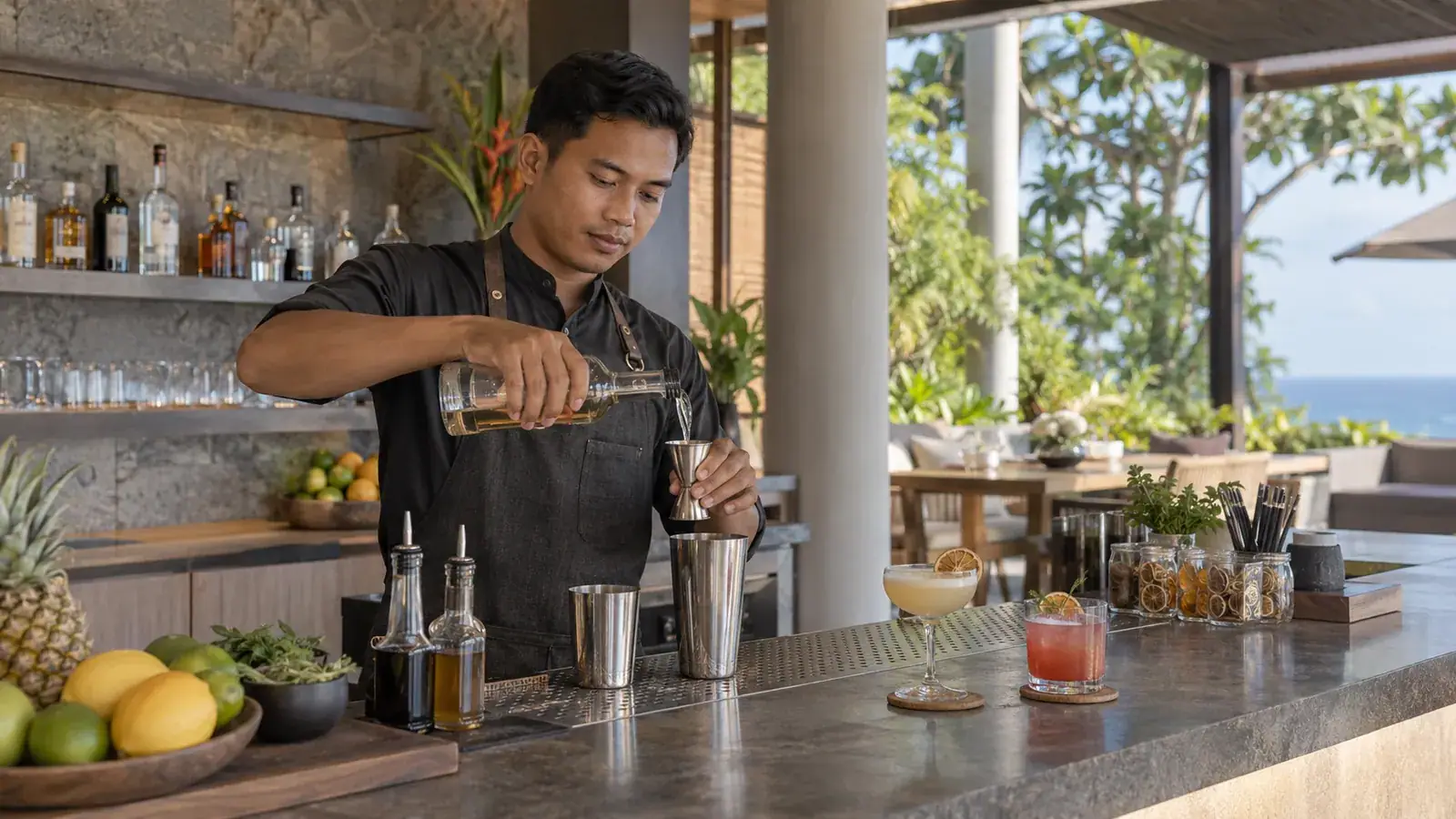
Menu engineering for Bali venues: pricing to a pour-cost target, spec cards, seasonality and local ingredients that guests remember.
Start with the guest, not the recipe
A profitable cocktail menu begins with your guest profile. A luxury resort audience may want complex, story-driven signatures. A beach club with high throughput needs fast, batchable, photo-ready serves. A restaurant bar should complement the food menu and turn tables efficiently.
Define price bands early. Your cheapest cocktail should attract trial; your mid-range should carry margin; your premium serve should create aspiration and social sharing.
Engineer for margin first
Every drink on the menu should be costed to a target pour cost, typically 18–24%. Build a costing card for each recipe with exact millilitre measures, garnish, ice and glassware cost. If a drink cannot hit the target without an unacceptable price, redesign it or drop it.
Contribution margin matters more than pour cost alone. A cocktail with a slightly higher pour cost but a much higher contribution can be more valuable than a lower-pour-cost drink with a small contribution.
Structure the list
Limit the menu to 8–12 cocktails. Too many choices slow decisions and increase waste. Group drinks by style: light and refreshing, bold and spirit-forward, tropical and local, low or no alcohol. Include at least one low-ABV and one zero-proof option.
Use names and descriptions that tell a story. In Bali, local botanicals, arak, tropical fruit and Balinese place names give guests something to remember and share.
Write spec cards and train the team
A spec card should include the recipe, method, glassware, ice spec, garnish, batch instructions, sell price and target pour cost. Photo-illustrated cards reduce variance between bartenders and protect margin during busy shifts.
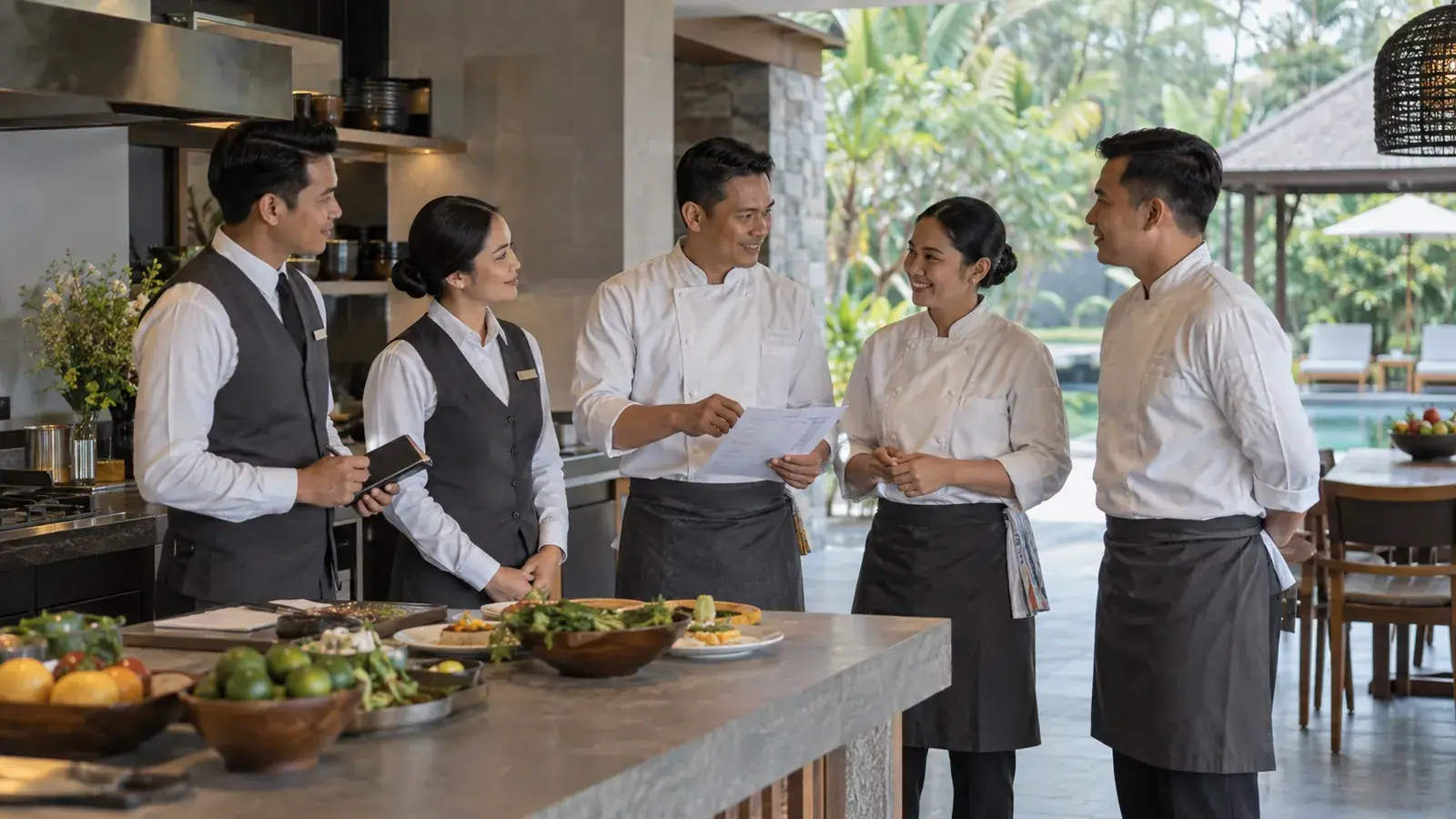
Every bartender should be able to make every drink blind to spec before launch. Schedule a training session and tasting panel, and capture feedback before the menu goes live.
Plan for seasonality and refresh
Seasonal ingredients in Bali shift with the fruit calendar and tourist seasons. Build a refresh calendar: minor tweaks quarterly, full menu review twice a year. Track sales mix and remove underperformers rather than letting them occupy menu real estate.
A menu that is never refreshed feels tired. A menu that changes too often confuses regulars and breaks training. Aim for a rhythm that keeps the list familiar but gives guests a reason to return.