May 17, 20268 min read· Wellness· By myCHEF Team

Yoga Retreat Meal Planning: Nutritional Integrity for Bali Retreats

Yoga retreat meal planning in Bali: plant-forward menus, energy timing, allergens, and multi-day catering for wellness groups. myCHEF guide.

yoga retreat meal planning Bali — myCHEF Bali journal

Yoga retreats in Bali succeed when the schedule, the space and the food agree with each other. Guests may come for asana and silence — they stay because their energy holds through a 05:30 practice, a long workshop day and an evening integration circle. Meal planning is not a side task for the kitchen. It is part of the curriculum.

This guide is for retreat leaders, wellness hosts and villa managers designing multi-day programmes in Ubud, Canggu, Uluwatu and beyond. It covers energy timing, plant-forward menus that still satisfy, allergen control at scale, and how professional retreat catering differs from restaurant drop-off or ad-hoc villa cooks. For event-level production, see also retreat events.

What retreat food must do that hotel food does not

Hotel breakfast buffets optimise for variety and speed. Retreat menus optimise for steady blood sugar, digestive comfort, cultural inclusivity and a calm service rhythm that never rushes guests out of presence. That means fewer deep-fried items before practice, clearer protein at lunch, lighter evenings when night sessions run late, and zero mystery ingredients for people with allergies.

It also means the kitchen must understand the timetable as well as the menu. A beautiful lunch served thirty minutes late after a peak-heat outdoor class is not hospitality — it is a recovery problem.

Map the day before you write the menu

Retreat schedule board aligned with meal times for a multi-day yoga programme in Bali

Start with the practice calendar, not the recipe list. For each day, mark:

  • Wake-up and first practice intensity (gentle, dynamic, heat-building)
  • Workshop length and cognitive load
  • Outdoor vs indoor sessions (heat and hydration change everything)
  • Free time blocks where guests may leave the property
  • Evening ceremonies, kirtan or silence that affect dinner timing

Then place meals as fuel windows, not as fixed hotel seatings. Many programmes work well with:

  • Light pre-practice option — fruit, herbal tea, overnight oats or broth for early risers who cannot train fasted
  • Grounding breakfast after morning practice — complex carbs, fruit, eggs or plant proteins, healthy fats
  • Substantial lunch — the main caloric anchor of the day
  • Optional afternoon snack station — fruit, nuts, coconut water, date bites
  • Lighter, earlier dinner — especially before yin, sound or late integration

If your group books a full villa chef for the week, our meal-count pricing on pricing and the daily model on private chef Bali help you compare one-meal, two-meal and three-meal days without guesswork.

Breakfast: rebuild without heaviness

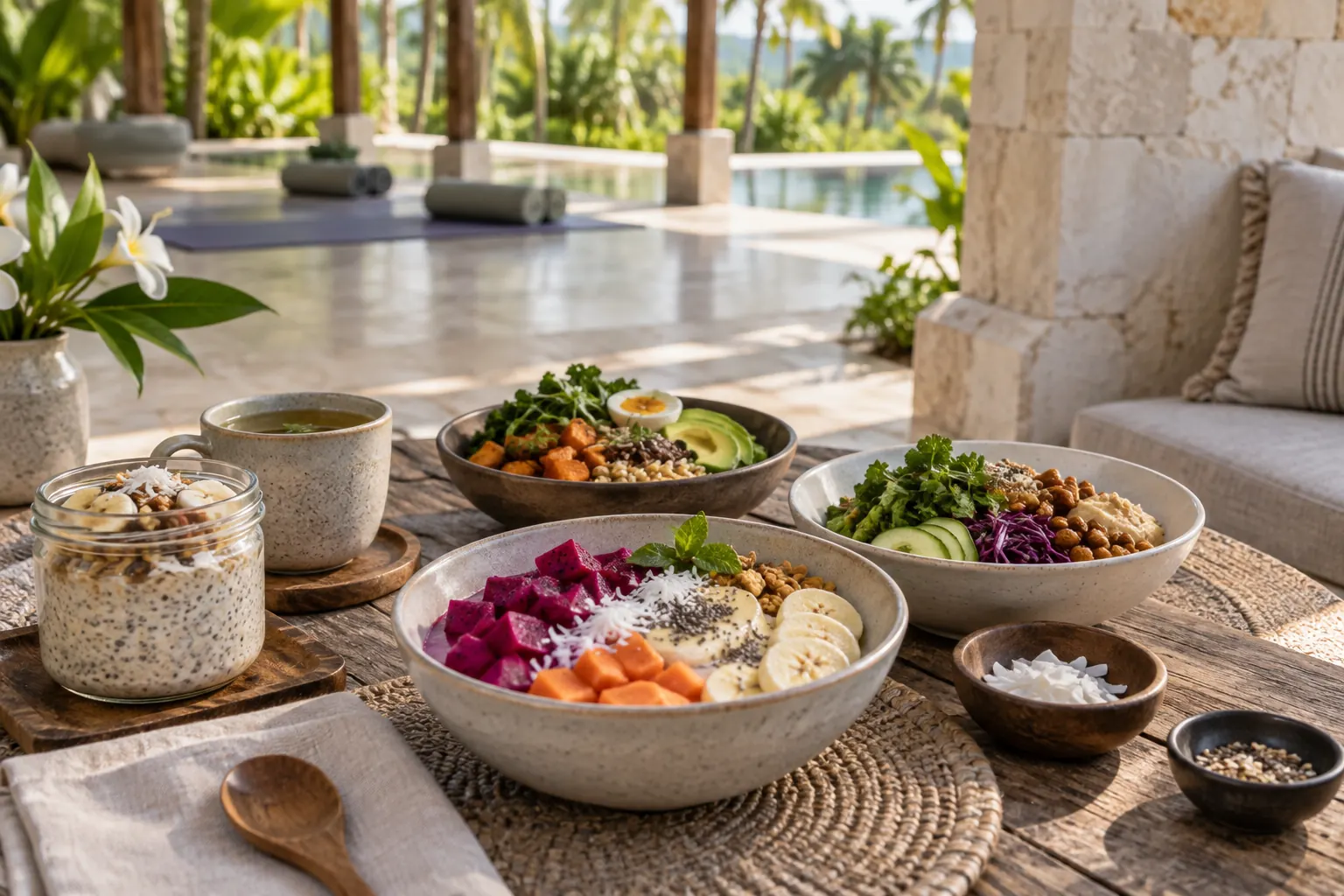
Colourful yoga retreat breakfast bowls with tropical fruit, granola and fresh juices at a Bali villa

Post-practice breakfast should restore glycogen and fluids without leaving guests sluggish for the next workshop. Patterns that work in Bali villas:

  • Warm porridge or congee-style bowls with ginger and fruit
  • Egg stations or tofu scrambles with greens and sourdough or gluten-free options
  • Tropical fruit with yoghurt or coconut yoghurt and house granola
  • Smoothie or juice bar limited to 2–3 well-designed options (not twenty syrupy choices)
  • Herbal teas and quality coffee for those who use caffeine intentionally

Keep the service style calm: plated or small-station rather than chaotic buffet piles. Floating breakfast can be a beautiful single-morning treat for couples’ add-ons, but for full retreat cohorts a grounded dining table or shaded bale is more practical and inclusive.

Lunch: the performance meal

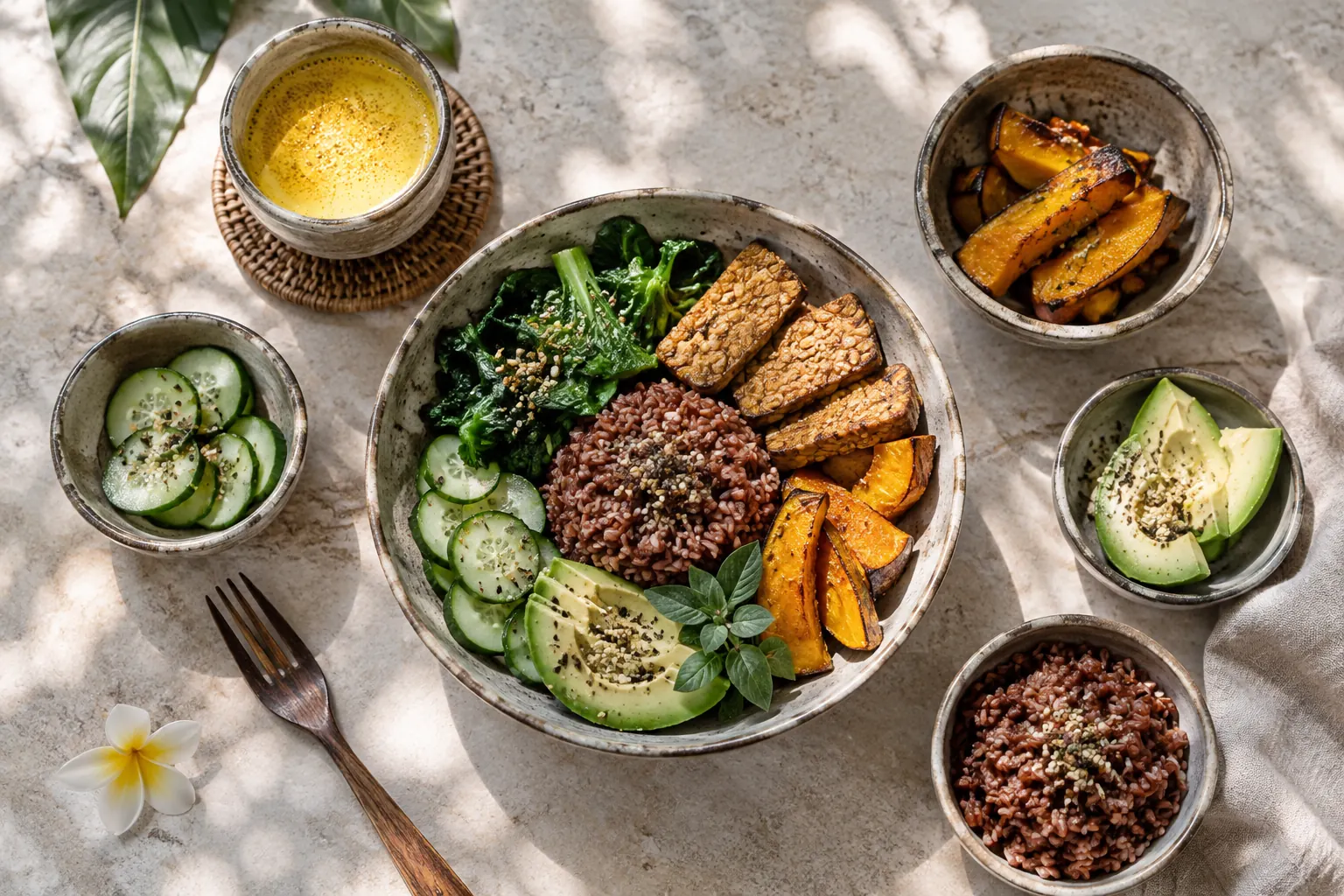
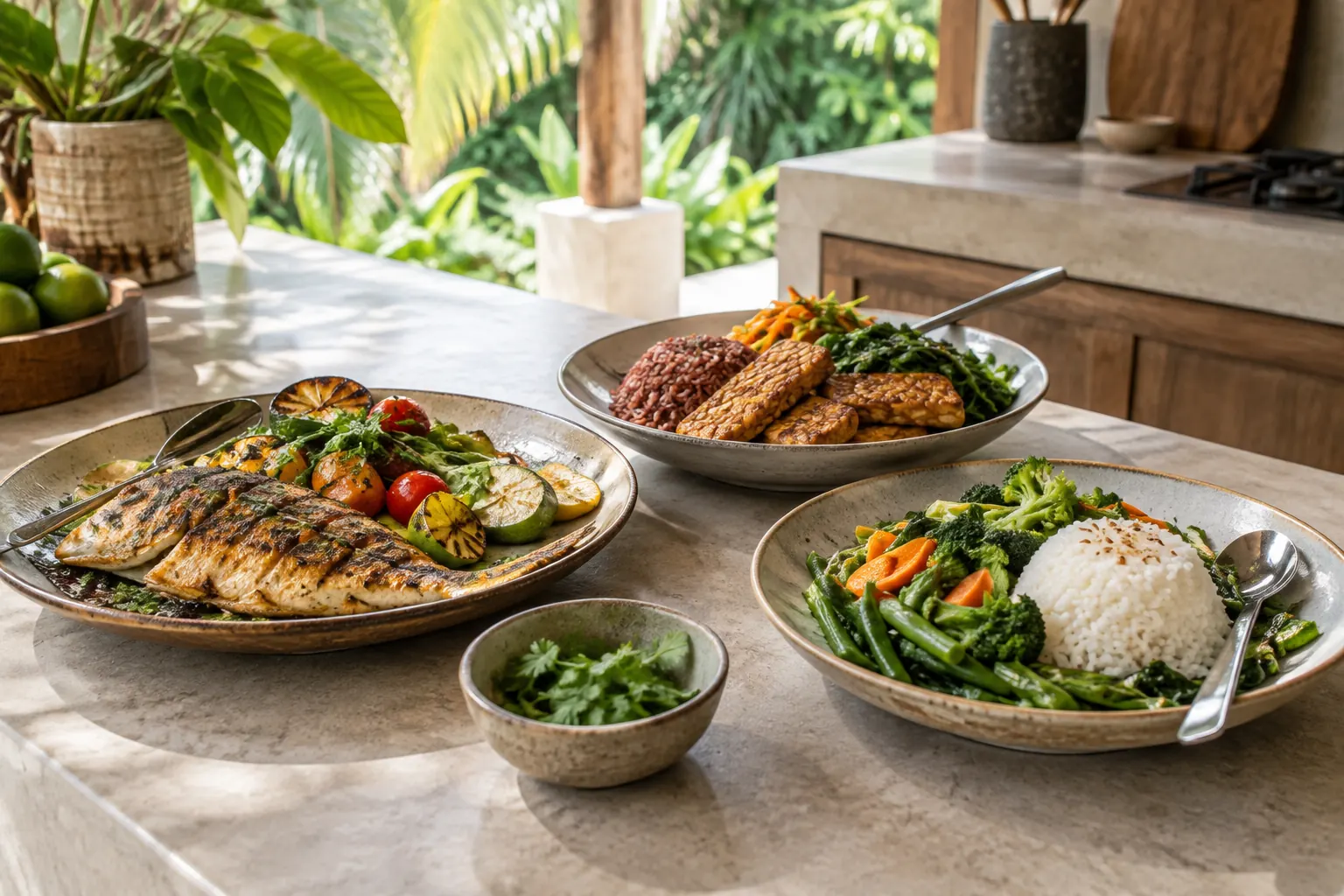
Balanced plant-forward lunch plates for a Bali yoga retreat with grains, vegetables and fresh herbs

Lunch carries most of the day’s work. Guests who under-eat at lunch crash before evening practice; guests who overeat on heavy cream sauces struggle to stay present. Design plates around:

  • A clear protein — fish, chicken, tempeh, tofu, legumes, eggs
  • A smart carb — rice, quinoa, sweet potato, flatbreads
  • Volume vegetables — cooked and raw for texture and micronutrients
  • A bright element — herb salad, citrus, sambal on the side, pickles

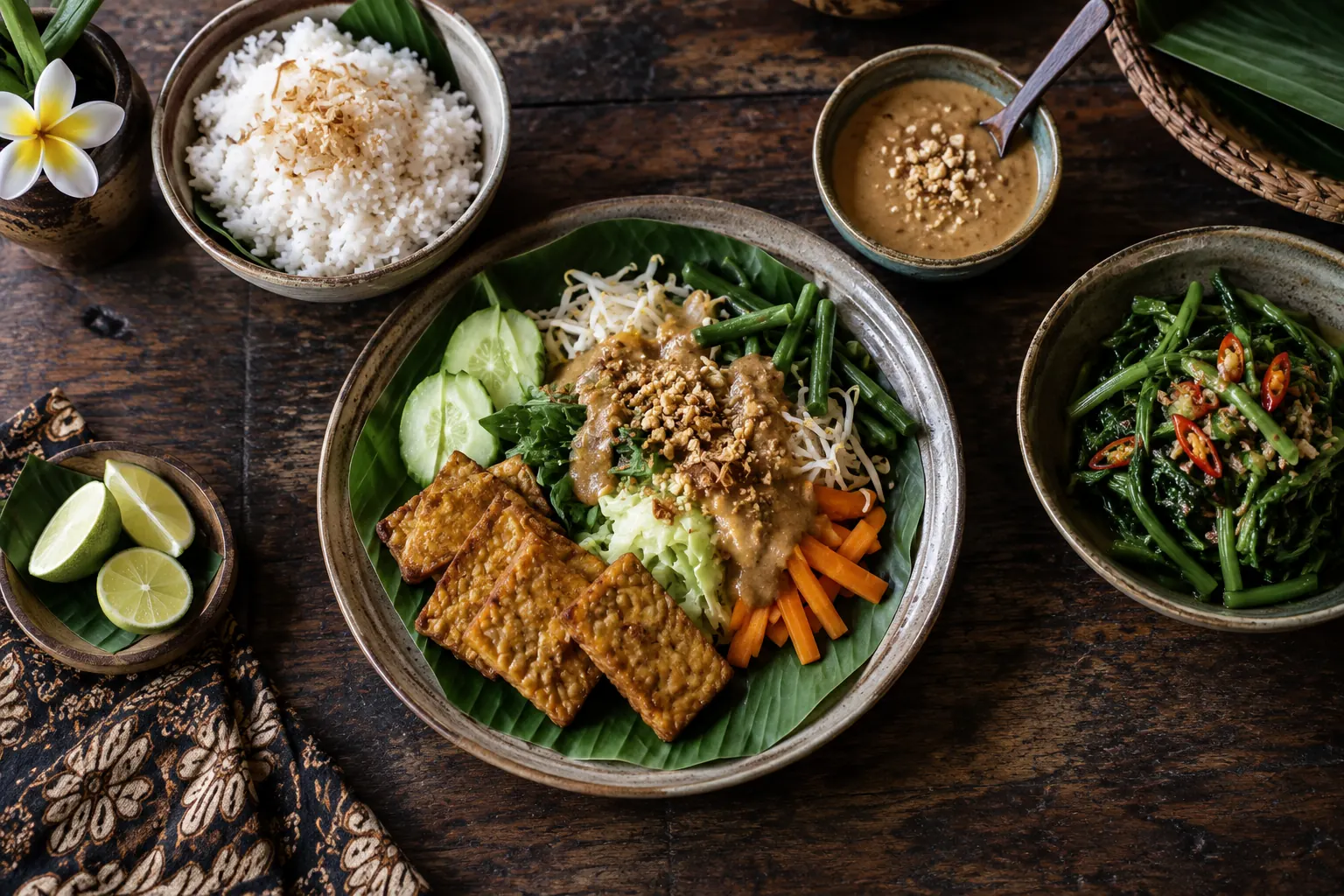
Balinese and Indonesian flavours are an asset when handled with restraint: fresh base genep aromatics, grilled fish, coconut-based curries that are fragrant rather than heavy, gado-gado style peanut sauces offered on the side for allergen control. International groups also appreciate Mediterranean and Japanese-leaning bowls that travel well in humid weather.

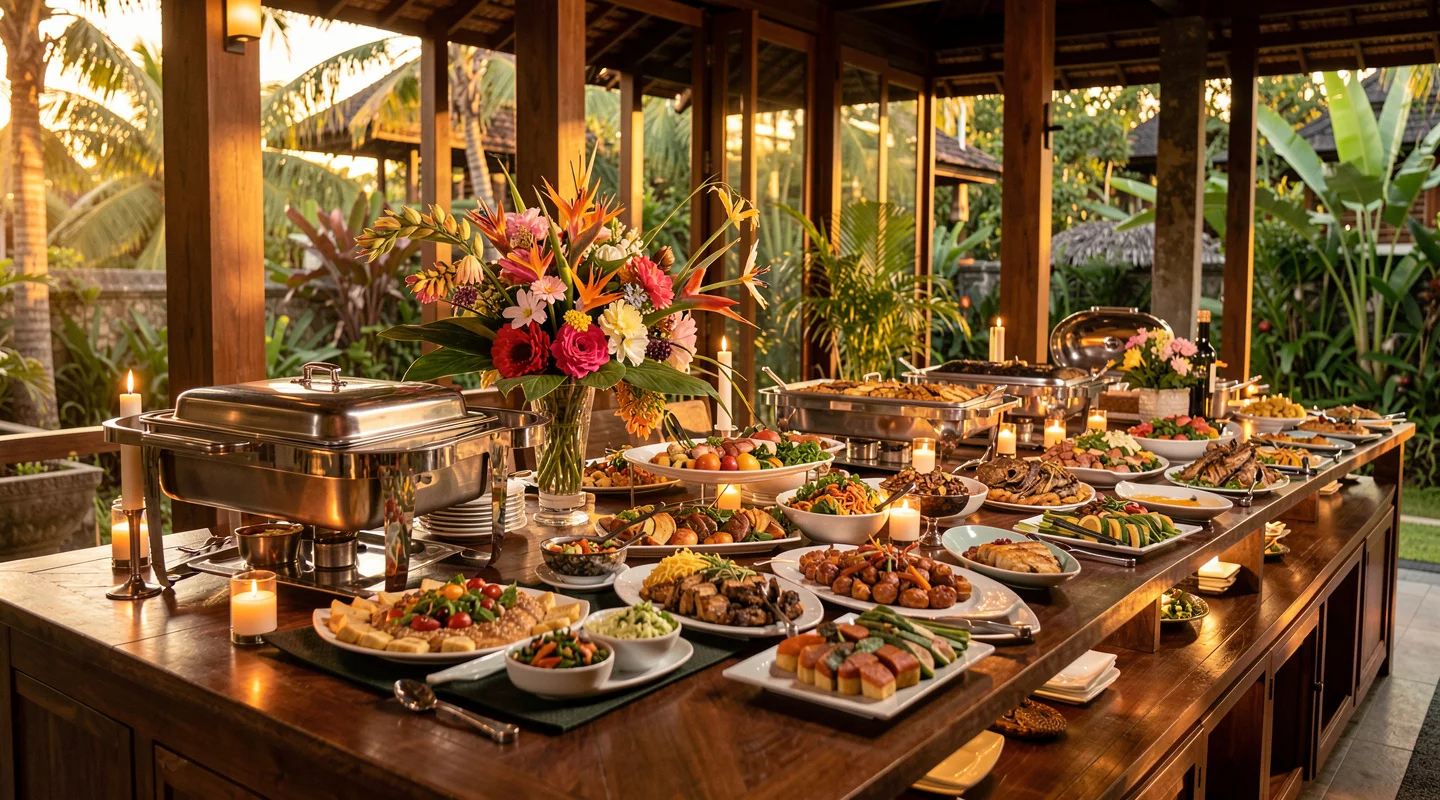
For larger cohorts, a composed buffet with clear labels outperforms plated service — guests control portions after varied practice loads. For groups under ~16, family-style sharing keeps the table communal without hotel formality.

Dinner: lighter, earlier, still memorable

Evening menus should still feel like hospitality, not hospital food. Aim for warmth and satisfaction with a gentler digestive load: broths, grilled proteins, vegetable-forward pastas, baked fish, herb salads. Save the richest celebration dinner for one planned night mid-retreat rather than every evening.

If the programme includes a special farewell night, a refined villa dinner or tasting menu format can mark the transition without breaking the week’s nutritional arc — as long as portions stay sensible.

Plant-forward without the “sacrifice” feeling

Many Bali yoga retreats are vegetarian or vegan by default, with optional fish or eggs. The failure mode is beige starch and steamed vegetables for five days. The fix is technique and variety:

  • Rotating global flavours so day three never tastes like day one
  • Texture contrast — crunchy, creamy, charred, fresh
  • Umami from mushrooms, miso, roasted tomatoes, fermented elements
  • Proper seasoning and acid; “healthy” is not an excuse for bland
  • One joyful dessert or fruit composition daily, portion-aware

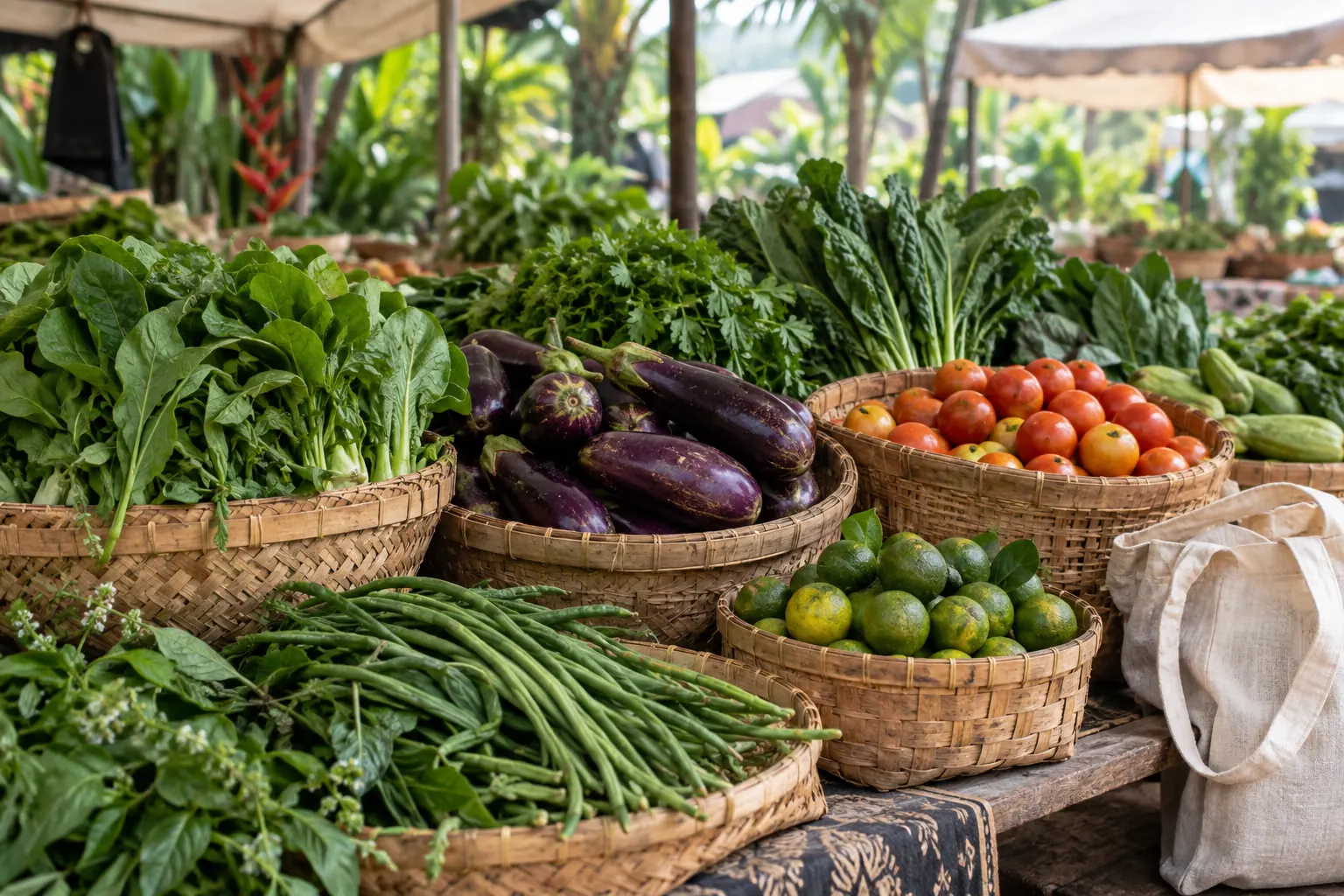
Ingredient quality does half the work. Our approach to local produce is detailed in sustainable sourcing — highland greens, market herbs and same-morning seafood change how plant-forward plates taste.

Allergens, preferences and the intake form

Retreat kitchens serve the same menu to many people with different needs. Collect data before arrival:

  • True allergies vs preferences (treat allergies as hard constraints)
  • Gluten-free, dairy-free, nut-free, soy-free flags
  • Religious requirements
  • Energy issues (hypoglycaemia, athletic load, recovery needs)
  • Dislikes that will make a guest stop eating if ignored

Build a core menu that covers 80% of the room, then layer marked alternatives. Label every station. Train servers not to guess. For multi-day programmes, a daily allergen matrix is as important as the recipe cards.

Hydration, snacks and the “hidden meal”

In Bali heat, water and electrolytes are not optional. Plan:

  • Infused water stations refreshed all day
  • Coconut water after peak-heat sessions
  • A snack point that prevents guests raiding warungs mid-programme (which breaks both budget and dietary control)
  • Tea service for evening wind-down without caffeine spikes

Snacks are part of meal planning, not a forgotten fruit basket. They protect the main meals from overeating and keep energy flat through long teaching blocks.

Kitchen logistics for multi-day retreats

A five-day retreat is closer to running a small restaurant than booking a single dinner. You need:

  • Cold storage capacity for bulk produce and prep
  • Consistent shopping runs (or a chef team that shops daily at cost)
  • Cleanup standards that keep shared villas hygienic for sleeping guests
  • Noise awareness around early practice and late silence
  • A staffing model that does not burn out a single cook by day three

myCHEF bills groceries at cost with receipts — transparent for retreat organisers who need clean cost control. Service coverage can be pure catering days or a dedicated villa chef rhythm; compare formats under villa catering and longer stays via live-in vs daily chef service.

Sample three-day energy arc (adaptable)

  1. Arrival day — hydrating lunch, grounding dinner, minimal spice for jet-lagged digestion
  2. Peak practice day — higher carbohydrate breakfast, protein-forward lunch, restorative dinner
  3. Integration / free-time day — brunch flexibility, lighter lunch if guests explore, celebration-leaning dinner if the programme peaks

Extend the same logic across 5–10 days: alternate intensity, rotate cuisines, schedule one “comfort” meal and one “local showcase” meal so the week has memory anchors.

Budgeting retreat meals without surprises

Organisers usually budget per person per day for food, then separately for chef labour and service. Ask for itemised quotes that separate:

  • Chef and assistant labour
  • Grocery budget range by menu tier
  • Service staff if plated or high headcount
  • Equipment if the villa kitchen is limited
  • Tax and service (++) as a fixed figure

Under-budgeting groceries produces thin menus; under-budgeting labour produces late service. Both damage reviews more than a modestly higher package that simply works.

FAQ — yoga retreat meal planning in Bali

Should retreat meals be fully vegan?

Only if it matches your brand and guest promise. Many successful Bali retreats are plant-forward with optional eggs or fish. Clarity in marketing matters more than ideology — guests should know before they book.

How many meals per day do most yoga retreats need?

Three structured meals plus a light snack strategy is the common standard. Some programmes add a pre-practice option for early sessions. Match meal count to practice load, not to hotel habit.

Can one chef handle a 20-person retreat alone?

For simple menus, sometimes. For varied diets, multi-course dinners or tight timing, plan for a chef plus at least one kitchen assistant. Service staff may still be needed for plated evenings.

How far in advance should we book retreat catering in Bali?

Four to eight weeks is comfortable for most group sizes; peak calendar months need earlier holds. Share the full practice schedule when you enquire so menus and staffing match the energy map.

Do you accommodate allergies across a whole retreat week?

Yes — with a proper intake form, labelled service and a kitchen process that treats critical allergies as hard constraints, not last-minute notes. Collect data before arrival, not on day one.

Planning a retreat week? Send dates, headcount, dietary mix and a draft schedule on WhatsApp. We will propose a meal plan and staffing model — or start from retreat catering and request a quote.

⭐ 560+ events served · 12,000+ guests · 500+ villa bookings

Published rates are ++ — 10% service charge and 11% government tax are added to the listed price. Your quote is always confirmed as a fixed, itemised all-in total before you commit.