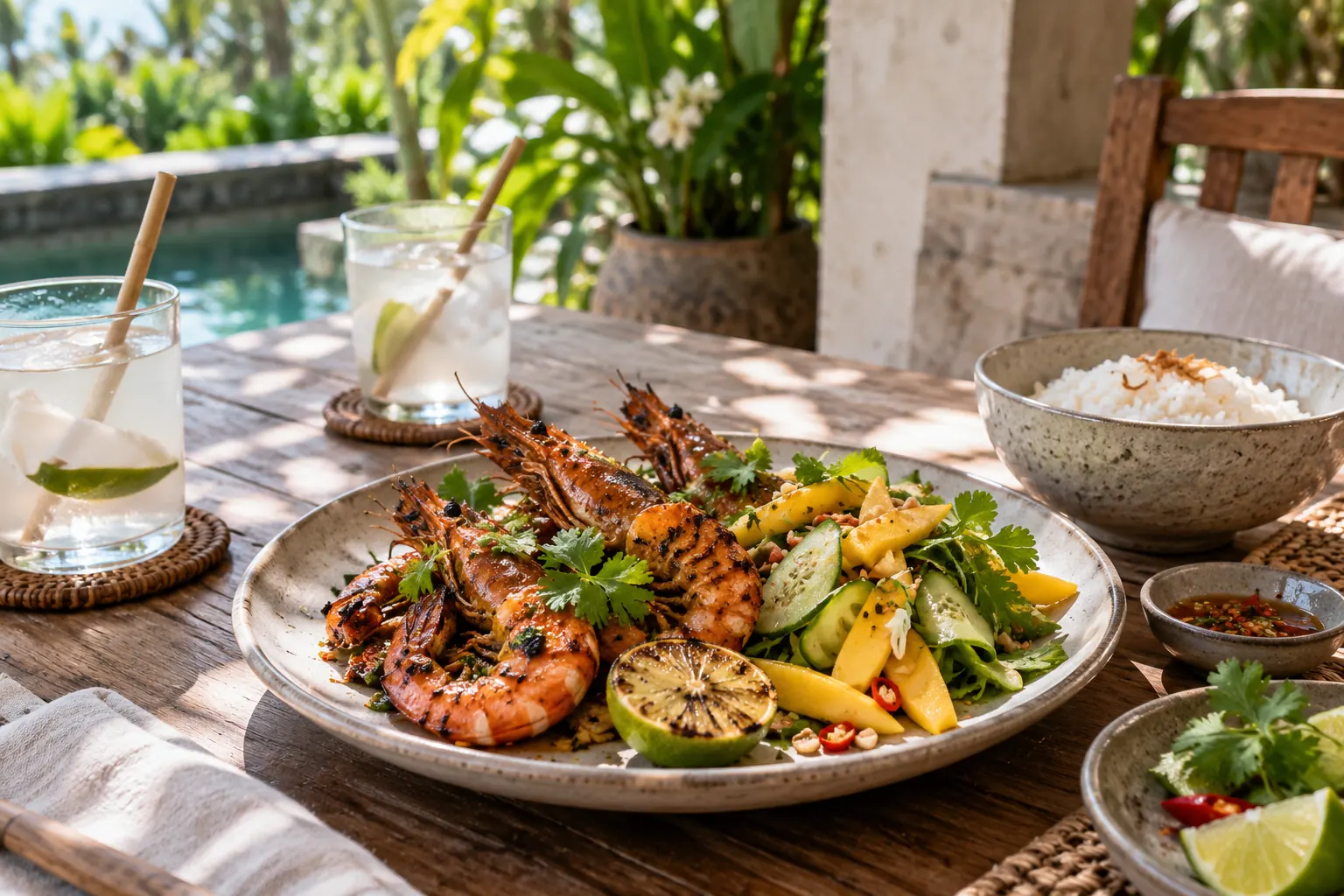
Sustainable Sourcing: Our Farm-to-Villa Philosophy
How myCHEF sources local and organic ingredients across Bali — markets, producers and freshness practices behind villa dining and catering menus.
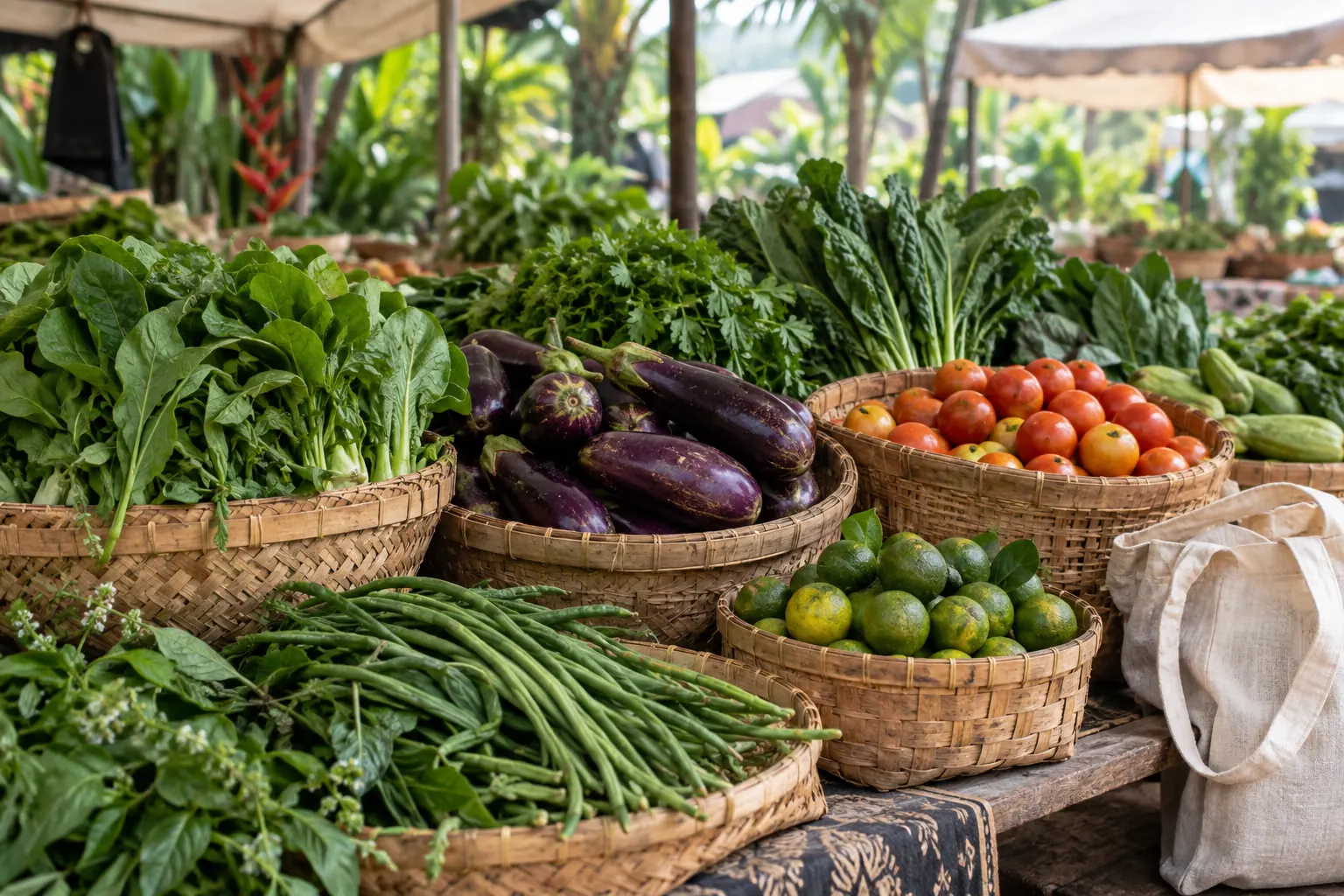
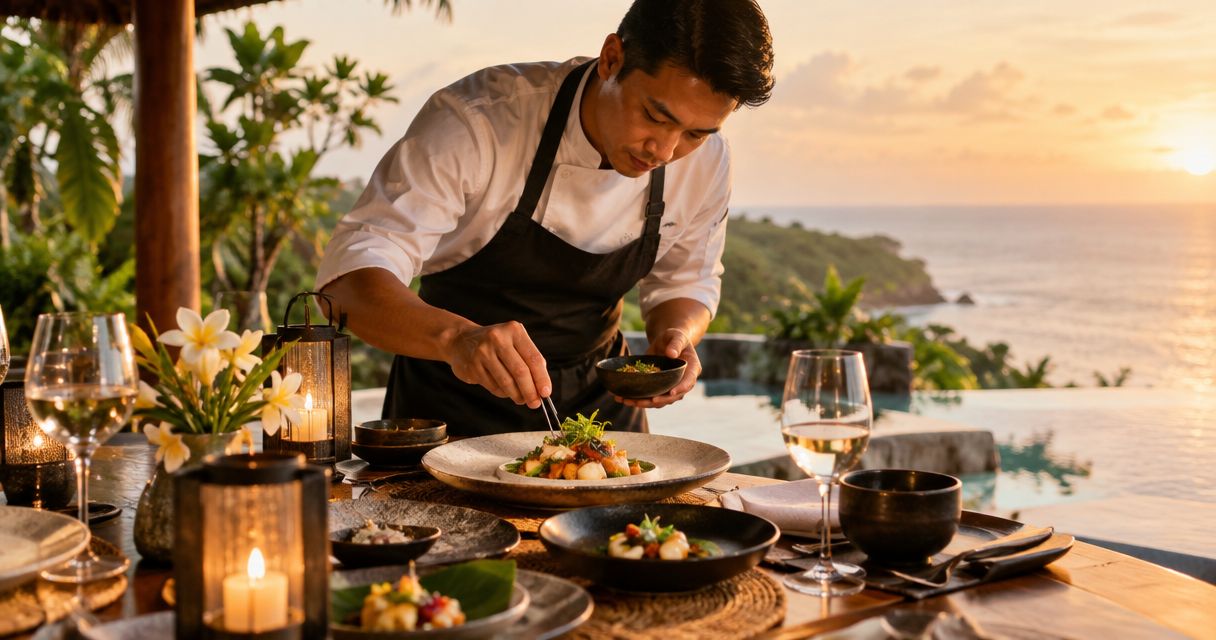
There is a version of “farm-to-table” that is a caption, and a version that is a shopping list, a 05:00 market run and a willingness to change the menu when the tomato is not good enough. The myCHEF private chef service in Bali runs the second version. We source for flavour density, food safety and fair producer relationships — not for a single photo at a fruit stall.
This article explains how we buy produce, seafood and proteins across Bali, what changes between wet and dry season, how grocery billing stays transparent, and why local-first cooking makes villa dining better. It sits beside our technique story in Milan fine-dining training and the practical booking maths in the private chef cost guide.
Why local is a quality decision, not only an ethics story
Bali sits just south of the equator, with volcanic highland soils around Bedugul and Kintamani that grow excellent greens, herbs, strawberries and brassicas when farms are careful. Produce harvested that morning behaves differently in a pan: higher flavour, better texture, less need for heavy sauce to “fix” a dull ingredient.
Importing can still be the right call — certain cheeses, specialty wines, particular wagyu grades. The point is hierarchy: default local when local is superior; import when the dish truly needs it; never import by habit while calling the menu seasonal.
Market mornings: the operational backbone
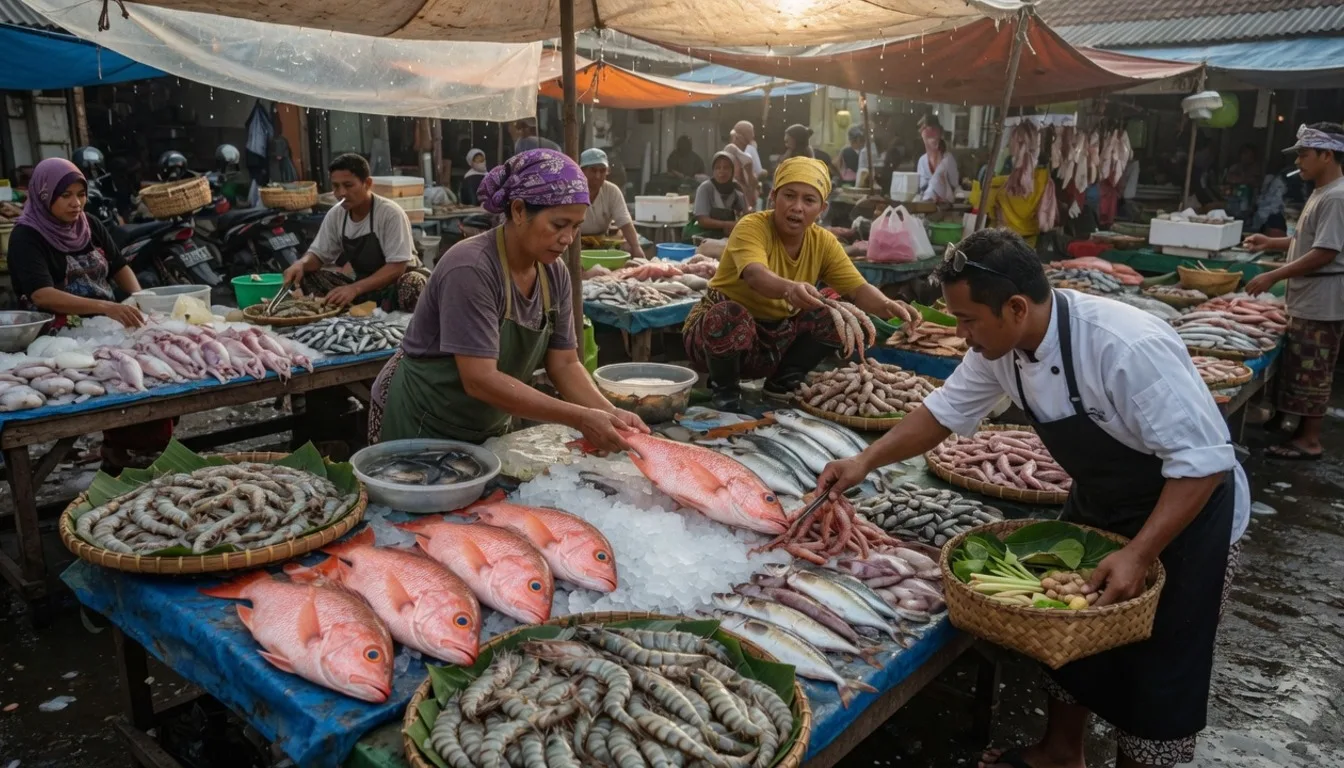
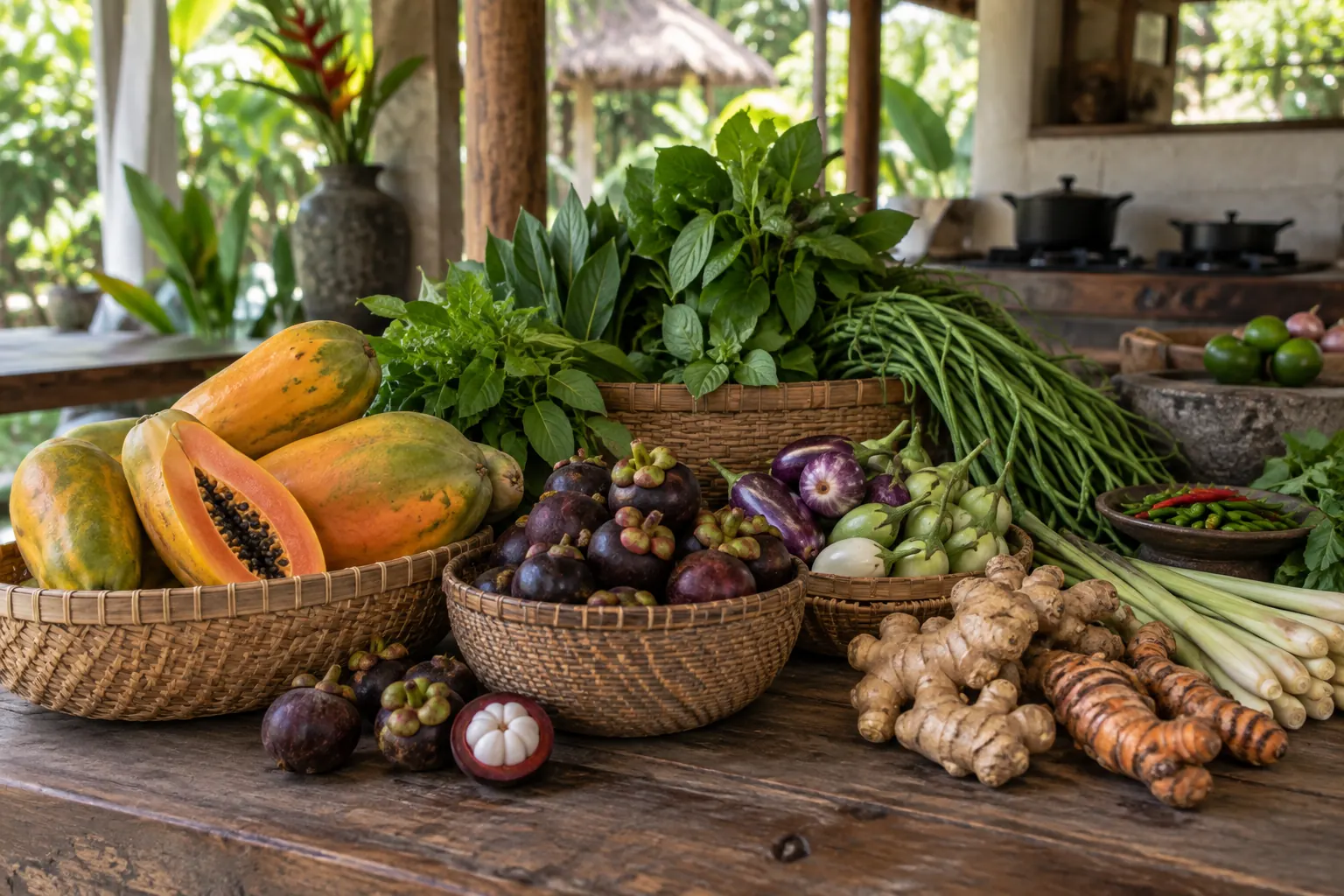
A professional villa dinner often begins before guests wake. Chefs or buyers walk markets for condition, not only price: gill colour on fish, snap on greens, perfume on herbs. Supermarket convenience has a place for staples and sealed goods; living produce still wins at the wet market and farm gate when quality is the goal.
What a good market run protects:
- Same-day seafood for dinner service
- Herbs that still smell like themselves after chopping
- Fruit at correct ripeness for dessert and breakfast programmes
- Flexibility when a planned item fails quality checks
That flexibility is why our menus are designed as frameworks. If the snapper is exceptional and the tuna is not, the plate changes. Guests experience better food; the kitchen keeps its standard.
Bedugul and the highland belt
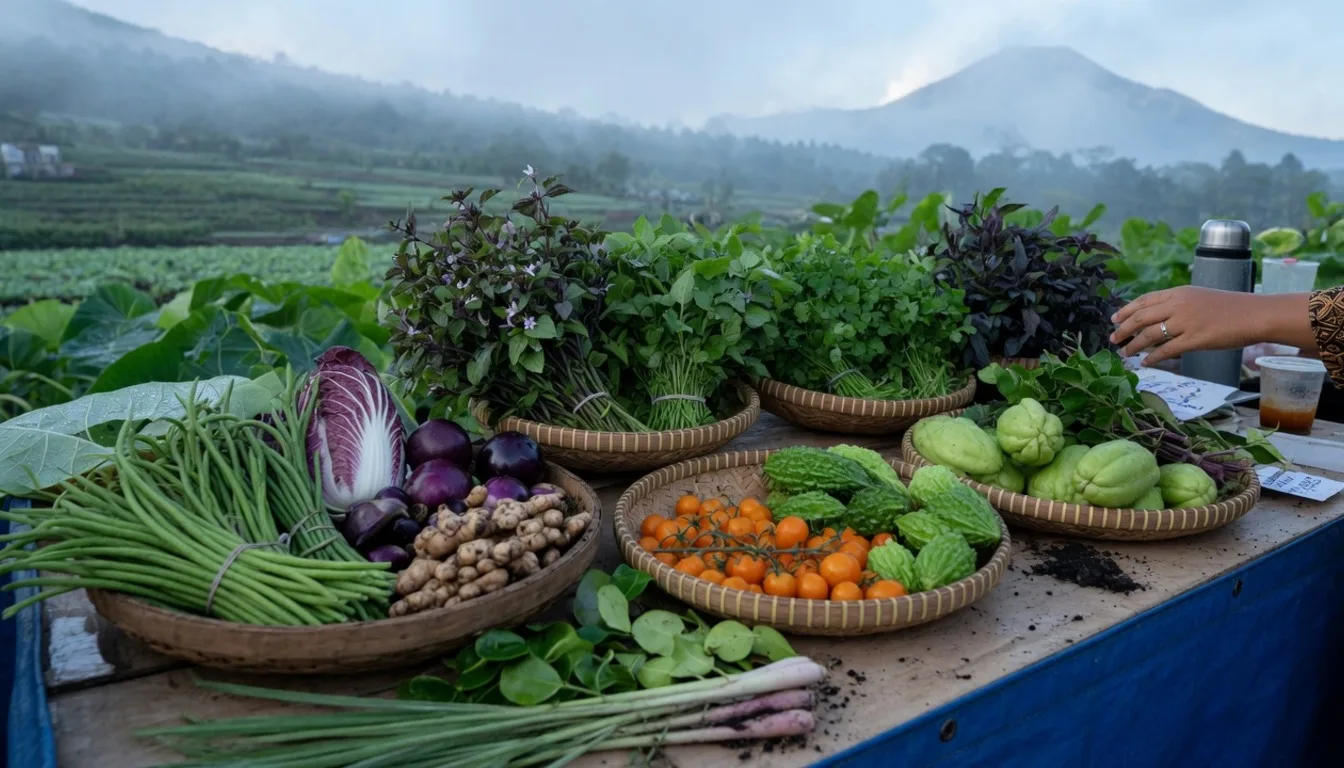
The Bedugul highlands are central to how we cook European and vegetable-forward menus in the tropics. Cooler nights produce firmer lettuce, better brassicas, more reliable tomatoes in season and strawberries that actually taste like strawberries. We work with small farms and trusted collectors rather than a single anonymous wholesale crate whenever volume allows.
Highland sourcing supports:
- Salad courses that stay crisp in humid dining rooms
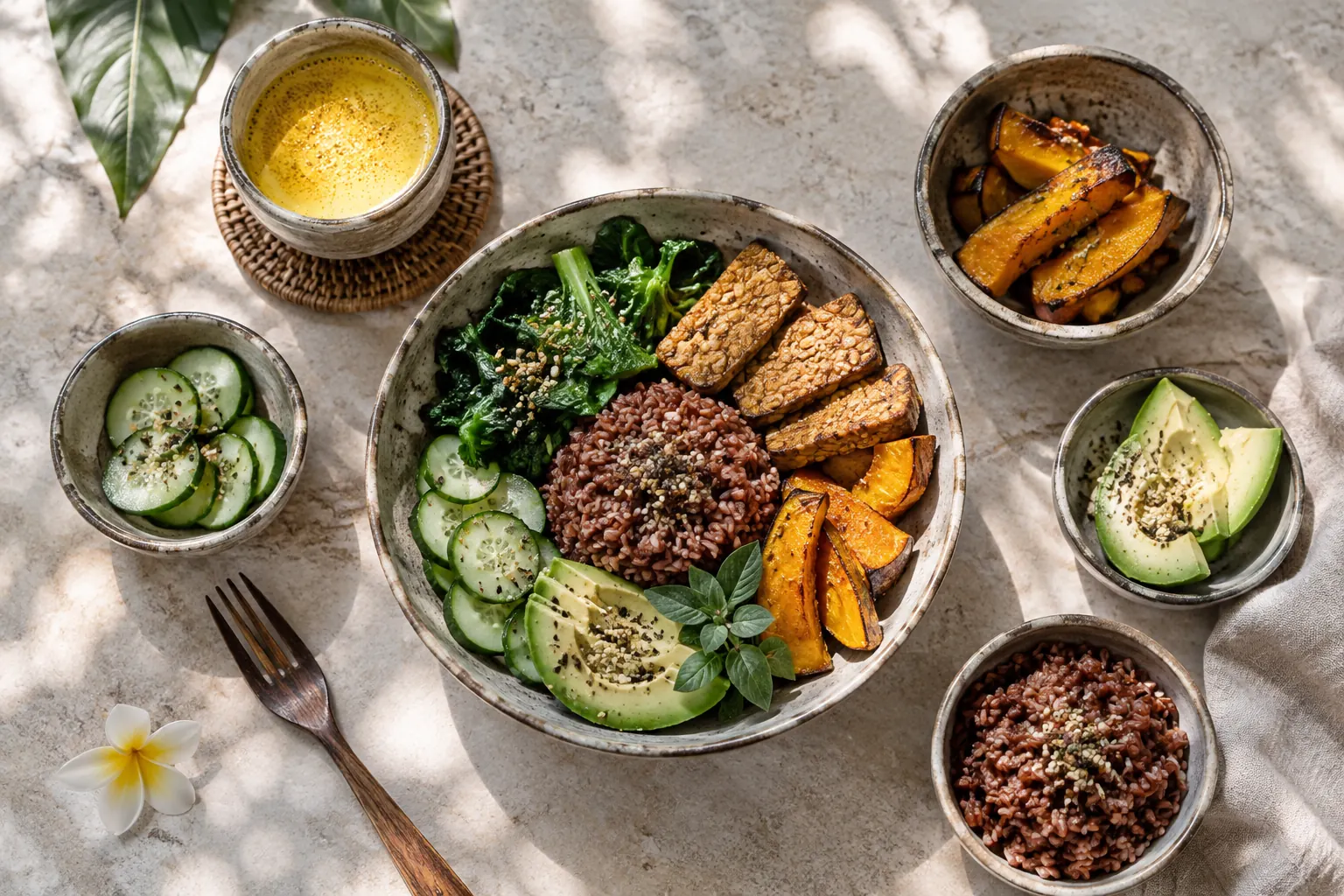
- Vegetarian and retreat menus that do not collapse into starch
- Garnish quality for tasting menus and plated events
- Breakfast fruit and berry notes without defaulting to imports
For multi-day wellness groups, this produce story pairs with the planning in yoga retreat meal planning and service delivery via retreat catering.
Seafood: morning boats, not mystery freezers
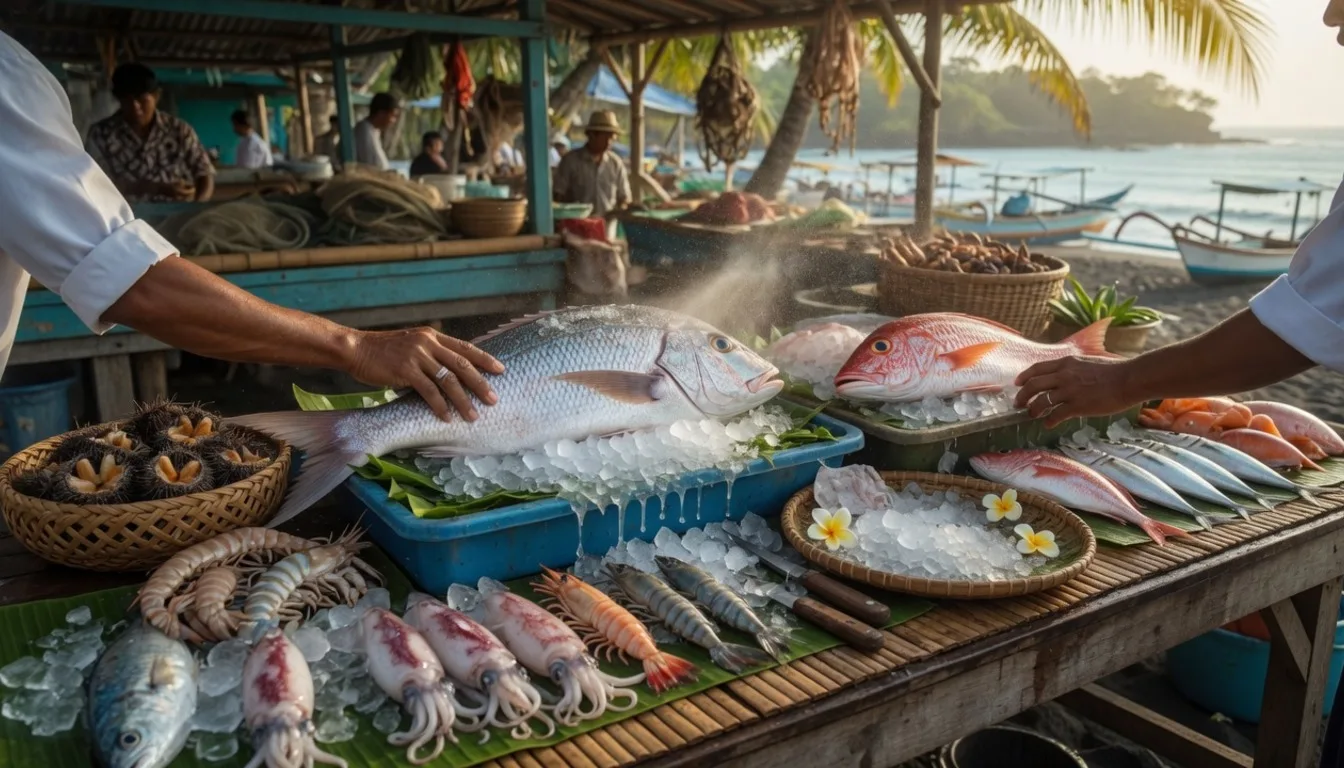
Jimbaran and other landing points reward early buyers. Yellowfin, snapper, mahi, prawns and squid can be outstanding on the right morning — and disappointing if you only look at a price board. We buy for the day’s menu, keep the cold chain tight and refuse product that fails the hand-and-nose test.
Practical seafood rules we cook by:
- Prefer whole fish you can evaluate over anonymous fillets when possible
- Match species to cooking method (grill, steam, crudo, curry) instead of forcing a trend
- Plan BBQ and grill menus around what the market actually has — see BBQ catering and seafood BBQ catering
- Respect guest allergies and religious needs before the shop, not after
Ocean-to-table is only meaningful if the ice stays cold and the cook time stays honest.
Eggs, poultry, meat and the producers we return to
Beyond produce and fish, consistency comes from relationships:
- Tabanan eggs — deep yolks for fresh pasta, breakfasts and baking
- Trusted poultry and meat suppliers — clear cold chain, predictable trim, no last-minute surprises on guest counts
- Ubud-area herbs and microgreens — plating detail for fine dining without flying garnish across oceans
- Specialty imports — used deliberately, declared in the grocery plan when they affect budget
We do not pretend every ingredient is “from a village garden.” Transparency beats mythology. Guests who care can see receipts; guests who simply want dinner taste the difference either way.
Wet season vs dry season: menus that follow the island
Bali’s dry season (roughly April–October) and wet season (roughly November–March) change what is abundant and excellent. Fighting the season produces expensive mediocrity. Following it produces better plates at saner cost.
Dry-season strengths often include firmer tomatoes, stronger outdoor grill weather, and highland vegetables that love cooler nights. Mediterranean and herb-driven menus thrive.
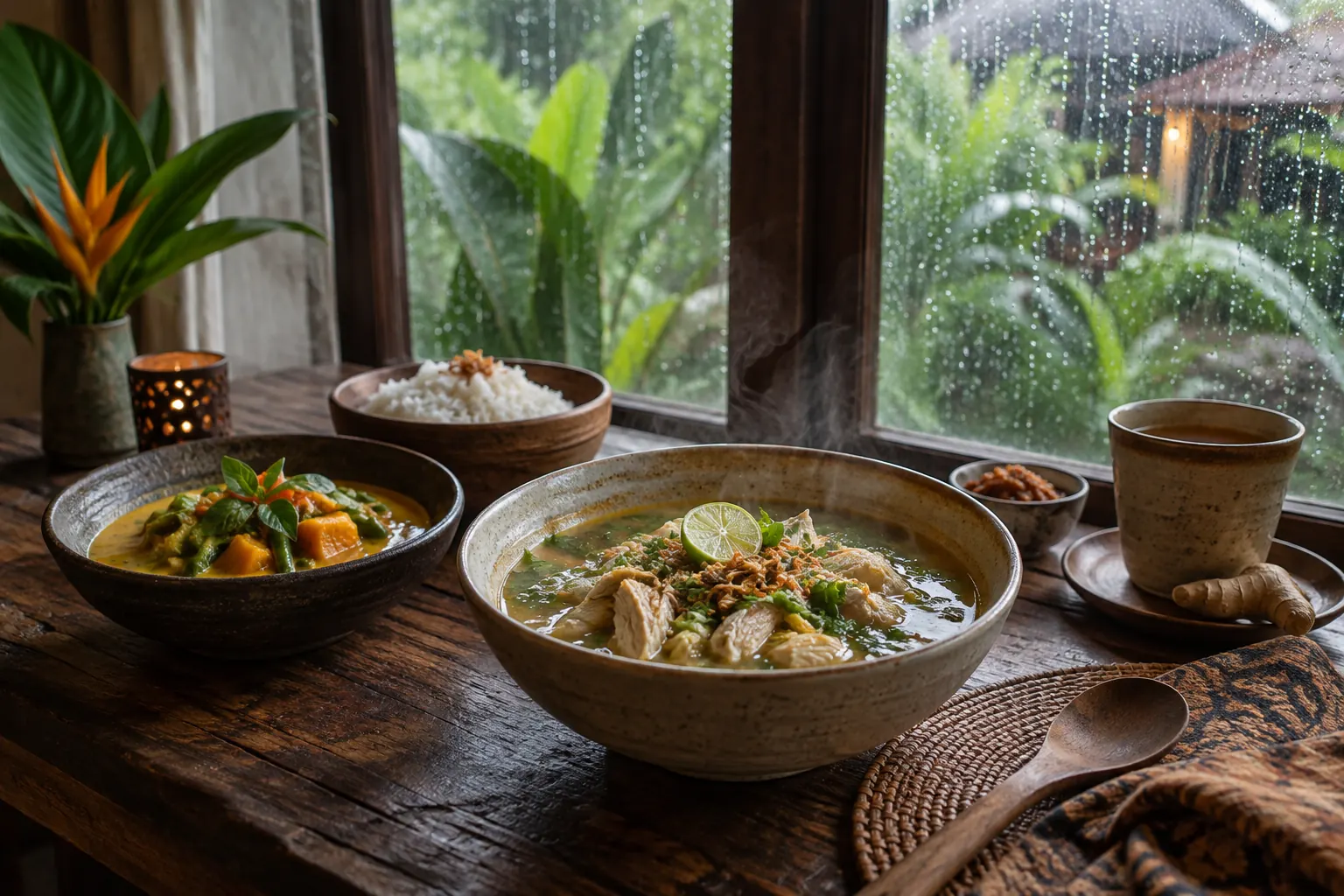
Wet-season strengths lean into tropical fruit, roots, coconut and dishes that comfort without needing perfect outdoor dining. Menus shift toward broths, curries, covered service and fruit-led desserts.
When you book private chef dining or a multi-course tasting menu, expect seasonal movement. July and January should not taste identical if both are cooked honestly.
Groceries at cost: how the money works
myCHEF bills groceries at cost with receipts — no markup. Labour and service are the service fee; ingredients are a transparent pass-through. That structure aligns incentives: we are not rewarded for inflating your shopping list.
What this means in practice:
- Proposals can show an ingredient budget range by menu tier and protein choice
- You can request receipts after shopping
- Premium upgrades (specific wagyu, specialty seafood, rare imports) are visible decisions, not hidden margins
- Retreat organisers and wedding planners can reconcile food cost cleanly against guest packages
For labour pricing models, see pricing. For event-scale catering, start at catering or wedding catering depending on format.
Food waste, prep discipline and villa realities
Sustainable sourcing fails if half the crate dies in a warm boot of a car. Cold boxes, tight prep lists and realistic yields matter. Villa kitchens also need honest portion planning: over-catering “just in case” is not generosity when it becomes landfill.
Our operational habits:
- Prep to the final headcount when it locks
- Use trimmings where cuisine allows (stocks, salsas, staff meals) without lowering guest-facing standards
- Leave kitchens clean so villa teams are not absorbing our waste problem
- Prefer reusable mise containers and controlled ice over disposable chaos where practical
Sustainability is logistics, not only farm names.
How to brief us for a better shop
You get better sourcing outcomes when the brief is clear:
- Guest count and ages (kids change protein and fruit planning)
- Hard allergies vs soft preferences
- Cuisine direction and any “must include / must avoid” items
- Budget posture: best-in-market vs strict cap
- Whether alcohol, specialty coffee or imported snacks are in scope
Share that early — especially for weddings and retreats — so market runs are purposeful. For multi-day stays, compare service models in live-in chef vs daily service so shopping rhythm matches how often you want the team on property.
FAQ — sustainable sourcing for villa dining in Bali
Do you only use local ingredients?
We default local when quality is superior, and import when a dish truly needs it. The standard is the plate and the receipt — not a claim that every item grew within ten kilometres.
Can we see grocery receipts?
Groceries are billed at cost with receipts available. There is no ingredient markup in our model.
How does wet season affect the menu?
Availability and weather shift produce and service style. We redesign toward what is excellent that week rather than forcing a dry-season menu in heavy rain.
Is same-day seafood always available?
Often yes, especially with early market runs — but weather and landings vary. A good chef changes species before serving tired fish. Flexibility is part of quality control.
How should wedding or retreat planners budget ingredients?
Ask for an ingredient range per person by menu tier, separate from labour. Lock dietary needs early so the shop is accurate. We itemise so food cost does not hide inside a vague package.
Want menus built around what Bali is actually growing? Send dates, guest count and dietary notes on WhatsApp, or start with a quote and explore fine dining and villa catering formats that fit your stay.