Cooking with the Seasons in Bali: Why It Matters
Unlike temperate regions with four distinct seasons, Bali has two: dry (April–October) and rainy (November–March). Understanding what grows when determines ingredient freshness, cost, flavor intensity, and sustainability. A seasonal approach to dining also means lower costs (in-season = abundant and cheap) and better flavor.
Bali Dry Season: April–October (The Peak)
Character
Sunny, clear skies, minimal rain. Perfect growing conditions for many crops. Tourist season peaks (expensive); demand is highest.
Star Ingredients
Seafood
- Fish: Tuna, mahi-mahi, red snapper, grouper, skipjack (peak freshness)
- Crustaceans: Lobster, blue crab, shrimp (abundant, quality high)
- Mollusks: Squid, cuttlefish (excellent texture and flavor)
Vegetables
- Long beans, water spinach (kangkung), cabbage (abundant)
- Eggplant, bell peppers, tomatoes (peak flavor)
- Corn, asparagus, broccoli (excellent condition)
- Bitter greens, moringa (nutritious, in season)
Fruits
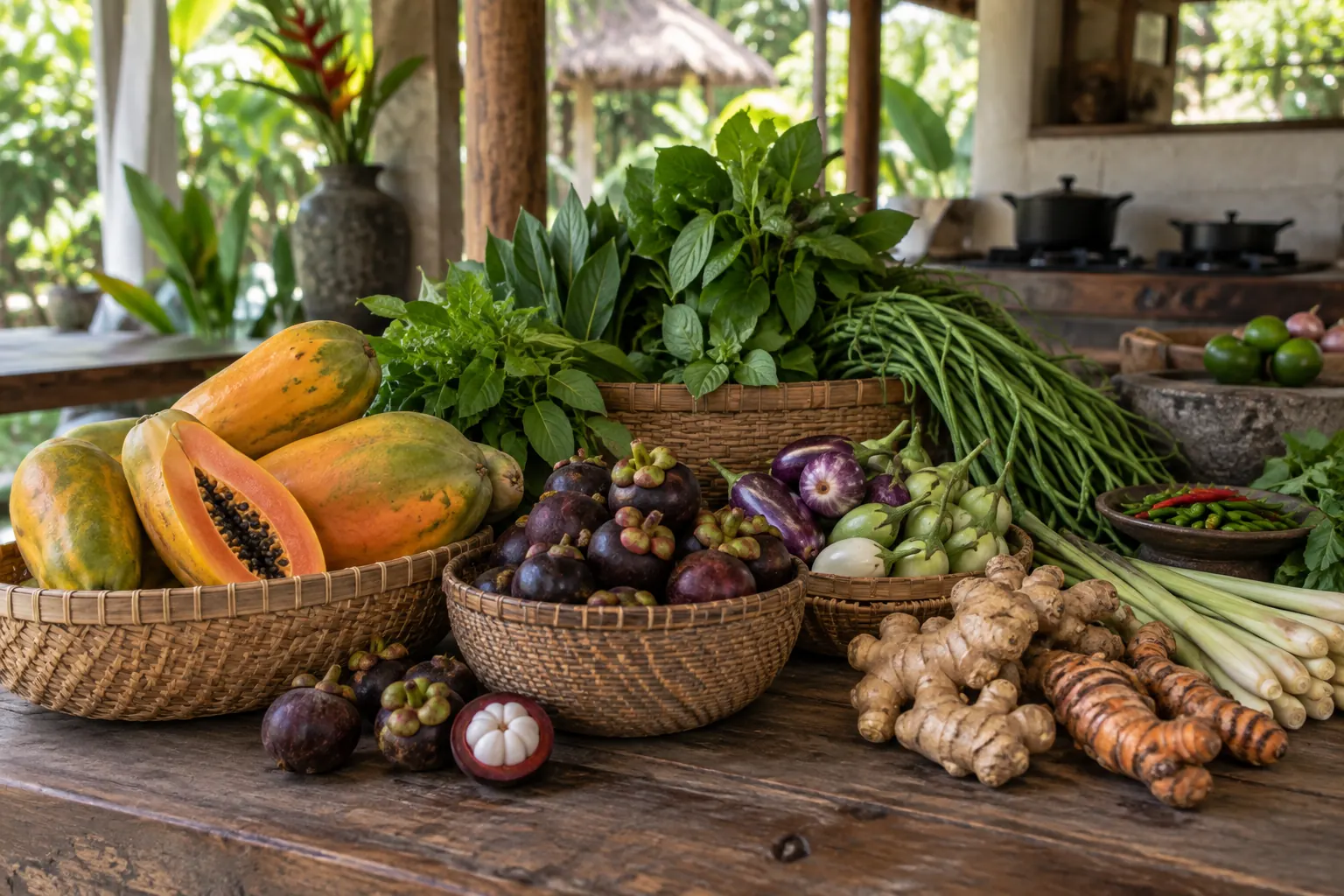
- Mangoes (peak June–August; exquisite)
- Citrus (lemon, lime, orange)
- Passion fruit (tart, aromatic)
- Papaya, melon (sweet, abundant)
Spices & Aromatics
- Turmeric, ginger, galangal (fresh, potent)
- Basil, cilantro, lemongrass (vibrant)
Cooking Approach
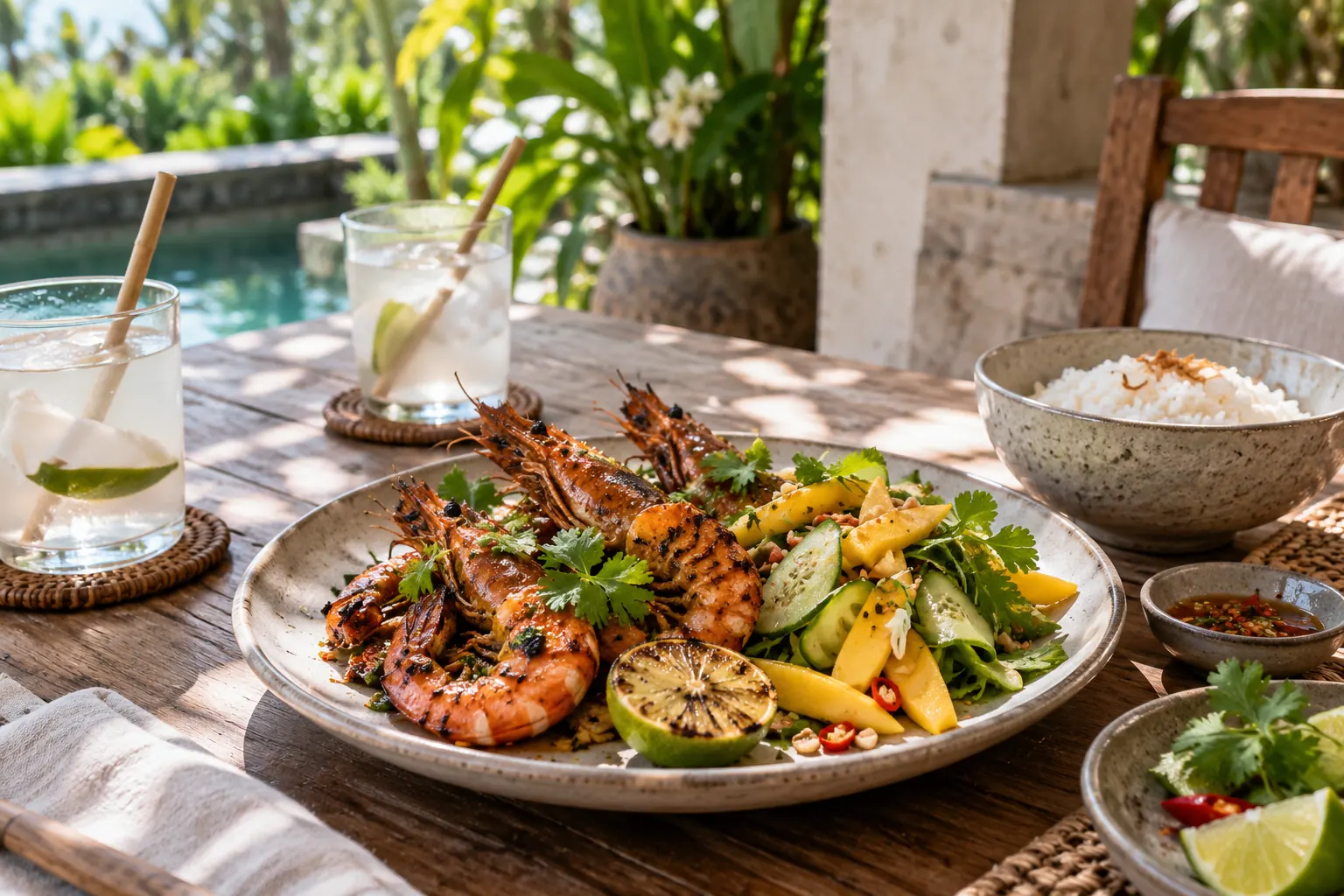
- Light, fresh preparations (grilled fish, light curries)
- Showcase ingredient quality with minimal intervention
- Herb-forward; celebrate aromatic freshness
Pricing
Premium (high season, peak quality). Budget 20–30% more than low season.
Bali Rainy Season: November–March (The Abundance & Value)
Character
Heavy rains, lush growth, fewer tourists, lower prices. Ingredient diversity is highest; often overlooked by restaurant diners but ideal for home cooking.
Star Ingredients
Seafood
- Fish: Sardines, anchovies (abundant, cheap, flavorful for stocks and pastes)
- Freshwater fish: Catfish, tilapia (from inland aquaculture; excellent value)
- Shellfish: Still available but less premium (avoid if freshness concerns)
Vegetables
- Mushrooms (button, oyster, local varieties; rainfall supports growth)
- Leafy greens (spinach, lettuce, water spinach; peak freshness)
- Pumpkin, squash (storage crops; excellent condition)
- Bitter greens, wild greens (foraged, seasonal treasures)
Fruits
- Bananas (all varieties; abundant, cheap)
- Pineapple (year-round but peak rainy season)
- Dragon fruit (rainy season peak)
- Rambutan, mangosteen, durian (November–January; rare, delicious)
- Coconut (abundant; fresh coconut milk is extraordinary)
Spices & Aromatics
- Chili peppers (abundant, cheap, perfect for pastes and sambal)
- Garlic, shallots (end of storage season; still good)
- Turmeric, ginger (less potent than dry season but available)
Cooking Approach
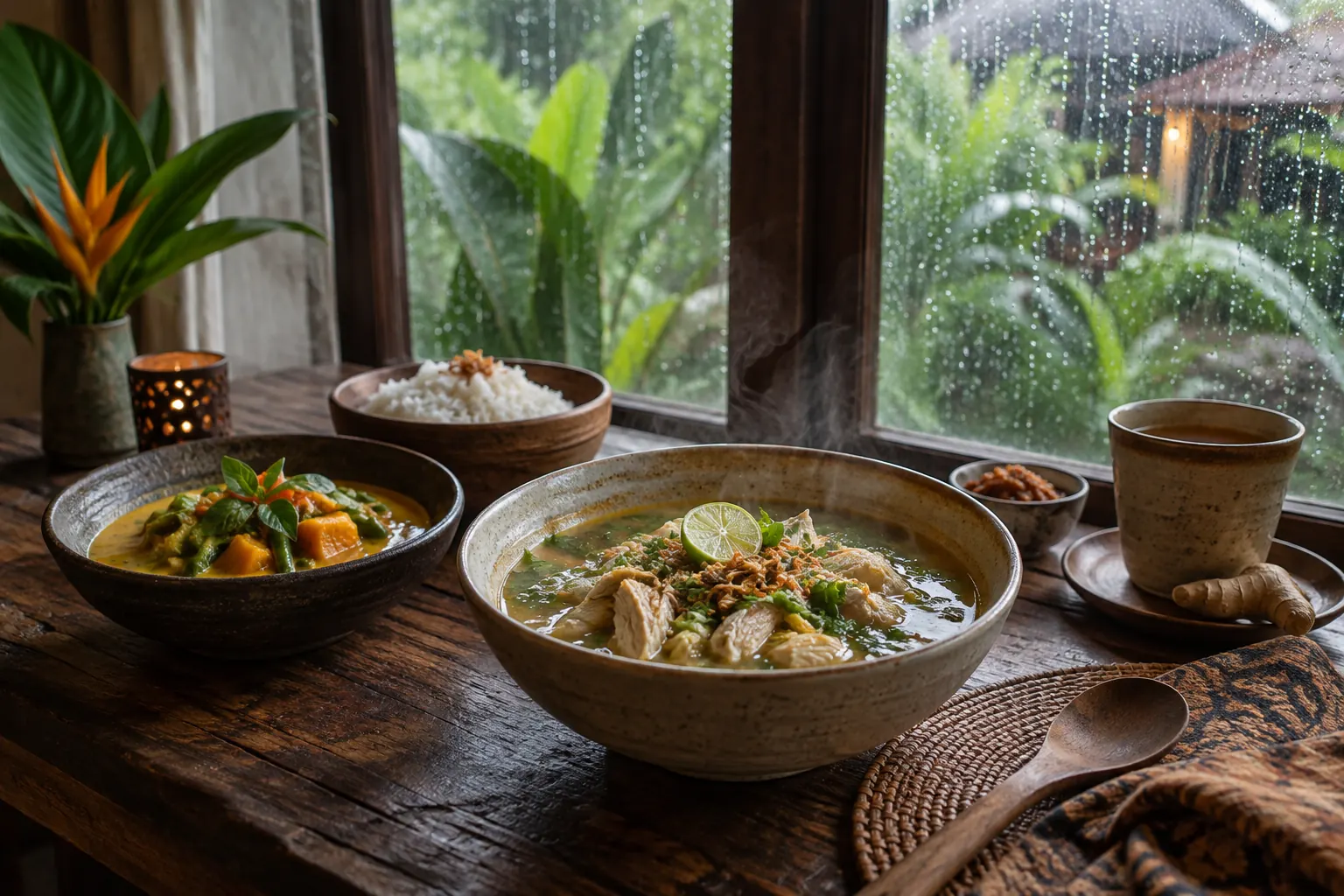
- Deeper, richer preparations (curries, long braises, stews)
- Utilize preserved techniques (sambal, paste, stock-making)
- Mushroom and vegetable-forward menus
Pricing
Budget-friendly (low season, abundant supply). Expect 30–40% savings vs. dry season.
Month-by-Month Ingredient Calendar
April–May (Early Dry Season)
Peak: Mango season begins, leafy greens, freshwater fish, turmeric
- Menu ideas: Fresh spring salads, light curries, grilled white fish
June–August (Peak Dry Season)
Peak: Mango (peak quality), tuna & premium fish, lobster, all vegetables
- Menu ideas: Grilled mango desserts, sashimi-grade fish, light Mediterranean preparations
September–October (Late Dry Season)
Peak: Citrus, dragon fruit begins, fish still excellent
- Menu ideas: Citrus-forward dishes, light desserts with lemongrass
November–December (Early Rainy Season)
Peak: Rambutan, mangosteen, durian (rare), mushrooms, leafy greens surge
- Menu ideas: Tropical fruit showcases, mushroom risotto, sambal-based curries
January–February (Peak Rainy Season)
Peak: Durian (peak quality), dragon fruit, all mushrooms, water spinach
- Menu ideas: Durian-based desserts, mushroom-forward, vegetable-heavy
March (Late Rainy Season)
Peak: Pineapple, bananas (end of season), mushrooms still strong
- Menu ideas: Tropical fruit, braised dishes, mushroom preparations
Ingredient Sourcing Strategies
Markets vs. Direct Sourcing
- Morning Farmers' Markets (5am–7am): Cheapest, freshest, seasonal variety
- Direct from Fishermen (early morning): Just-landed fish, negotiable pricing
- Local Producers: Organic farms, spice paste makers (higher quality, premium pricing)
- Import Suppliers: Non-seasonal items (olive oil, specialty ingredients)
Pricing Leverage Points
- Buy at farmers' market closing time (7am+) for discounts
- Negotiate directly with fishermen for bulk orders
- Order direct from farmers for meal prep (5–10% discount vs. retail)
Menu Planning by Season
Dry Season Menu (June–August)
First Course: Chilled soup with herbs, tuna crudo with citrus
Main: Grilled fish, mango salsa, light vegetables
Dessert: Passion fruit panna cotta, mango sorbet
Rainy Season Menu (January–February)
First Course: Mushroom and turmeric soup
Main: Braised fish in rich curry, sticky rice, water spinach
Dessert: Durian custard or rambutan with lime
Sustainability & Seasonal Eating
Eating seasonally in Bali is inherently sustainable: it supports local farmers, reduces transportation, saves money, and respects the island's natural rhythms. Your private chef should be championing seasonal sourcing; ask about it explicitly when booking.
Final Thought
Bali's seasons offer dramatically different ingredient palettes. Dry season delivers premium, delicate ingredients perfect for fine dining. Rainy season offers abundance, value, and the chance to celebrate deeply flavored, traditional preparations. Understanding this rhythm ensures you eat best with the land, not against it.